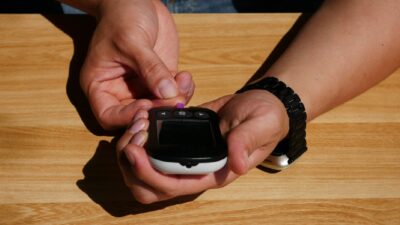
A CGM patch is the adhesive disc that holds a continuous glucose monitor sensor against your skin for the duration of its wear cycle. In modern systems like Dexcom G7, Dexcom Stelo, and FreeStyle Libre 3, the patch is fully integrated with the sensor wire and transmitter electronics into one slim, single-use unit. Older systems used a separate transmitter that snapped onto a smaller sensor patch.
Anatomy of a CGM Patch
A typical CGM patch has three functional layers stacked on top of one another:
| Layer | Material | Function |
|---|---|---|
| Adhesive | Acrylate or silicone medical adhesive | Bonds to skin for 7-15 days |
| Backing film | Polyurethane or polyester | Flexes with movement, blocks water |
| Electronics housing | Plastic enclosure | Contains transmitter chip, battery, and sensor base |
A 4-5 mm filament protrudes from the housing and pierces the skin during application. The filament sits in interstitial fluid (the fluid between cells) and is coated with the enzyme glucose oxidase, which generates the electrical signal that the transmitter reads.
How the Patch Goes On
Each modern CGM ships with a one-handed applicator. You twist or remove a safety cap, press the applicator firmly against a clean upper arm or abdomen (Stelo and Libre 3 are arm-only), and click a release button. A spring drives the filament in, and the adhesive disc presses flat against your skin. The whole process takes about 2 seconds and is generally painless because the filament is thinner than a human hair.
Wear Time by System
| System | Wear Time | Patch Diameter |
|---|---|---|
| Dexcom G7 | 10 days + 12-hour grace | ~24 mm |
| Dexcom Stelo | 15 days | ~24 mm |
| FreeStyle Libre 3 | 14 days | ~21 mm |
| FreeStyle Libre 2 | 14 days | ~35 mm |
| Medtronic Guardian 4 | 7 days | ~28 mm |
| Eversense E3 | 180 days (implanted) | Adhesive transmitter only |
Water Resistance
According to the FDA, all currently cleared CGM patches are rated water-resistant for showering, bathing, and swimming. Specific depth and duration ratings vary:
- Dexcom G7 / Stelo: 8 feet for up to 24 hours
- FreeStyle Libre 2 / 3: 3 feet for up to 30 minutes
- Medtronic Guardian 4: 8 feet for up to 24 hours with the included shower cover
Hot tubs, saunas, and prolonged hot showers shorten patch life because heat loosens the adhesive. Pat dry after immersion; rubbing peels the edges.
Skin Reactions and How to Manage Them
About 20-30 percent of CGM users develop some form of skin irritation, ranging from mild redness to allergic contact dermatitis. The two most common adhesives, acrylate and isobornyl acrylate, are well-known sensitizers. To reduce irritation:
- Apply a thin barrier film like Cavilon or Skin Tac before placing the patch.
- Rotate sites with each new sensor (left arm, right arm, abdomen).
- Use a hydrocolloid base layer (Compeed, Tegaderm) and place the CGM on top.
- Take an oral antihistamine if a pattern of itching develops.
- If irritation persists, talk to your dermatologist about patch testing.
Overpatches: Extending Wear Time
Manufacturers and third-party brands sell adhesive overpatches that fit around the CGM housing without covering the sensor. Popular options include:
- Dexcom Overpatch (free with G7/Stelo orders) – precut for the round housing
- Abbott FreeStyle Libre Patch (free with shipments) – precut for Libre 2 and 3
- Skin Grip – waterproof Kevlar-style fabric, lasts the full sensor cycle
- Simpatch – hypoallergenic and available in skin tones and colors
- Pump Peelz – decorative overpatches
Overpatches help athletes, swimmers, and anyone in humid climates avoid early sensor failure.
When to Replace a CGM Patch Early
Replace the sensor before the wear cycle ends if:
- The adhesive lifts more than 25 percent of the way around the housing
- The sensor stops transmitting and a restart does not restore data
- You develop significant pain, swelling, or pus at the insertion site
- The filament partially pulls out during a snag
Manufacturer customer support will usually replace a sensor that failed early under warranty.
Patches and Daily Life
CGM patches are designed to be unobtrusive. Most users wear them under T-shirt sleeves on the back of the upper arm. Sleeping on the patch is generally fine; the housing is low profile and rounded. Air travel does not affect performance, and metal detectors and millimeter-wave scanners are safe. MRI scanners are not safe; remove the sensor before MRI and apply a new one afterward. For broader background, see detection of prediabetes and the A1C levels hub.
The Bottom Line
A CGM patch is the adhesive interface between the sensor wire under your skin and the wearable transmitter on top. Modern integrated patches last 10-15 days, are water-resistant for normal swimming, and can be reinforced with overpatches for athletes. Skin care, site rotation, and barrier films make wearing one comfortable for the long term.
Medical disclaimer: This article is for educational purposes only and is not a substitute for professional medical advice, diagnosis, or treatment. Always consult your physician or qualified healthcare provider with any questions about a medical condition or medication.