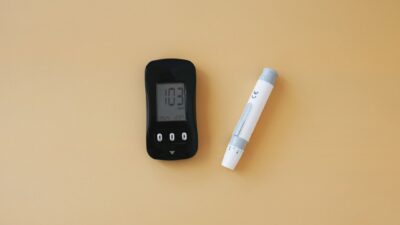
You can usually get a free glucose meter through four pathways: manufacturer starter programs, your clinician’s office, insurance (which covers both meter and strips), or a community health resource. The meter itself is inexpensive to produce, so companies mail them free hoping you will become a long-term buyer of their test strips. The strips are the real ongoing cost — and that is where most of the planning should go.
Why Glucose Meters Are Often Free
Blood glucose meter companies run a razor-and-blade business model. The meter hardware is inexpensive; the ongoing revenue comes from proprietary test strips compatible only with that brand. Give away the meter, lock in the strip sales. That is why searching “where can I get a free glucose meter” almost always leads to a legitimate answer: multiple brands want to hand you one.
That economics has benefits for you. If your goal is simply to check blood sugar at home — for example because you just learned about prediabetes — a free meter is genuinely available in almost every U.S. market. Plan for the strip cost separately.
Where Can I Get a Free Glucose Meter: 6 Pathways
1. Manufacturer Starter Programs
Most major brands mail a free meter to anyone who fills out a short form.
- OneTouch (LifeScan): onetouch.com offers a free Verio Reflect or Verio Flex meter with sign-up.
- Contour (Ascensia): contournext.com offers a free Contour Next One with email signup.
- Accu-Chek (Roche): accu-chek.com offers starter meters for Guide Me and Instant models.
- ReliOn (Walmart): the cash-pay ReliOn Premier runs under 25 dollars at Walmart and often has rebate offers that make it effectively free.
Expect the meter within 1 to 2 weeks. Strips are not included in the free offer.
2. Your Clinician’s Office
Primary care offices, endocrinologists, and especially diabetes educators keep sample meters from multiple manufacturers. Ask at your next visit — or call the office and ask a nurse. Many clinics will also include a free starter pack of 10 to 25 strips to get you through the first week.
3. Insurance Coverage
Meters and strips are covered by Medicare Part B, Medicaid, and most private insurance as durable medical equipment (DME).
- Medicare: typically 20 percent coinsurance after the Part B deductible; dual-eligible Medicaid enrollees usually pay nothing.
- Medicaid: covers approved meters in all 50 states; specific brand depends on state formulary.
- Private insurance: most plans list one or two preferred meters covered in full; check your plan’s “preferred glucose meter” list.
Per CMS Medicare guidelines, the prescriber must order the meter and strips for it to be covered.
4. Community Health Centers and FQHCs
Federally Qualified Health Centers (FQHCs) and community clinics serve patients regardless of insurance. Many stock meters donated by manufacturers or purchased through the 340B drug pricing program. Find your nearest center through the HRSA locator at findahealthcenter.hrsa.gov.
5. Non-Profit and Patient Assistance Programs
- American Diabetes Association: maintains a resource list at diabetes.org.
- Beyond Type 1 and Beyond Type 2: offer financial support directories.
- Mutual Aid Diabetes: community-funded supply sharing including meters and strips.
- Local Area Agencies on Aging: sometimes provide meters for older adults through state programs.
6. CGM Starter Programs (Not Meters, but Relevant)
If you are curious about continuous monitoring, Dexcom’s Hello program offers a free 10-day sensor trial for qualifying new users. Abbott has run similar FreeStyle Libre starter promotions. These are not ongoing free supplies, but they let you experience a CGM before committing.
The Real Cost: Test Strips
| Brand | Typical Cash Cost per Strip | Insurance Covered? |
|---|---|---|
| OneTouch Verio | $0.50 to $1.00 | Yes, most plans |
| Contour Next | $0.40 to $1.20 | Yes, most plans |
| Accu-Chek Guide | $0.50 to $1.30 | Yes, most plans |
| ReliOn Premier | $0.18 to $0.25 | Varies |
| Amazon Basic Care | $0.14 to $0.30 | Sometimes |
A typical adult with insulin-using diabetes tests 4 times a day, which means about 120 strips a month. At 0.50 dollars per strip that is 60 dollars monthly. At 0.20 dollars (ReliOn, Amazon Basic Care) it is 24 dollars. For occasional testers monitoring prediabetes or following our diet and nutrition plan, a pack of 50 strips may last months.
When a Free Meter Is Not the Best Answer
If you take insulin and qualify for a CGM through insurance, jumping straight to a CGM is often better than a free meter. Dexcom G7, FreeStyle Libre 3, and the over-the-counter Dexcom Stelo give trend data that a meter cannot match. Ask your clinician whether a CGM prescription is warranted.
Also be careful about very old meters. If a manufacturer mails you a device that has been discontinued, strips may be hard to find in a few years. Stick with current models from top-four brands.
How to Request a Free Glucose Meter Today
- Call your clinic and ask the nurse if they have sample meters.
- Check your insurance card’s website for the preferred meter program.
- Fill out the OneTouch, Contour, or Accu-Chek free meter form.
- If you are uninsured, search HRSA’s locator for a nearby community health center.
- Ask your pharmacist; many pharmacies have relationships with manufacturers for starter kits.
The Bottom Line
Free glucose meters are widely available through manufacturer starter programs, your clinician, insurance, and community health centers. The ongoing expense is test strips, so choose a meter whose strips fit your budget and insurance formulary. If you take insulin or want richer data, talk with your clinician about stepping up to a CGM.
Medical disclaimer: This article is educational and is not medical advice. Discuss which glucose meter and monitoring frequency fit your specific needs with your healthcare provider.