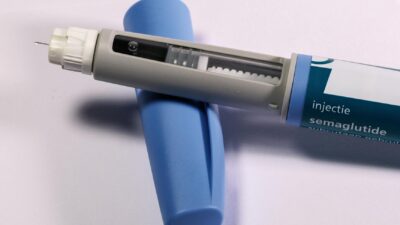
100 units of semaglutide on a U-100 insulin syringe equals 1.0 mL of volume — the full capacity of a standard 1 mL insulin syringe. The mg dose at 100 units depends entirely on the vial concentration: 2.5 mg at 2.5 mg/mL, 5.0 mg at 5 mg/mL, or 10 mg at 10 mg/mL. The 2.5 mg dose closely matches the maximum FDA-approved Wegovy maintenance dose; doses at 5 mg or above are well outside any approved use.
The MG Conversion by Concentration
| Vial Concentration | 100 units = mL | 100 units = MG | Comparison to Wegovy max (2.4 mg) |
|---|---|---|---|
| 1 mg/mL | 1.0 mL | 1.0 mg | Below maintenance dose |
| 2.5 mg/mL | 1.0 mL | 2.5 mg | Approximately maintenance dose |
| 5 mg/mL | 1.0 mL | 5.0 mg | ~2x maximum approved dose |
| 10 mg/mL | 1.0 mL | 10 mg | ~4x maximum approved dose |
Why 2.5 MG Is Notable
The maximum FDA-approved Wegovy dose is 2.4 mg weekly. The 2.5 mg dose at 2.5 mg/mL concentration with 100 units volume is a common configuration in compounded semaglutide because it approximates the maximum Wegovy dose using easy round numbers (full syringe, simple concentration).
Some compounding pharmacies and prescribers use this approach to make dose calculation simpler at the maintenance dose phase. Whether 2.5 mg is meaningfully different from 2.4 mg clinically is debatable; the difference is within typical dose-to-effect variability.
Why Higher Concentrations Create Risk
At 5 mg/mL concentration, drawing 100 units delivers 5.0 mg — approximately twice the maximum approved semaglutide dose. At 10 mg/mL, 100 units delivers 10 mg — four times the maximum approved dose.
Symptoms of semaglutide overdose:
- Severe persistent nausea and vomiting
- Dehydration leading to acute kidney injury
- Severe abdominal pain (possible pancreatitis)
- Hypoglycemia (especially if combined with insulin or sulfonylureas)
- Dizziness, confusion, weakness
If you suspect an overdose, contact poison control (1-800-222-1222 in the US) or seek emergency medical attention.
How to Verify Before Drawing 100 Units
Before drawing a 100-unit dose, confirm:
- Your prescription specifies this dose in mg. Get the prescription in mg, then calculate units based on your vial concentration.
- Your vial concentration is what you think it is. Read the label every time, especially after refills.
- The math checks out. Concentration (mg/mL) × volume (mL) = mg dose. 100 units × your concentration ÷ 100 = your mg dose.
- The mg dose is within FDA-approved range. Maximum approved is 2.4 mg for Wegovy weight-loss; 2 mg for Ozempic diabetes.
- Your prescriber confirmed this specific dose. Communicate dose changes in BOTH mg and units.
If You Need More Than 100 Units
For compounded semaglutide at lower concentrations (1 mg/mL), reaching the maintenance dose may require more than 100 units, which exceeds the capacity of a standard 1 mL insulin syringe. Options:
- Use a 3 mL syringe (typically marked in tenths of mL rather than units)
- Switch to a higher concentration vial (your pharmacy can typically accommodate)
- Use brand-name pens which deliver the dose pre-measured in a single injection
Splitting the dose across two injections is rarely appropriate — most semaglutide dosing protocols assume single weekly injection. Discuss with your prescriber and pharmacist before changing injection technique.
Filling a 100-Unit Dose
Steps for drawing the full 100 units (using a standard 1 mL U-100 insulin syringe):
- Wash hands and prepare clean work surface
- Wipe vial rubber stopper with alcohol pad
- Pull syringe plunger to 100 units while needle is in air
- Insert needle through vial rubber stopper
- Push plunger to inject all air into vial
- Invert vial and slowly pull plunger back to 100 units (the maximum mark)
- Tap gently to remove air bubbles, then ensure exactly 100 units
- Withdraw needle, prepare injection site, inject subcutaneously
The full 100-unit volume is at the maximum capacity of the syringe; some users find it easier to use a 3 mL syringe for this volume because there’s less concern about overshooting.
Comparison to Brand-Name Wegovy Maximum
The maximum-dose Wegovy pen (2.4 mg) delivers its dose in approximately 0.75 mL of solution. The pen automates this; you don’t see or measure the volume. The compounded equivalent at 100 units / 2.5 mg / 2.5 mg/mL is a slightly larger volume and uses a vial-and-syringe rather than a pen.
The Bottom Line
100 units of semaglutide on a U-100 insulin syringe is always 1.0 mL of volume. The mg dose depends entirely on the vial concentration: 2.5 mg at 2.5 mg/mL closely matches the maximum approved Wegovy dose, while 5.0 mg or 10 mg at higher concentrations would be dangerous overdoses. Always verify concentration before drawing this volume. Confirm with your prescriber that the dose is appropriate for your situation. For more on GLP-1 treatment options, see our hub.