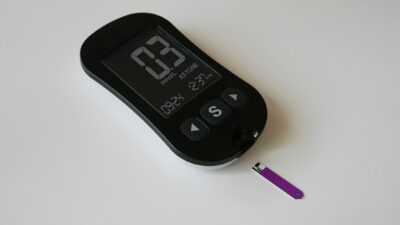
The Dexcom G7 15-day sensor is an FDA-cleared continuous glucose monitor (CGM) that extends sensor wear time from 10 days to 15.5 days for adults age 18 and older. It uses the same app, receiver, and transmitter as the original G7, so current users can switch without buying new hardware. The extended wear time reduces the number of sensor changes per year by about one-third.
What Is New About the 15-Day G7
The original Dexcom G7, launched in 2023, already set a high bar for CGM accuracy and comfort. The 15-day version keeps the same physical design — a small, one-piece disc worn on the upper arm or upper buttocks in children — but adds firmware and chemistry updates that stabilize the sensor filament for a longer wear period. Dexcom received FDA 510(k) clearance in 2025 after submitting data from a pivotal accuracy study in adults with type 1 and type 2 diabetes.
For people already managing prediabetes or early type 2 diabetes, the longer sensor life means fewer interruptions in data and less skin real estate used per month. For insulin users, it means fewer gaps in automated pump delivery.
Accuracy: MARD and Real-World Performance
Accuracy for CGMs is measured by mean absolute relative difference (MARD) — the average percentage error between the sensor and a lab reference. Lower is better, and anything under 10% is considered clinically reliable.
| Sensor | Overall MARD | Wear Time | Approved Ages |
|---|---|---|---|
| Dexcom G7 (10-day) | ~8.2% | 10 days + 12 hr grace | 2 and older |
| Dexcom G7 15-day | ~8.0% | 15 days + 12 hr grace | 18 and older |
| FreeStyle Libre 3 Plus | ~8.2% | 15 days | 2 and older |
| Medtronic Guardian 4 | ~10.6% | 7 days | 7 and older |
The 15-day G7 maintains tight accuracy across the full wear period, with slightly lower error in the hypoglycemic range (below 70 mg/dL) compared with the 10-day sensor. According to Dexcom’s submitted clinical data, fewer than 1% of readings exceed a 20% error at any point during the 15-day wear window.
Who Can Use the 15-Day Sensor
FDA clearance restricts the 15-day G7 to adults age 18 and older with either type 1 or type 2 diabetes. Children and adolescents ages 2 through 17 should stay on the 10-day G7, which has an identical accuracy profile and was specifically validated in pediatric cohorts.
Pregnant users, people on dialysis, and those with critical illness should discuss CGM selection with their care team. Dexcom has not submitted separate 15-day validation data for these populations, although the 10-day G7 carries pregnancy indications in many countries.
How the 15-Day G7 Fits Into Diabetes Management
CGM data changes how you interact with food, exercise, and medication. Seeing a post-meal spike of 220 mg/dL in real time is a much stronger behavioral signal than a single fingerstick two hours later. That feedback loop is one reason CGMs reduce A1C by roughly 0.3-0.6 percentage points in adults with type 2 diabetes, according to randomized trials cited by the American Diabetes Association.
If you want a primer on how A1C relates to glucose averages, see our guide to A1C levels and how to interpret them alongside CGM output.
Typical Use Cases
- Adults on basal-bolus insulin: The 15-day wear pairs with Tandem t:slim X2 Control-IQ and Omnipod 5 for automated insulin delivery.
- Type 2 diabetes on oral meds: Intermittent CGM use (one 15-day sensor every few months) can identify hidden post-meal spikes.
- Adults with prediabetes: Off-label wellness use is common; check with your clinician and insurer because this is usually out-of-pocket.
- Gestational diabetes: Many obstetric teams use the 10-day G7 instead, pending more pregnancy-specific data on the 15-day version.
Setting Up and Wearing the Sensor
The physical insertion is identical to the 10-day G7. Clean the upper arm with alcohol, let it dry, press the applicator firmly, and push the button. A 30-minute warm-up period follows, then the sensor streams glucose data to the Dexcom G7 app or receiver every 5 minutes.
The built-in 12-hour grace period at the end of sensor life lets you schedule changes at a convenient time — for example, Friday morning instead of Thursday night. You can place the sensor anywhere on the back of the upper arm; rotate sites to reduce skin irritation. Adhesive overlay patches from the manufacturer extend wear in people who sweat heavily or swim frequently.
Cost and Insurance Considerations
Dexcom has positioned the 15-day G7 at the same monthly price as the 10-day version, with the longer wear translating to fewer sensor shipments per quarter. Medicare Part B covers CGMs for anyone on insulin and for people with problematic hypoglycemia, and most commercial plans cover CGM with a prescription from your diabetes care team. Ask your pharmacy whether the 15-day SKU is in stock, since inventory may lag the FDA announcement.
Limitations and Safety Notes
No sensor is perfect. The Dexcom G7 15-day sensor still requires a fingerstick confirmation when symptoms do not match the reading, during the first few hours after insertion if readings seem unstable, and before dosing insulin if the arrow is changing rapidly. Acetaminophen above 1,000 mg every 6 hours can still cause mild interference. Hydroxyurea remains a contraindication because it causes falsely high readings.
Skin reactions to the adhesive occur in a small percentage of users. Over-the-counter barrier wipes (Skin Tac, IV Prep) or a thin layer of topical steroid cream applied before insertion can reduce irritation. If a rash persists, ask your clinician about switching sensor sites or trialing the FreeStyle Libre 3 Plus, which uses a different adhesive.
The Bottom Line
The Dexcom G7 15-day sensor is an incremental but meaningful upgrade: same accuracy, same app, same pump compatibility, but 50% longer wear. For adults 18 and older, it reduces sensor changes, simplifies supply logistics, and may lower annual out-of-pocket costs. Children should stay on the 10-day G7, and anyone considering a switch should talk with the clinician who manages their insulin or oral therapy so the prescription is updated correctly.
For more on CGMs and how they fit into a broader diabetes plan, explore our treatment overview and read about whether prediabetes is reversible with early intervention. Always review new devices and prescriptions with your doctor before making a change.
Sources
- U.S. Food and Drug Administration. Dexcom G7 15-Day CGM System 510(k) clearance letter, 2025.
- American Diabetes Association. Standards of Care in Diabetes 2025 — Diabetes Technology.
- Dexcom, Inc. G7 CGM System clinical performance data.
- Centers for Disease Control and Prevention. Continuous Glucose Monitoring.