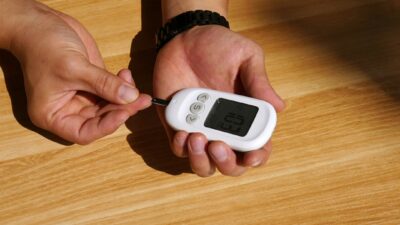
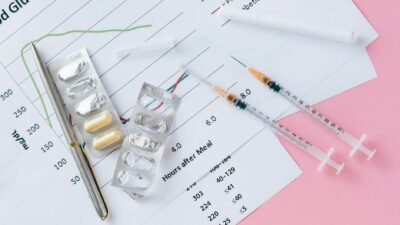
The honeymoon period in type 1 diabetes is the phase after diagnosis when residual pancreatic beta-cell function provides some endogenous insulin, reducing exogenous insulin needs. About 80 to 90 percent of newly diagnosed people enter a honeymoon, which typically lasts weeks to about 2 years. Daily insulin requirements often drop below 0.5 units per kilogram per day; some children temporarily need almost no insulin. Continuing therapy during honeymoon is essential — it preserves residual beta-cell function. The phase is not a misdiagnosis or cure; eventual complete beta-cell failure is the rule.
Definition
- Partial clinical remission after T1D diagnosis
- Total daily insulin dose <0.5 units/kg/day with A1C <7 percent
- Also called “partial remission phase”
- Driven by residual beta-cell function — autoimmune destruction is incomplete at diagnosis
- Most patients still produce small amounts of insulin (detectable C-peptide) for months to years
How Common Is It?
- About 80–90 percent of newly diagnosed people enter a honeymoon
- More common in older children and adults at diagnosis
- Less common in very young children (under 5) — they tend to have more aggressive autoimmune destruction
- Less common when DKA is present at diagnosis — beta-cell loss is more advanced
Typical Duration
| Duration | Frequency |
|---|---|
| No honeymoon | ~10–20% |
| Less than 3 months | ~20% |
| 3–12 months | ~40% |
| 1–2 years | ~25% |
| More than 2 years | ~5–10% |
Median duration is about 6 to 12 months. Reports of multi-year honeymoons exist but are uncommon.
Predictors of Longer Honeymoon
- Older age at diagnosis (adults > teens > school-age > preschool)
- Higher BMI at diagnosis
- Lower A1C at diagnosis
- Absence of diabetic ketoacidosis at presentation
- Fewer or lower-titer autoantibodies
- Earlier diagnosis (detected at Stage 1–2 via screening, before symptomatic Stage 3)
- Higher C-peptide at diagnosis
- Possibly: less severe initial inflammatory milieu, certain HLA types
What Happens Physiologically
- At T1D diagnosis, about 10–30 percent of beta cells typically remain functional
- Exogenous insulin “rests” these cells by lowering glucose toxicity and metabolic demand
- Residual cells recover partially and start producing insulin more effectively
- Insulin needs from injections drop
- Over time, ongoing autoimmune destruction kills the remaining beta cells
- Eventually, residual function falls below clinically meaningful levels and exogenous insulin must rise
Clinical Signs of Honeymoon
- Insulin requirements drop dramatically in the weeks after diagnosis
- Frequent hypoglycemia if insulin doses are not reduced
- Stable, predictable glucose patterns
- A1C reaches normal or near-normal range easily
- Detectable fasting and stimulated C-peptide
- Occasional days where almost no exogenous insulin seems needed
Why You Should Not Stop Insulin
This is the most important counterintuitive point about the honeymoon:
- Continued exogenous insulin reduces metabolic stress on residual beta cells
- This appears to slow ongoing autoimmune destruction in some studies
- Stopping insulin allows glucose to rise — glucose toxicity then accelerates beta-cell loss
- Most trials of insulin continuation show longer C-peptide preservation than insulin discontinuation
- Families who interpret honeymoon as “cure” and stop insulin often see rapid honeymoon end with significant DKA risk
Typical practice is to continue both basal and bolus insulin even at very low doses, never stopping entirely. Doses may drop to 0.1–0.3 u/kg/day total during the deepest honeymoon.
Therapies Being Studied to Preserve Honeymoon
| Therapy | Mechanism | Status |
|---|---|---|
| Teplizumab (Tzield) | Anti-CD3 antibody; T-cell modulation | FDA-approved 2022 for Stage 2 delay; PROTECT trial in Stage 3 newly diagnosed showed slower C-peptide decline |
| Verapamil | Calcium channel blocker; reduces beta-cell stress | Phase 2 trials show C-peptide preservation; ongoing |
| Anti-thymocyte globulin (low-dose) | T-cell depletion | Modest C-peptide preservation in trials |
| Rituximab | Anti-CD20; B-cell depletion | Modest, transient C-peptide preservation |
| Abatacept | T-cell costimulation blocker | Modest C-peptide preservation |
| GAD-alum vaccine | Antigen-specific tolerance | Some HLA-DR3-DQ2 subgroup benefit |
| Vitamin D, omega-3, IL-2 | Various | Weaker evidence; some trials ongoing |
Teplizumab — The First Approved Disease-Modifying Therapy
- FDA approved November 2022 for Stage 2 T1D (positive autoantibodies + dysglycemia) in patients ≥8 years
- Delays progression to clinical (Stage 3) disease by median ~2 years (some patients much longer)
- Single 14-day IV infusion course
- Common side effects — rash, lymphopenia, cytokine release symptoms
- The PROTECT trial in newly diagnosed Stage 3 patients (typical “honeymoon” population) showed slower C-peptide decline at 78 weeks
- Cost and infusion logistics limit access; insurance navigation is an evolving challenge
- Screening of relatives via TrialNet identifies candidates
Emotional Impact on Families
- Relief and confusion — “Did the doctors get it wrong?”
- Hope that the disease might resolve
- Reluctance to continue rigorous management
- Disappointment when honeymoon ends
- The “second diagnosis” — when insulin requirements rise sharply and management feels harder
- Adolescents may seize on honeymoon to skip doses, leading to DKA
- Mental health screening is appropriate throughout
How to Manage During Honeymoon
- Continue insulin at the lowest dose that maintains good control
- Reduce doses progressively to prevent hypoglycemia
- CGM strongly recommended to detect lows and pattern shifts
- Frequent diabetes visits — every 1–3 months
- Family education on what honeymoon is and is not
- Anticipate the end — recognize signs of rising insulin requirements
- Maintain all routine care — eye, kidney, lipid, thyroid, celiac screening per ISPAD/ADA
- Discuss clinical trials if interested in disease-modifying therapy
Signs the Honeymoon Is Ending
- Rising A1C despite stable doses
- Larger post-meal glucose spikes
- Need for higher correction doses
- Less stable overnight glucose
- Insulin needs creeping above 0.5 u/kg/day
- Falling C-peptide (if measured)
- Increased ketones with mild illness
End is usually gradual over weeks to months — not abrupt. As beta-cell function fails, exogenous insulin dose rises to replace what the body no longer makes.
Special Considerations in Adults — LADA
Latent autoimmune diabetes of adults (LADA) is type 1 diabetes presenting in adulthood, often mistaken for type 2. LADA has a particularly long honeymoon — sometimes years — because beta-cell destruction is slower. Indicators:
- Adult-onset (often 30–60 years)
- Lean phenotype, no metabolic syndrome features
- Initial control on oral agents, but they fail within 1–6 years
- Positive autoantibodies (especially anti-GAD)
- Low C-peptide eventually
LADA patients benefit from early insulin and avoidance of beta-cell-stressing agents like sulfonylureas.
What the Honeymoon Is NOT
- NOT a misdiagnosis — the autoimmune process is real and ongoing
- NOT a cure — beta cells will eventually fail
- NOT a reason to stop insulin — that accelerates the end
- NOT a sign that you can stop monitoring or visits
- NOT a guarantee of any specific duration
Side Effects and Risks During Honeymoon
- Hypoglycemia from over-dosing while beta cells still produce insulin — lower insulin doses, increase monitoring
- False sense of remission leading to non-adherence
- Psychological burden of “waiting for the other shoe to drop”
- Family conflict around treatment intensity
- Cost and complexity of disease-modifying therapy if pursued
- End-of-honeymoon adjustment with rising insulin needs and DKA risk
Related Reading
The big picture on T1D in kids is at type 1 diabetes in children. For broader pediatric management framework, see pediatric diabetes management and school management for pediatric diabetes. For broader symptom recognition see our overview of symptoms of prediabetes.
The Bottom Line
The honeymoon period in type 1 diabetes is the phase after diagnosis when residual beta-cell function reduces exogenous insulin needs — typically lasting weeks to about 2 years with median 6 to 12 months. About 80 to 90 percent of newly diagnosed people experience one. Predictors of longer honeymoon include older age at diagnosis, higher BMI, lower A1C, and absence of DKA. Continue insulin throughout honeymoon — stopping accelerates beta-cell loss. New therapies like teplizumab can delay onset in Stage 2 and may preserve function in Stage 3. The honeymoon is not a cure or misdiagnosis — complete beta-cell failure is the eventual rule, and ongoing care prevents DKA at the transition. Talk to your child’s endocrinology team about clinical trial options if you are interested in disease-modifying therapy and what to expect as the honeymoon progresses.