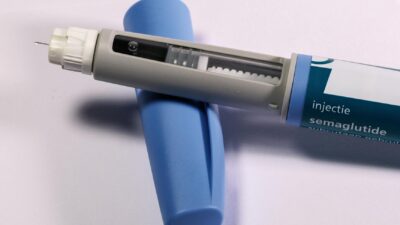
Semaglutide is pronounced sem-uh-GLOO-tide, with the emphasis on the third syllable. The drug is sold under three brand names in the United States: Ozempic (oh-ZEM-pik) for type 2 diabetes, Wegovy (WEE-goh-vee) for weight loss, and Rybelsus (ry-BEL-sus) for oral type 2 diabetes treatment. All three brand names are owned by Novo Nordisk and contain the same active ingredient — semaglutide.
Syllable-by-Syllable Breakdown
| Syllable | Phonetic | Rhymes with | Stress |
|---|---|---|---|
| sem | /sɛm/ | gem, hem, them | Unstressed |
| uh | /ə/ (schwa) | the “uh” in “about” | Unstressed |
| GLOO | /gluː/ | glue, blue, true | Primary stress |
| tide | /taɪd/ | ride, tide, hide | Secondary stress |
Saying it slowly: “sem” + “uh” + “GLOO” (loud) + “tide” → sem-uh-GLOO-tide.
Common Mispronunciations
Several incorrect versions are common:
- sem-AG-loo-tide — wrong stress (on second syllable instead of third)
- se-MAH-gloo-tide — wrong pronunciation of second syllable (“MAH” instead of schwa)
- sem-uh-gloo-TIDE — wrong stress (on fourth syllable instead of third)
- SEM-uh-glue-tide — overly stressed first syllable
The official pronunciation puts primary stress on “GLOO” — the third syllable.
Why the “-Glutide” Suffix?
The suffix “-glutide” is a drug-class identifier maintained by the World Health Organization International Nonproprietary Names (INN) Programme. All drugs in the GLP-1 receptor agonist class use this suffix. Examples:
| Generic Name | Pronunciation | Brand Name(s) |
|---|---|---|
| liraglutide | lir-AG-loo-tide | Victoza, Saxenda |
| dulaglutide | doo-la-GLOO-tide | Trulicity |
| semaglutide | sem-uh-GLOO-tide | Ozempic, Wegovy, Rybelsus |
| exenatide | ex-EN-uh-tide | Byetta, Bydureon |
| tirzepatide | tir-ZEP-uh-tide | Mounjaro, Zepbound (dual GIP/GLP-1) |
Note: tirzepatide uses “-tide” but the “-zep-” infix identifies it as a dual GIP/GLP-1 agonist rather than a pure GLP-1 receptor agonist.
Brand Name Pronunciations
Ozempic — oh-ZEM-pik (3 syllables, stress on second):
- “oh” like the letter O
- “ZEM” stressed, like “Zen” with M ending
- “pik” like the word “pick”
Wegovy — WEE-goh-vee (3 syllables, stress on first):
- “WEE” stressed, like the word “we”
- “goh” like the word “go”
- “vee” like the letter V
Rybelsus — ry-BEL-sus (3 syllables, stress on second):
- “ry” like “rye” (the bread)
- “BEL” stressed, like the word “bell”
- “sus” like “suss”
Why Pronunciation Matters
Pharmacists, prescribers, and patients communicate about medications verbally, and similar-sounding names can be confused with one another. Clear pronunciation reduces the risk of:
- Verbal prescription errors (e.g., confusing semaglutide with similar-sounding peptides)
- Patient confusion at pharmacy pickup
- Telemedicine mishearings during virtual consultations
- Misunderstandings at urgent care or emergency visits
If you’re discussing semaglutide with a healthcare provider for the first time, you can either pronounce it correctly or simply say the brand name (Ozempic, Wegovy, Rybelsus) — both work.
Where the Name Comes From
The name “semaglutide” was created through the World Health Organization International Nonproprietary Names (INN) system, which assigns standardized generic names to new medications worldwide. The components break down as follows:
- “sema-“ — molecule-specific prefix unique to this drug, derived to distinguish it from other GLP-1 receptor agonists in development
- “-glu-“ — references “glucagon-like” peptide, indicating the drug class
- “-tide” — standard INN suffix for peptide-based medications
The naming convention allows medical professionals worldwide to identify the drug class and approximate mechanism just from the name. Future GLP-1 drugs will follow similar conventions: triple-agonist retatrutide (re-ta-TRU-tide) uses the same “-tide” suffix; tirzepatide (tir-ZEP-uh-tide) uses “-tide” while the “-zep-” infix identifies it as a different incretin agonist subclass.
Tips for Medical Conversations
Beyond pronunciation, a few practical tips for talking about semaglutide with healthcare providers:
- Always carry a current medication list with your prescriptions, including brand and generic names
- Mention any related drugs (Ozempic, Wegovy, Rybelsus) you’ve previously tried
- Note your current dose in mg, not just units (especially important for compounded versions)
- Tell providers about compounded vs brand-name versions — they’re treated similarly clinically but have different regulatory considerations
- Bring questions written down so you don’t rely on memory when discussing the drug
Quick Audio Reference Tips
If you’re unsure how to pronounce it during a conversation:
- Say the brand name instead (Ozempic, Wegovy, Rybelsus are all easier)
- Spell it: “s-e-m-a-g-l-u-t-i-d-e”
- Type the name during virtual visits using the chat function
- Ask the provider: “How do you pronounce it?” — this is a normal question
Healthcare providers are accustomed to patients mispronouncing complex drug names and won’t judge you for asking.
The Bottom Line
Semaglutide is pronounced sem-uh-GLOO-tide with emphasis on the third syllable. The brand names are Ozempic (oh-ZEM-pik), Wegovy (WEE-goh-vee), and Rybelsus (ry-BEL-sus). All three contain the same active ingredient. The “-glutide” suffix identifies the drug class (GLP-1 receptor agonists). When in doubt, use the brand name or simply spell it out. Consult your prescriber or pharmacist for any questions about your medication. For more on GLP-1 treatment options, see our hub.