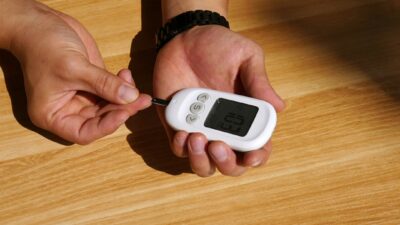
Type 2 diabetes in children is rising rapidly — now about 5 to 10 percent of new pediatric diabetes cases versus essentially zero a generation ago. It is concentrated in adolescents with obesity and disproportionately affects Black, Hispanic, Native American, and Asian American/Pacific Islander youth. The landmark TODAY trial showed youth-onset T2D progresses faster than adult-onset — beta-cell function fails sooner and complications appear earlier. Treatment combines metformin from age 10, GLP-1 receptor agonists (liraglutide, semaglutide), insulin when needed, and family-based lifestyle intervention. Annual complication screening begins at diagnosis.
How Common Is It?
- About 5,000–6,000 new cases of pediatric T2D diagnosed in the US each year
- Now ~5–10 percent of new pediatric diabetes cases (was nearly zero in 1990s)
- Strongly correlated with the rise in childhood obesity
- Disproportionately affects minority youth — incidence 4–5x higher in Black, Hispanic, Native American, and AAPI youth than White youth
- Female-to-male ratio about 1.7:1
- Typical age at diagnosis 12–16 years (around puberty)
Risk Factors
| Factor | Detail |
|---|---|
| Obesity | BMI ≥85th percentile or BMI ≥120% of 95th percentile |
| Family history | First- or second-degree relative with T2D |
| Race/ethnicity | Black, Hispanic, Native American, AAPI |
| Maternal diabetes during gestation | Including gestational diabetes |
| Acanthosis nigricans | Dark, velvety skin in neck folds and axillae |
| PCOS | In adolescent girls |
| Birth weight | Both small and large for gestational age |
| Hypertension or dyslipidemia | Increases prior probability |
ADA recommends screening for T2D starting at age 10 (or onset of puberty if earlier) in children who are overweight/obese with at least one additional risk factor, repeated every 3 years.
Presentation
- Often asymptomatic — found on screening
- Polyuria, polydipsia in more advanced cases
- Weight loss is uncommon unless severe hyperglycemia (in contrast to T1D)
- Fatigue, blurred vision
- Acanthosis nigricans on neck, axilla
- About 5–25 percent present in DKA (less than T1D’s ~30 percent, but still substantial)
- Hyperosmolar hyperglycemic state (HHS) — rare but reported, more severe than DKA
Distinguishing T2D from T1D in Children
| Feature | T1D | T2D |
|---|---|---|
| Typical age | 4–14 years | 12–18 years |
| Weight | Lean or weight loss | Overweight/obese |
| Onset | Acute (weeks) | Gradual (months) |
| Autoantibodies | Positive (GAD, IA2, ZnT8, IAA) | Negative |
| C-peptide | Low or undetectable | Normal or elevated |
| Family history of T2D | Variable | Often strong |
| Acanthosis nigricans | Absent | Common |
| DKA at diagnosis | ~30% | ~5–25% |
Up to 20 percent of children with apparent T2D have detectable autoantibodies — sometimes called “double diabetes” or autoimmune T2D. These children progress to insulin dependence faster.
The TODAY Trial — Key Lessons
TODAY (Treatment Options for type 2 Diabetes in Adolescents and Youth) was the landmark NIH trial published 2012:
- Enrolled 699 children aged 10–17 with recently diagnosed T2D
- Randomized to metformin alone, metformin + rosiglitazone, or metformin + intensive lifestyle
- Primary endpoint was glycemic failure (A1C >8 sustained, or need for insulin)
- Failure rate was high in all arms — about 46 percent overall by ~4 years
- Metformin alone had 52 percent failure; metformin + rosiglitazone 39 percent; metformin + lifestyle 47 percent
- Hispanic youth had highest failure rate
- Showed clearly that youth-onset T2D progresses faster than adult-onset
The TODAY2 follow-up showed by age 26 (about 15 years from diagnosis): 67 percent had hypertension, 80 percent dyslipidemia, 55 percent kidney disease, 51 percent neuropathy, 32 percent eye disease. These rates are dramatically higher than expected from comparable adult-onset cohorts.
Treatment Options
| Class | Drug | FDA Pediatric Approval | Notes |
|---|---|---|---|
| Biguanide | Metformin | ≥10 y | First-line; up to 2000 mg/day; renal dose adjust |
| GLP-1 RA | Liraglutide (Victoza) | ≥10 y for T2D | Daily injection |
| GLP-1 RA | Liraglutide (Saxenda) | ≥12 y for obesity | Higher dose for weight |
| GLP-1 RA | Semaglutide (Wegovy) | ≥12 y for obesity | Once weekly |
| GLP-1 RA | Exenatide ER (Bydureon BCise) | ≥10 y for T2D | Once weekly |
| SGLT2 inhibitor | Empagliflozin (Jardiance) | ≥10 y for T2D | Once daily |
| SGLT2 inhibitor | Dapagliflozin (Farxiga) | ≥10 y for T2D | Once daily |
| Insulin | Basal, mealtime | All ages | Used when oral/injectable non-insulin fails or A1C >8.5 at diagnosis |
Treatment Algorithm
- At diagnosis, A1C 6.5–8.5%, no acidosis or significant ketosis → start metformin + lifestyle
- A1C 8.5–9% or symptomatic → start metformin + basal insulin (then titrate insulin down as glucose improves)
- A1C ≥9% with significant ketosis or DKA → manage acute, then dual therapy
- Failure to reach A1C target on metformin alone after 3 months → add GLP-1 RA (preferred) or SGLT2 inhibitor or basal insulin
- Continued failure → intensify with combinations including insulin
- Lifestyle is the substrate at every stage — not a backup
Family-Based Lifestyle Intervention
- Whole-household changes — not just the child
- Reduce sugar-sweetened beverages (single highest-yield change)
- Increase vegetables, lean protein, whole grains
- Limit fast food and ultra-processed foods
- 60 minutes daily physical activity
- Limit screen time to <2 hours of recreational use
- Family meals together when possible
- Adequate sleep (8–10 hours by age)
- Cultural sensitivity in food counseling — adapt to family cuisine, not replace it
- Address food access, cost, time, and parental work patterns
- See our diet and nutrition overview for foundational principles
Bariatric Surgery in Adolescents
Increasingly used for severe pediatric obesity with T2D:
- Sleeve gastrectomy and Roux-en-Y are the main procedures
- Criteria typically include BMI ≥35 with comorbidities or BMI ≥40
- Teen-LABS data show T2D remission rates of about 90 percent at 3 years post-surgery in adolescents — substantially higher than in adults
- Long-term nutritional monitoring required
- Multidisciplinary team — surgeon, endocrinologist, dietitian, mental health
Complication Screening at Diagnosis
Unlike T1D, complications can be present at T2D diagnosis. ADA recommends:
- Dilated eye exam at diagnosis, then annually
- Urine albumin-to-creatinine ratio at diagnosis, then annually
- Lipid panel at diagnosis
- Blood pressure at every visit
- Foot exam annually
- Liver function tests (NAFLD is common in pediatric T2D)
- OSA screening if symptoms or severe obesity
- Mental health screening
- PCOS evaluation in girls
Mental Health and Social Considerations
- Depression rates ~25 percent in pediatric T2D — higher than T1D in some studies
- Stigma around weight and diabetes
- Treatment fatigue and adherence challenges
- Family stress and financial burden
- Disordered eating screening
- Routine mental health screening built into diabetes care
Transition to Adult Care
Youth-onset T2D patients have particularly poor outcomes when transitioning from pediatric to adult care:
- Higher dropout rates from care
- Pregnancy planning (especially given higher rates in adolescent girls)
- Continuity of medication, monitoring, complication screening
- Structured transition planning starting around age 14–16
Side Effects of Treatment
- Metformin — GI upset (manage with ER, titration); B12 deficiency long-term
- GLP-1 RAs — nausea, vomiting; rare pancreatitis; gallbladder issues
- SGLT2 inhibitors — genital fungal infections; risk of euglycemic DKA
- Insulin — hypoglycemia, weight gain
- All — psychosocial burden, school disruption, cost
Related Reading
For comparison, see type 1 diabetes in children. The broader management framework is at pediatric diabetes management, school logistics at school management for pediatric diabetes. See also our is prediabetes reversible page for prevention principles relevant to at-risk youth.
The Bottom Line
Type 2 diabetes in children is increasingly common — about 5 to 10 percent of new pediatric diabetes — and behaves more aggressively than adult-onset T2D. The TODAY trial showed roughly half of youth fail glycemic control within 4 years and complications develop early. Treatment combines metformin (FDA approved from age 10) with GLP-1 receptor agonists, SGLT2 inhibitors, and insulin when needed. Family-based lifestyle intervention is foundational and culturally adapted. Complication screening starts at diagnosis. Bariatric surgery is a powerful option for severe obesity with T2D. Talk to your child’s care team about appropriate medication combinations, family lifestyle plans, mental health support, and timing of complication screening.