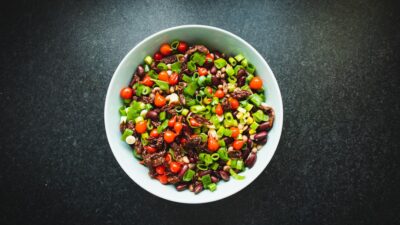
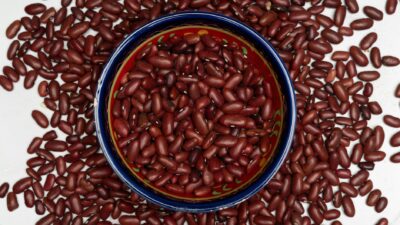
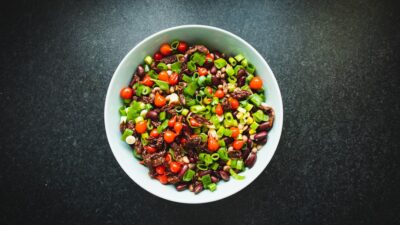
Black beans are one of the most diabetes-friendly carbohydrate foods available in mainstream US grocery stores. A half-cup cooked serving provides 20 grams of carbohydrate with 7 grams of fiber (net 13 g), 7 grams of plant protein, and a glycemic index of approximately 30 — among the lowest of any carbohydrate-containing food. Like other legumes, black beans produce a documented second-meal effect, improving glucose response at subsequent meals. The Jenkins Archives of Internal Medicine trial showed that substituting legumes for refined grains in adults with type 2 diabetes lowered A1C by 0.5 percentage points over 3 months. Black beans add a distinctive feature compared with most other beans — anthocyanin polyphenols (the same compounds found in blueberries) provide modest additional cardiovascular and antioxidant benefits.
Nutrition Profile
| Black beans form (½ cup cooked) | Calories | Carbs (g) | Fiber (g) | Protein (g) | Glycemic Index |
|---|---|---|---|---|---|
| Cooked from dry | 114 | 20 | 7 | 7.5 | ~30 |
| Canned, drained | 109 | 20 | 8 | 7 | ~30 |
| Canned, rinsed | 109 | 20 | 8 | 7 | ~30 |
| Refried black beans | 120 | 21 | 6 | 7 | ~36 |
| Black bean soup | 118 | 20 | 7 | 8 | ~30 |
| Black bean burger (commercial) | varies | 15-25 | 5-8 | 9-15 | ~40 |
| Cooked-then-cooled (resistant starch) | 114 | 20 | 8 | 7.5 | ~25 |
Glycemic Impact
Black beans produce a flat, modest glucose response. CGM users typically see peaks 15 to 30 mg/dL above baseline with a half-cup serving. The combination of soluble fiber, resistant starch, and plant protein produces a curve that resembles a long, low hill rather than a sharp peak. In mixed meals, the second-meal effect means glucose response at the next meal is also improved — eating beans at lunch often produces a flatter dinner curve even without beans at dinner.
The Second-Meal Effect
- Black beans at one meal improve glucose response at the next meal as well.
- Mechanism: short-chain fatty acids from colonic fermentation of bean fiber improve insulin sensitivity over hours.
- Demonstrated in clinical trials where black beans at lunch produced flatter glucose curves at dinner.
- The effect generalizes across all legumes but is well-documented for black beans specifically.
- The implication: bean meals are not just locally beneficial — they shape later meals.
Anthocyanins — The Black Bean Distinction
- Black beans contain anthocyanin pigments (same as blueberries, blackberries, red cabbage).
- The pigments are concentrated in the seed coat.
- Studied for modest cardiovascular benefits — reduced LDL, improved endothelial function.
- Anti-inflammatory effects relevant for adults with type 2 diabetes.
- White, pinto, navy beans don’t contain anthocyanins.
- Modest additional benefit beyond what other beans provide; not a primary reason to choose black over kidney.
Black Beans vs Other Legumes
| Bean (½ cup cooked) | Carbs (g) | Fiber (g) | Protein (g) | Glycemic Index |
|---|---|---|---|---|
| Black beans | 20 | 7 | 7.5 | ~30 |
| Kidney beans | 20 | 6 | 7.5 | ~28 |
| Pinto beans | 22 | 7 | 7.5 | ~32 |
| Navy beans | 24 | 9 | 7.5 | ~31 |
| Lentils | 20 | 8 | 9 | ~28 |
| Chickpeas | 22 | 6 | 7 | ~28 |
| Edamame | 8 | 4 | 9 | ~15 |
Cultural Cuisines Featuring Black Beans
- Latin American: black bean soup (Cuban), feijoada (Brazilian), refried beans, black beans and rice (gallo pinto, moros y cristianos).
- Mexican: enchiladas, tacos, burritos, sopes — black beans as protein-rich filling.
- Southern American: red beans and rice tradition with black bean variants.
- Vegetarian/vegan cuisine: black bean burgers, chili, salads, dips.
- Asian cuisine: fermented black bean sauce (different bean — fermented soybeans).
Sodium Considerations
- Canned black beans: 350-500 mg sodium per half-cup serving.
- Rinsing reduces sodium by ~40% to 200-300 mg.
- Low-sodium canned versions: 100-250 mg per half-cup.
- Home-cooked from dried: essentially salt-free (add salt to taste).
- For adults with hypertension, choose low-sodium or rinse thoroughly.
- Mexican refried beans often contain substantial added salt — check labels.
Cooking Methods
- From dried: soak overnight (or quick-soak), simmer 60-90 minutes; most economical and lowest-sodium.
- Pressure cooker: no soak needed; 25-30 minutes high pressure; quickest from dried.
- Canned: rinse and drain; ready to use; convenient.
- Cuban-style: simmered with onion, garlic, bell pepper, cumin, oregano, bay leaf.
- Mexican-style: with chipotle, lime, cilantro, onion.
- Brazilian feijoada: slow-cooked with smoked meats.
- Cooled and reheated develops resistant starch — slightly lower glycemic response.
Vitamin and Mineral Profile
| Nutrient (½ cup cooked) | Amount | % Daily Value |
|---|---|---|
| Folate | 128 mcg | 32% |
| Iron | 1.8 mg | 10% |
| Magnesium | 60 mg | 14% |
| Phosphorus | 120 mg | 12% |
| Potassium | 305 mg | 6% |
| Zinc | 1 mg | 9% |
| Thiamine | 0.2 mg | 17% |
| Manganese | 0.4 mg | 17% |
Pairing Strategies
- Black beans + brown rice = complete protein with all essential amino acids.
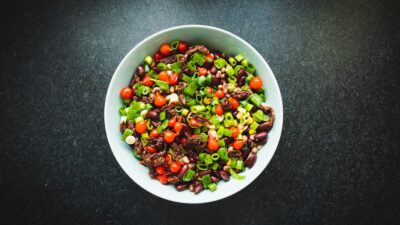
- Black bean salad with corn, peppers, tomato, lime — Mexican-style.
- Black beans in soft tacos with grilled chicken or vegetables.
- Black bean soup with chopped vegetables — warming low-calorie meal.
- Black beans in chili (turkey or beef chili with black beans, tomato).
- Black bean dip with vegetable dippers — low-carb snack.
- Black bean burgers (homemade) as a vegetarian dinner option.
The Gas Issue
- Black beans contain galacto-oligosaccharides (GOS) that ferment in the colon.
- Fermentation produces gas — particularly with sudden intake increases.
- Gradual introduction over 2-3 weeks allows microbiome adaptation.
- Soaking dried beans and discarding the soak water reduces GOS.
- Rinsing canned beans helps modestly.
- Cooking with carminative herbs (cumin, fennel, ginger, kombu seaweed) helps some people.
- Bean-O (alpha-galactosidase) can be taken before meals.
- For most adults, the gas issue resolves with regular consumption over 2-3 weeks.
Who Should Be Careful
- People with IBS — beans can trigger symptoms; gradual introduction or low-FODMAP alternatives.
- People with chronic kidney disease — moderate potassium and phosphorus; discuss with renal dietitian.
- People with gout — beans are moderate-purine; modest portions usually fine.
- People on warfarin — beans contain modest vitamin K; maintain consistent intake.
- People prone to digestive symptoms — start with small portions.
Practical Daily Strategies
- Keep cans of low-sodium black beans in the pantry as default protein-rich food.
- Batch-cook 1 cup dried beans on Sunday — yields about 3 cups cooked for the week.
- Use in 2-3 meals per week: black bean soup, taco filling, salads, chili.
- Pair with brown rice or quinoa for complete plant protein.
- Substitute black beans for half the meat in chili, tacos, or burritos for plant-protein boost.
- Rinse canned beans to reduce sodium.
- Track CGM responses — most adults see flat curves with bean meals.
The Bottom Line
Black beans are one of the most diabetes-friendly carbohydrate foods available. A half-cup cooked serving provides 20 g carbohydrate with 7 g fiber (net 13 g), 7 g plant protein, and a glycemic index of approximately 30 — among the lowest of any carbohydrate-containing food. The Jenkins Archives of Internal Medicine trial showed substituting legumes for refined grains lowered A1C by 0.5 percentage points over 3 months. Black beans also produce the documented second-meal effect: glucose response at later meals is improved. The anthocyanin polyphenols (same compounds as blueberries) add modest cardiovascular benefits not found in white, pinto, or navy beans. Canned beans are convenient and nutritionally equivalent to home-cooked; rinsing reduces sodium by ~40%. Pairing black beans with brown rice produces complete plant protein. The gas issue resolves with gradual introduction over 2-3 weeks. For adults with type 2 diabetes who tolerate beans, 2-3 servings per week is a low-effort, evidence-supported addition to a meal plan. See our broader diabetes diet guide for the framework on legume consumption.