Does peanut butter raise blood sugar? Pure peanut butter has a minimal effect on blood sugar — its glycemic index is about 14, it contains only 3 grams of net carbs per 2 tablespoons, and its high fat and protein content slow digestion. Sweetened or hydrogenated commercial peanut butters with added sugar are a different story and can produce a measurable rise. For most people with diabetes or prediabetes, a 1 to 2 tablespoon serving of natural peanut butter is one of the most blood-sugar-friendly snacks available and can even blunt the spike from other carb-containing foods when paired together.
The Numbers: Carbs, GI, and Glucose Impact
| Type | Serving | Total Carbs (g) | Fiber (g) | Net Carbs (g) | Sugar (g) | GI | GL |
|---|---|---|---|---|---|---|---|
| Natural peanut butter (peanuts, salt only) | 2 tbsp | 6 | 2 | 4 | 1 | 14 | 1 |
| Regular Jif/Skippy peanut butter | 2 tbsp | 8 | 2 | 6 | 3 | 14-20 | 1-2 |
| Reduced fat peanut butter | 2 tbsp | 15 | 2 | 13 | 4 | 25-32 | 3-4 |
| Powdered peanut butter (PB2) | 2 tbsp | 5 | 2 | 3 | 1 | 14-20 | 1 |
| Honey-roasted peanut butter | 2 tbsp | 10 | 2 | 8 | 5 | 25-35 | 2-3 |
| Chocolate peanut butter spread | 2 tbsp | 16 | 1 | 15 | 10 | 40-50 | 6-8 |
Why Pure Peanut Butter Has Such a Small Glucose Effect
Several characteristics combine to make natural peanut butter one of the lowest-impact foods you can eat:
- Low carbohydrate content: only 4 to 6 grams of net carbs per 2 tablespoons.
- High fat content: 16 grams of mostly monounsaturated and polyunsaturated fat per serving, which slows gastric emptying and starch digestion.
- High protein content: 7 to 8 grams per 2 tablespoons, which further slows digestion and triggers insulin response without driving large glucose changes.
- Fiber: 2 grams of fiber per serving, mostly insoluble, which adds bulk and slows transit.
- Low glycemic load: with only 1 unit of GL, peanut butter is in the lowest tier of foods for glucose impact.
Watch the Label: Added Sugar and Hydrogenated Oils
Not all peanut butter is created equal. Many popular “regular” brands add sugar, palm oil, and salt. The differences add up over time:
- Natural / no-stir natural: peanuts and salt only — the cleanest option for glucose control.
- Standard creamy (Jif, Skippy): typically contains 1 to 3 grams of added sugar plus mono- and diglycerides; still relatively low impact.
- Reduced fat: ironically often higher in carbs and sugar because fat is replaced with maltodextrin or corn syrup solids.
- Honey-roasted, chocolate-flavored, or “dessert” peanut butters: can have 5 to 12 grams of added sugar per serving — eat as an occasional treat, not a daily snack.
Look for products with 2 grams or less of sugar per serving and a short ingredient list.
Peanut Butter as a Spike Blunter
One of the most useful things about peanut butter for people managing blood sugar is its ability to blunt the glucose response from other foods when eaten together:
| Food Alone | Food + 2 tbsp PB | Approximate Spike Reduction |
|---|---|---|
| Apple (medium) | Apple + PB | 25 to 35 percent |
| Whole wheat toast (1 slice) | Toast + PB | 30 to 40 percent |
| Oatmeal (1/2 cup cooked) | Oatmeal + PB | 20 to 30 percent |
| Banana (medium) | Banana + PB | 25 to 40 percent |
| Celery sticks | Celery + PB | Minimal change (already low) |
The fat and protein in peanut butter slow gastric emptying so the carbs from the paired food digest more gradually.
Peanut Butter and Type 2 Diabetes Risk
A 16-year prospective study of 83,000 women published in JAMA found that women who consumed 5 or more tablespoons of nuts or peanut butter weekly had a 21 percent lower risk of developing type 2 diabetes compared with women who rarely ate nuts. The proposed mechanisms include:
- Magnesium content — peanuts are a top source; low magnesium status has been linked to insulin resistance.
- Monounsaturated fats may improve insulin sensitivity.
- Fiber and protein together support satiety and weight management.
- Plant polyphenols may have anti-inflammatory effects.
Portion Size Matters for Calories
Peanut butter is nutrient-dense but also calorie-dense — about 190 to 200 kcal per 2 tablespoons. Since weight management is one of the biggest levers in reversing prediabetes and managing type 2 diabetes, portion control still matters.
| Serving | Calories | Carbs | Protein |
|---|---|---|---|
| 1 tablespoon | 95 | 3 g | 4 g |
| 2 tablespoons (standard serving) | 190 | 6 g | 8 g |
| 1/4 cup (4 tbsp) | 380 | 12 g | 16 g |
| 1/2 cup (often eaten “by accident” from the jar) | 760 | 24 g | 32 g |
Practical Strategies
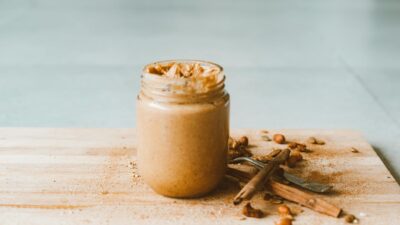
- Buy natural: peanuts and salt only; if there is a layer of oil on top, that is normal — stir it in.
- Use as a pairing tool: add 1 to 2 tablespoons to apple slices, celery, oatmeal, or whole grain toast to flatten the glucose curve.
- Measure with a tablespoon, not by eye: straight from the jar is the biggest portion-control failure.
- Try powdered peanut butter (PB2): defatted, lower calorie, useful in smoothies and oatmeal.
- Make it a snack with protein: 2 tablespoons of peanut butter with a hard boiled egg or Greek yogurt is a low-spike snack.
- Avoid honey-roasted or chocolate spreads: these belong with desserts, not staple foods.
Personal Response Testing
- Glucose response to peanut butter is usually minimal, but test to confirm.
- Try 2 tablespoons alone first — most people see less than 10 mg/dL rise at 60 minutes.
- Test peanut butter with an apple vs apple alone — the spike is typically 25 to 35 percent lower with peanut butter.
- Be aware: a few people respond to the protein in peanut butter with a delayed glucose rise (gluconeogenesis), but this is uncommon.
Related Reading
See our broader guides on diet-and-nutrition, will peanut butter lower blood sugar, and will peanut butter raise blood sugar.
For more authoritative reading on nut consumption and diabetes risk, the American Diabetes Association includes nut butters among recommended snack foods, and the CDC’s diabetes prevention materials highlight nuts and nut butters as part of a balanced eating pattern.
The Bottom Line
Pure peanut butter does not meaningfully raise blood sugar — it has a glycemic index of about 14, just 3 to 4 grams of net carbs per 2 tablespoons, and high fat and protein content that slow digestion. It can even blunt the spike from other carb foods when paired together. The caveats are real but simple: choose natural peanut butter without added sugar or hydrogenated oils, watch portion size for calorie control, and steer clear of dessert-style flavored spreads. For most people with prediabetes or type 2 diabetes, peanut butter is one of the easiest foods to fit into the daily routine.