Green beans glycemic index is very low — fresh and frozen green beans rate about 15 to 32, with a glycemic load of just 1 to 2 per cup. With only 10 grams of total carbs and 4 grams of fiber per cup cooked, green beans cause minimal change in blood sugar and rank among the safest vegetables for people with diabetes or prediabetes. They are nutritionally distinct from dried beans (kidney, black, pinto) — green beans are immature pods eaten whole and behave like a non-starchy vegetable rather than a starchy legume.
The Numbers: GI, GL, Carbs, and Fiber
| Type | GI | Carbs per 1 cup cooked (g) | Fiber (g) | Net Carbs (g) | GL | Calories |
|---|---|---|---|---|---|---|
| Green beans, fresh, steamed | 15-20 | 10 | 4 | 6 | 1 | 44 |
| Green beans, frozen, cooked | 15-25 | 9 | 4 | 5 | 1 | 40 |
| Green beans, canned (drained) | 25-32 | 8 | 3 | 5 | 1-2 | 34 |
| Green beans, raw | 15 | 7 | 3 | 4 | 1 | 31 |
| French-cut green beans (cooked) | 15-22 | 9 | 4 | 5 | 1 | 40 |
| Italian flat green beans | 15-22 | 10 | 4 | 6 | 1 | 44 |
| Yellow wax beans | 15-22 | 10 | 4 | 6 | 1 | 44 |
Why Green Beans Are Different from Dried Beans
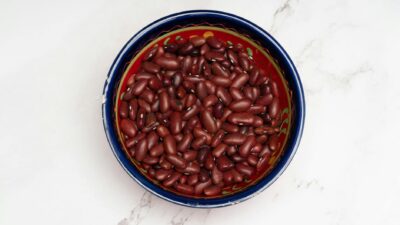
One of the most common nutrition confusions is treating green beans like dried beans (kidney, pinto, black, navy). The two are botanically related — both come from Phaseolus vulgaris — but nutritionally they are nearly opposite foods:
| Feature | Green Beans (Pods) | Dried Beans (Mature Seeds) |
|---|---|---|
| Stage of harvest | Immature, tender pod with small seeds inside | Mature, dried seeds |
| Carbs per cup cooked | 10 g | 40-45 g |
| Glycemic load | 1-2 | 7-10 |
| Calories per cup | 40-44 | 225-245 |
| Protein per cup | 2 g | 15 g |
| Food category | Non-starchy vegetable | Starchy legume / protein |
| Effect on blood sugar | Minimal | Moderate |
The takeaway: when American Diabetes Association guidance recommends “non-starchy vegetables freely and legumes in moderation,” green beans belong in the non-starchy vegetable category, not the legume category.
Nutrition Highlights
Beyond their low carb content, green beans offer meaningful nutritional value:
- Fiber: 4 g per cup cooked — soluble fiber supports gut health and slows glucose absorption.
- Vitamin K: about 20 percent of daily value per cup.
- Vitamin C: 18 percent of daily value (fresh and frozen; lower in canned).
- Folate: 10 percent of daily value.
- Manganese: 18 percent of daily value.
- Plant compounds: flavonoids, carotenoids, and chlorogenic acid have antioxidant and modest insulin-sensitizing effects.
- Low calorie: 40 to 44 kcal per cup cooked.
Fresh vs Frozen vs Canned
| Form | GI | Nutritional Notes | Best For |
|---|---|---|---|
| Fresh | 15-20 | Highest vitamin C; firmest texture; needs trimming and washing | Salads, stir-fry, side dishes |
| Frozen | 15-25 | Flash-frozen at peak ripeness; nearly equivalent to fresh; convenient | Casseroles, soups, weeknight cooking |
| Canned (low sodium) | 25-32 | Softer texture; lower vitamin C; convenient and shelf-stable | Quick meals; rinse before use |
| Canned (regular) | 25-32 | 360-400 mg sodium per cup; rinse to reduce | Quick meals when no-salt unavailable |
Cooking Methods and Their Effect on GI
- Raw (in salads): lowest GI, most vitamin C retained.
- Steamed 4 to 6 minutes: low GI; preserves color, texture, and most nutrients.
- Quick stir-fry: low GI; absorbs cooking oil for added fat that further blunts any glucose response.
- Roasted at 425 degrees F for 15 to 20 minutes: low GI; concentrates flavor; great with olive oil and lemon.
- Boiled until soft: slightly higher GI than steamed because of starch gelatinization, but the absolute glucose impact remains minimal.
- Canned and reheated: highest GI of the bunch but still very low in absolute terms.
Practical Serving and Pairing Ideas
| Meal | Carbs | Notes |
|---|---|---|
| 1 cup steamed green beans + olive oil + lemon | 6 g net | Classic Mediterranean side |
| 1 cup roasted green beans + garlic + almonds | 9 g net | Green beans almondine |
| 1 cup stir-fried green beans + chicken + ginger | 7 g net | Quick protein-vegetable meal |
| 2 cups green beans + 4 oz salmon + olive oil | 12 g net | Full low-carb dinner |
| 1 cup green beans in chicken soup | 5 g net | Bulk up brothy soups |
Practical Diabetes-Friendly Strategies
- Use as the “free” vegetable: 1 to 2 cups at lunch or dinner has minimal blood sugar impact.
- Swap higher-carb sides: replace 1/2 cup rice with 1 cup green beans to save 20 grams of carbs.
- Keep frozen in stock: always available, no spoilage, ready in 5 minutes.
- Roast with olive oil: 425 degrees F for 18 minutes — caramelization adds flavor without adding carbs.
- Add to soups and stews: volume and fiber that does not affect glucose.
- Pair with protein and fat: the combination keeps you full and stable.
- Rinse canned varieties: reduces sodium by 30 to 40 percent.
Personal Response Testing
- Most people see less than 5 to 10 mg/dL rise from 1 to 2 cups of green beans.
- If you suspect green beans are affecting glucose, test before and 60 minutes after to confirm.
- A larger rise usually indicates the pairing (rice, bread, casserole base) is the cause, not the green beans.
- Green bean casserole made with cream of mushroom soup, fried onions, and butter is a different food — check the label and ingredients.
Related Reading
See our broader guides on diet-and-nutrition, A1c levels, and beans glycemic index.
For additional authoritative information, the American Diabetes Association lists green beans among the recommended non-starchy vegetables, and the USDA FoodData Central provides detailed nutrient profiles for various preparations.
The Bottom Line
Green beans glycemic index is very low — fresh and frozen rate 15 to 25, canned slightly higher at 25 to 32, with a glycemic load of just 1 to 2 per cup. With only 4 to 6 grams of net carbs and 4 grams of fiber per cup cooked, they are a safe choice for diabetes and prediabetes and can be eaten in generous portions without meaningful blood sugar impact. Treat green beans as a non-starchy vegetable rather than a legume, prefer fresh or frozen over canned for nutrition and sodium, and use them as a high-volume side that lets you cut back on starchy carbs without feeling deprived.