Solar retinopathy is damage to the retina caused by staring at the sun, a solar eclipse, or a welding arc without proper eye protection. It is an acute photochemical and thermal injury and is unrelated to diabetes. Typical symptoms — central blurring, a persistent afterimage, or a blind spot — appear within hours and may or may not recover over months. The only reliable treatment is prevention.
How Solar Light Damages the Retina
When you look directly at the sun, the eye’s lens focuses intense visible and near-infrared light onto the fovea, the tiny central region of the retina responsible for sharp vision. Two kinds of injury happen simultaneously:
- Photochemical damage: short-wavelength blue and ultraviolet light trigger free-radical reactions inside photoreceptor cells, damaging their outer segments.
- Thermal damage: concentrated sunlight can raise the retinal temperature by 4°C or more in seconds, denaturing proteins and injuring supporting cells.
Unlike a camera sensor, the retina has no pain receptors, so the damage happens without any burning or discomfort — which is exactly why people keep looking.
Common Causes
- Unprotected eclipse viewing is the best-known cause; cases spike after every major solar eclipse.
- Sungazing as a meditative or religious practice.
- Welding arc flash — staring at an arc without a proper welding helmet produces a similar injury (also called “welder’s flash” or arc eye for the corneal version).
- Military laser exposure, laser pointers, and tanning bed lamps can produce related injuries.
- Drug or psychiatric states that involve prolonged sungazing.
Typical Symptoms
Symptoms usually appear 1 to 4 hours after exposure and may include:
- A blurred or blind spot in the center of vision (central scotoma)
- Distorted colors or a red-tinted patch
- A persistent afterimage that does not fade
- Trouble reading small print
- Sensitivity to light
- Mild eye ache or headache (not always present)
Symptoms can affect one or both eyes depending on how the exposure happened. Vision loss is usually partial rather than total.
Solar Retinopathy vs. Diabetic Retinopathy
| Feature | Solar Retinopathy | Diabetic Retinopathy |
|---|---|---|
| Cause | Direct light exposure to the sun or welding arc | Chronically elevated blood glucose damaging retinal capillaries |
| Onset | Acute — hours after exposure | Gradual — years of diabetes |
| Hallmark finding | Small foveal lesion on OCT | Microaneurysms, dot-blot hemorrhages, cotton-wool spots, neovascularization |
| Affects | Central vision (fovea) | Widespread retinal vessels |
| Typical recovery | Partial over 3 to 6 months; some permanent loss | Progressive without treatment; laser, anti-VEGF, surgery available |
| Prevention | Never view sun or welding arc unprotected | Tight glucose, blood pressure, and lipid control |
If you have diabetes and notice vision changes, the cause is far more likely diabetic retinopathy than solar retinopathy. See our guide on what is retinopathy for the broader umbrella of retinal diseases.
How It Is Diagnosed
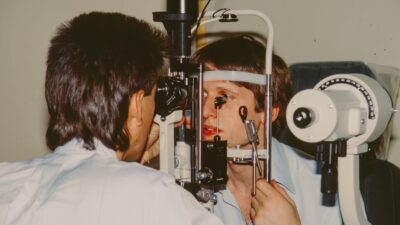
An ophthalmologist will perform a dilated fundus exam and usually imaging:
- Optical coherence tomography (OCT) shows a characteristic small foveal defect in the outer retinal layers.
- Fundus photography may show a tiny yellow or red foveal spot in the acute phase, fading to a faint pigmentary change later.
- Fundus autofluorescence and fluorescein angiography are sometimes used in unusual cases.
- Amsler grid testing helps track central distortion over time.
A careful history — eclipse viewing, welding without a helmet, deliberate sungazing — usually makes the diagnosis obvious.
Is There a Treatment?
There is no proven medication, supplement, or surgical procedure that specifically reverses solar retinopathy. Some clinicians have tried oral corticosteroids in the acute phase, but evidence of benefit is limited. Management is largely supportive:
- Protect the other eye from any further exposure.
- Monitor visual acuity and Amsler grid findings at home.
- Return for follow-up OCT imaging at 1 month, 3 months, and 6 months.
- If a permanent central scotoma develops, low-vision rehabilitation, magnifiers, or eccentric-viewing training can help with reading and daily tasks.
About half of patients experience meaningful recovery over the first 3 to 6 months; the rest have some degree of permanent central vision loss.
Prevention: The Only Real Cure
For Solar Eclipses
Use only eclipse glasses certified to the ISO 12312-2 standard, which block 99.999 percent of visible light and all harmful infrared and UV. Inspect them for scratches or punctures before use. Apply them before looking up and keep them on until you look away. Ordinary sunglasses — even dark polarized ones — are tens of thousands of times too bright and are not safe. Pinhole projection onto white paper or card is a safe indirect viewing method.
For Welding and Industrial Arcs
Always wear a welding helmet with a shade rating appropriate for the process and amperage:
- Shade 10 to 11 for low-amperage stick welding
- Shade 12 to 13 for mid-range MIG or TIG
- Shade 14 for high-current plasma cutting and direct sun observation
Auto-darkening helmets are reliable but need working batteries and regular inspection.
Everyday UV Protection
Wear sunglasses that block 99 to 100 percent of UVA and UVB whenever you are outdoors in bright conditions. This does not prevent solar retinopathy from direct sungazing, but it does reduce cumulative UV exposure linked to cataracts and macular degeneration. For people already managing A1C levels and diabetes, good eye-health habits also lower the risk of diabetic eye disease.
When to See an Ophthalmologist
See an eye doctor within 1 to 2 days if you:
- Notice a new central blind spot or persistent afterimage
- Lost visual acuity after eclipse viewing, welding, or sungazing
- Cannot see a portion of a printed page clearly
- Experience distorted colors or lines
A prompt dilated exam and OCT scan establish the diagnosis and rule out other urgent conditions like macular hole, central serous retinopathy, or optic neuritis.
The Bottom Line
Solar retinopathy is a preventable injury caused by concentrated light hitting the retina without proper protection. It is not diabetic retinopathy and is unrelated to blood sugar control. Symptoms appear within hours, diagnosis is made by OCT, and there is no treatment that reliably reverses the damage — so the prevention rules are what matter: ISO-certified eclipse glasses, proper welding shade, and never trusting ordinary sunglasses. If you already have symptoms after a known exposure, see an ophthalmologist within 1 to 2 days for imaging and a baseline exam.