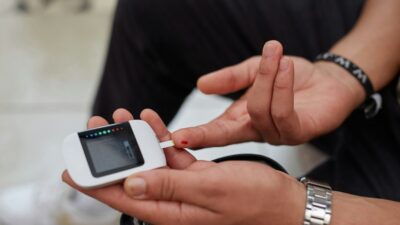
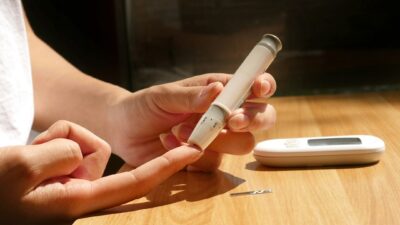
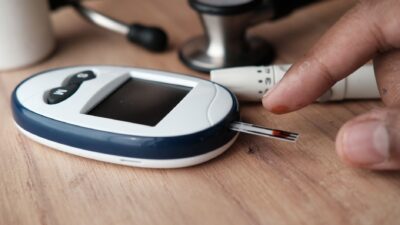
The best time to check blood sugar with type 2 diabetes is usually when you wake up (fasting), before meals, 1 to 2 hours after you start eating, and at bedtime. Which of these you need, and how often, depends mostly on your treatment. People taking several insulin shots a day may test before each meal and at bedtime. People managing type 2 diabetes with diet, exercise or medicines that rarely cause lows may not need to test every day.
This guide explains what each testing time tells you, typical targets and how to build a schedule with your care team.
What Each Testing Time Tells You
| When to check | What it shows | Typical target for many adults |
|---|---|---|
| Fasting, on waking | Overnight control and liver glucose output; often the first number checked when starting or adjusting long-acting insulin | 80 to 130 mg/dL (4.4 to 7.2 mmol/L) |
| Before a meal | Your starting point before food | 80 to 130 mg/dL (4.4 to 7.2 mmol/L) |
| 1 to 2 hours after the start of a meal | How much that meal raised your glucose | Under 180 mg/dL (10.0 mmol/L) |
| Bedtime | Whether you are heading into the night too high or too low | Set by your care team |
| When you have symptoms | Whether shakiness, sweating, confusion or thirst is from a low or high | Below 70 mg/dL (3.9 mmol/L) is low |
The before-meal and after-meal targets above come from MedlinePlus and the CDC, which both stress that your care team may set different goals. Targets are often less strict for older adults or people with a history of severe lows, and stricter for others. For a deeper look at morning numbers, see what fasting blood sugar should be.
How Often to Test Depends on Your Treatment
There is no single schedule that fits everyone. Your medicines matter most, because some can cause low blood sugar and some can’t.
If you take several insulin injections a day
Testing is often advised before meals and at bedtime, and sometimes after meals or overnight. These readings help you and your care team adjust mealtime insulin doses.
If you take long-acting (basal) insulin only
Many people mainly test fasting, before breakfast, because that number guides basal insulin adjustments. Your team may also ask for checks before dinner or at bedtime.
If you take a sulfonylurea
Medicines such as glipizide or glimepiride can cause lows. Your care team may ask you to test more often, especially before driving, when you skip a meal or if you feel unwell.
If you use diet, exercise or medicines that rarely cause lows
Many people with type 2 diabetes on metformin, a GLP-1 medicine, an SGLT2 inhibitor or no medicine don’t need daily testing. Some test a few times a week, or for a week or two after a treatment change. Your A1C is the main long-term check, usually every 3 to 6 months. Learn more about A1C levels.
Paired Testing: The Best Way to Learn From Meals
Paired testing means checking right before a meal and again 1 to 2 hours after you start eating, then comparing the two numbers. A large jump tells you that meal raised your glucose more than others. Try it with different breakfasts or dinners over a week or two. Many people learn more from a short period of paired testing than from months of random checks.
Start your timer when you take the first bite, not when you finish. Blood sugar usually peaks about 1 to 2 hours after the start of a meal, though fat, protein and fiber can shift the timing. Our guide on when to test blood sugar after eating goes into more detail.
Other Times You Should Check
- When you feel symptoms such as shakiness, sweating, a racing heart, confusion, extreme thirst or frequent urination
- Before driving, if you take insulin or a sulfonylurea
- Before, during or after exercise, especially if you take medicine that can cause lows
- On sick days, since illness and infection often raise blood sugar
- After a medicine change or when starting steroids
- After drinking alcohol, which can lower blood sugar hours later in people on insulin or sulfonylureas
What to Do With a Low or High Reading
A reading below 70 mg/dL (3.9 mmol/L) is low (level 1), and below 54 mg/dL (3.0 mmol/L) is a clinically significant low (level 2). A common approach is the 15-15 rule: take 15 grams of fast-acting carbohydrate, such as glucose tablets or 4 ounces of juice, and recheck in 15 minutes. Repeat if you’re still low. If someone is unconscious or can’t swallow, do not give food or drink. Use glucagon if it has been prescribed, and call 911.
For high readings, follow the sick-day or high-glucose plan from your care team. Get urgent care for very high readings along with vomiting, confusion, trouble breathing or signs of dehydration.
Meters vs Continuous Glucose Monitors
A fingerstick meter gives you a snapshot at the moment you test. A continuous glucose monitor (CGM) checks glucose every few minutes and shows trends, including overnight. According to the NIDDK, a CGM can alert you to highs and lows. The ADA’s 2026 Standards of Care note that home glucose data can show how meals, activity and medicines affect you beyond what A1C reveals, and the 2026 update expanded CGM use to more people with type 2 diabetes. See our page on CGM for type 2 diabetes.
Tips for Accurate Readings
- Wash and dry your hands before testing.
- Use strips before their expiration and open-vial discard dates.
- Write down the time, the reading and any notes about food, activity or illness, or use your meter’s app.
- Bring your log or device data to appointments so your team can spot patterns.
The Bottom Line
For most people with type 2 diabetes, the most useful times to check blood sugar are fasting on waking, before meals, 1 to 2 hours after starting a meal and at bedtime, plus any time you feel off. How often you test depends on your treatment, especially whether you use insulin or a sulfonylurea. Paired before-and-after meal checks are a powerful way to learn how food affects you. Work with your care team to set a testing schedule and targets that fit you.