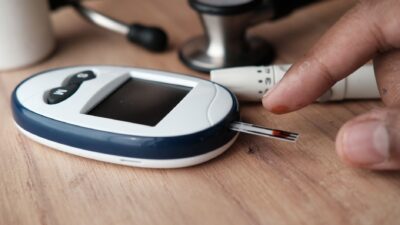
The Accu-Chek Aviva glucometer, made by Roche, has been discontinued in the United States, according to Roche’s US website. The good news for current users is that Accu-Chek Aviva Plus test strips are still being sold, so a working Aviva meter can stay in use. If your meter fails or you need a new one, you will need to switch to a different meter and its matching strips.
This guide covers the meter’s status, how its strips work, how to get accurate readings and how to choose a replacement. We are brand-neutral and do not earn commissions from any meter maker.
Is the Accu-Chek Aviva Still Available?
Roche’s US product listing describes the Accu-Chek Aviva meter as discontinued and says Aviva Plus test strips will continue to be available for people already using the system. Roche’s UK site says the meter is no longer available in the UK and Ireland, and Australia’s national diabetes scheme announced in 2024 that Aviva strips were being discontinued there. Roche’s US pages point people looking for a new meter toward the Accu-Chek Guide family.
As of late 2026, that means:
- New Aviva meters are hard to find through normal US retail and pharmacy channels. Be cautious with used or third-party listings, since you cannot confirm how the meter was stored or whether it works properly.
- Aviva Plus strips are still sold, though stock at individual stores and online retailers can be patchy. Roche’s US site listed a box at about $110 in late 2026; pharmacy and insurance prices vary widely.
- Insurance coverage may change. Some plans move discontinued systems off their preferred lists, so check before your next refill.
Accu-Chek Aviva Plus Strip Specs
| Feature | Accu-Chek Aviva Plus strips |
|---|---|
| Blood sample size | 0.6 microliter |
| Test time | About 5 seconds |
| Measuring range | 20 to 600 mg/dL (1.1 to 33.3 mmol/L) |
| Enzyme | Modified glucose dehydrogenase (GDH-PQQ), per FDA 510(k) K101299 |
| Compatible meters | Aviva-family meters, including Aviva, Aviva Combo, Aviva Connect, Aviva Expert, Aviva Insight and Aviva Nano |
| Not compatible | Accu-Chek Guide, Guide Me, Guide Link, Instant and SmartView meters |
US meters report in mg/dL. To convert to mmol/L, divide by 18. A reading of 70 mg/dL is 3.9 mmol/L, and 180 mg/dL is 10.0 mmol/L.
Roche states that its Aviva Plus strips meet an accuracy standard in which 95% of results fall within 15 mg/dL of the lab value below 100 mg/dL and within 15% at 100 mg/dL and above. That matches the international ISO 15197:2013 standard. FDA guidance for newer over-the-counter meters sets a stricter target of 95% of results within 15% and 99% within 20% across the whole measuring range. Read more in our guide to the most accurate blood glucose meter.
A note on interference
Some older glucose dehydrogenase strips could read falsely high in people receiving certain substances that contain non-glucose sugars, such as some peritoneal dialysis solutions. Aviva Plus strips use a modified enzyme designed to reduce this problem, but the strip package insert still lists substances and conditions that can affect results. If you are on dialysis, receive IV therapies or have a condition that affects your red blood cell count, review the insert with your care team.
How to Use the Accu-Chek Aviva Glucometer
- Wash and dry your hands. Sugar or lotion on your skin can raise the reading.
- Insert an Aviva Plus strip into the meter, following the arrow on the strip. The meter turns on.
- Prick the side of your fingertip with the lancing device.
- Touch the tip of the strip to the drop and let it fill. Do not smear blood onto the strip.
- Read and log the result, along with notes such as meals or exercise.
Some Aviva meters allow alternate-site testing, such as on the palm or forearm, using a special cap on the lancing device; check your owner’s booklet. Alternate-site readings can lag behind fingertip readings when glucose is changing fast, so use your fingertip after meals or exercise, when you feel low, when you are ill or whenever you need to make a treatment decision.
Keeping your meter accurate
- Run a control solution test with Accu-Chek Aviva control solution when you open new strips, if you drop the meter or if a result does not match how you feel.
- Keep the strip vial closed and store it at room temperature, away from bathrooms, hot cars and freezing conditions.
- Do not use strips past their expiration date.
- Replace the battery when the low-battery symbol appears.
- Check that the meter’s date and time are right so your logbook stays accurate.
If your meter shows a reading that seems wrong, wash your hands and retest. If you have symptoms of low blood sugar (below 70 mg/dL, 3.9 mmol/L) or a very high reading, follow your treatment plan and contact your care team.
Switching From the Aviva to a New Meter
If your Aviva fails, is damaged or your plan stops covering its strips, here is how to switch smoothly:
- Check coverage first. Call your insurer or Medicare supplier and ask which meter and strips are preferred. A covered meter is often free or very low cost.
- Get a new prescription for the meter, strips and lancets, so the pharmacy can bill them correctly.
- Use up or return unopened Aviva strips if your pharmacy allows. Do not try them in a different meter.
- Compare readings for a few days if you still have a working Aviva. Small differences between meters are normal. Large, consistent differences are worth discussing with your care team.
- Transfer your history. Write down or download your recent readings before you retire the old meter.
Medicare Part B covers blood sugar monitors and test strips for people with diabetes when a doctor orders them and they come from an enrolled supplier. After the Part B deductible, you usually pay 20% of the Medicare-approved amount. Our guides to the best glucose meter with cheap strips and where to get a free glucose meter can help you compare options. You can also browse our overview of glucose meters and the Contour Next glucose meter review.
What to Look For in a Replacement
| Factor | Why it matters |
|---|---|
| Insurance coverage | Strips are the biggest ongoing cost; covered brands save the most |
| Strip price without insurance | Store-brand and value meters often have cheaper strips |
| Accuracy | Look for FDA clearance and published accuracy data |
| App or Bluetooth | Useful for sharing readings with your care team |
| Screen size and buttons | Important for people with low vision or arthritis |
| Strip handling | Some meters use strip drums or vials that are easier to handle |
If you test many times a day or have frequent lows, ask your care team whether a continuous glucose monitor (CGM) is an option.
Do You Need a Glucometer for Prediabetes?
Most people with prediabetes do not need daily fingersticks. Prediabetes is diagnosed with lab tests, such as an A1C of 5.7% to 6.4% (39 to 47 mmol/mol) or a fasting glucose of 100 to 125 mg/dL (5.6 to 6.9 mmol/L). Some people use occasional meter checks to learn how foods affect them. See our A1C levels guide and learn whether prediabetes is reversible.
The Bottom Line
The Accu-Chek Aviva glucometer has been discontinued in the US, but Aviva Plus strips remain available, so a working meter can keep doing its job. Check your meter with control solution, store strips well and use your fingertip for treatment decisions. When it is time to replace it, start with your insurance coverage, get a new prescription and remember that the strips change with the meter. Your care team can help you choose a meter that fits your needs and budget.