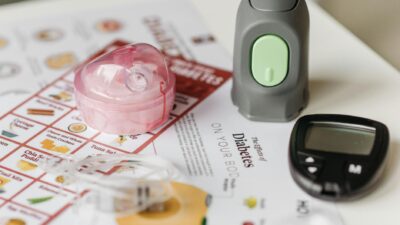
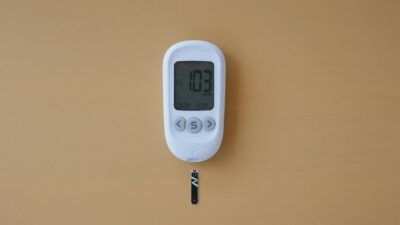
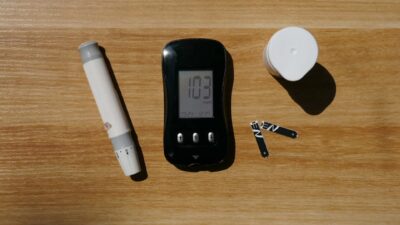
The Contour Next is a family of fingerstick glucose meters from Ascensia Diabetes Care known for high accuracy, small 0.6-microliter sample size, and a 5-second result time. Models include the Contour Next, Contour Next One (with Bluetooth app connectivity), Contour Next EZ, and Contour Next Link (for pairing with Medtronic insulin pumps). Independent testing consistently places the Contour Next family among the most accurate meters on the US market.
The Contour Next Family
| Model | Key Features | Best For |
|---|---|---|
| Contour Next (classic) | 5-sec result, 0.6 µL sample, Second-Chance Sampling, 800-reading memory | Everyday home use; no smartphone needed |
| Contour Next One | Bluetooth to Contour Diabetes app; smartLIGHT target indicator (green/yellow/red) | Users who want trend data and smartphone integration |
| Contour Next EZ | Simplified interface, larger buttons, backlit display | Older adults or those who want minimal features |
| Contour Next Link 2.4 | Transmits readings wirelessly to Medtronic MiniMed pumps and CareLink software | Medtronic pump users |
| Contour Next Gen2 | Older model; smartLIGHT indicator; strips compatible with newer meters | Legacy users still on this device |
Accuracy
The Contour Next family consistently scores among the top-performing meters in independent accuracy assessments:
- Meets ISO 15197:2013 standards (95% of readings within ±15 mg/dL below 100 or ±15% at 100+)
- Often performs within 8 to 10 percent of the lab reference in published comparisons
- Contour Next One has been cited as one of the most accurate consumer meters available
Accuracy is the result of both meter electronics and strip chemistry working together. Contour Next strips use a glucose dehydrogenase-FAD enzyme, which is specific to glucose (does not cross-react with maltose, the problem some older strips had) and stable across a wide temperature range.
How to Use a Contour Next Meter
- Wash and thoroughly dry your hands; residue from food or lotion can skew readings.
- Insert a fresh strip into the meter, gray end first. The meter powers on automatically.
- Lance the side of a fingertip (hurts less than the pad); coax a small drop.
- Touch the strip’s tip to the drop — the strip wicks the sample. Do not smear blood onto the top of the strip.
- If the sample is too small, apply more blood within 60 seconds (Second-Chance Sampling). The meter will beep.
- Wait 5 seconds for the result.
- Tag the reading (pre-meal, post-meal, fasting, hypo, sick day) if desired.
- Dispose of the strip and lancet in a sharps container.
Storage and Strip Life
- Keep strips in the original vial; close the cap tightly after removing a strip
- Do not transfer strips to a different container
- Write the open date on the vial; use within 6 months of opening or before the printed expiration, whichever comes first
- Store at room temperature 50°F to 86°F (10°C to 30°C)
- Do not refrigerate or freeze strips
- Protect from direct sunlight and humidity
Contour Diabetes App (for Contour Next One)
The free Contour Diabetes app adds:
- Automatic Bluetooth sync from meter to phone
- Trend graphs and daily pattern analysis
- Customizable target ranges with smartLIGHT indicator (green = in target, yellow = near limit, red = out of range)
- Logbook export to PDF for clinician sharing
- Reminders for post-meal testing, medication, and lancet changes
Contour Next vs Other Popular Meters
| Meter | Sample Size | Test Time | App Integration | Typical Accuracy |
|---|---|---|---|---|
| Contour Next One | 0.6 µL | 5 sec | Bluetooth; Contour Diabetes app | High |
| OneTouch Verio Flex | 0.4 µL | 5 sec | Bluetooth; OneTouch Reveal app | High |
| Accu-Chek Guide | 0.6 µL | 4 sec | Bluetooth; mySugr app | High |
| Freestyle Libre 3 (CGM) | n/a; subcutaneous | Continuous | App-first | High |
| Relion Prime (store brand) | 0.5 µL | 7 sec | No | Meets ISO; fewer bells and whistles |
Cost and Insurance
- Meter price: often free with a prescription through manufacturer programs or store-brand rebates; retail cash prices around $20 to $40
- Strips: typically $0.50 to $1 per strip retail; lower through insurance, 90-day mail order, or Medicare
- Medicare Part B covers meters and strips as durable medical equipment with a prescription
- Ascensia offers a savings program for eligible patients
Common Errors and Troubleshooting
- E-1 or “Error”: strip problem; replace with a fresh strip
- “Sample Too Small”: use Second-Chance Sampling within 60 seconds or re-test with a new strip
- Unexpected high or low reading: wash hands, try a different finger, verify strip is not expired, run control solution
- Meter does not power on: replace battery (CR2032 lithium coin cell in most models)
- Bluetooth not connecting (Next One): forget and re-pair; confirm phone Bluetooth is on
Should You Use a Meter or Switch to a CGM?
Meters are excellent for occasional spot checks, troubleshooting, and cost-sensitive care. CGMs are preferred for intensive insulin users, recurrent hypoglycemia, pregnancy, and anyone who would benefit from the full glucose curve. Many CGM users keep a Contour Next meter as a backup to verify suspicious readings. For broader context, see our guide on glucose test strips and GMI on Dexcom G7.
Related Reading
See our detection of prediabetes hub and A1C levels for how meter data fits into broader diabetes management.
The Bottom Line
The Contour Next family is a solid choice for fingerstick glucose monitoring — accurate, fast, and well-supported. The Contour Next One adds Bluetooth and a companion app for trend review; the Link 2.4 integrates with Medtronic pumps. Whichever model you pick, use fresh strips from a tightly capped vial, wash your hands before testing, and run control solution on any new strip batch to confirm accuracy. For most people who want a reliable meter to pair with or replace a CGM for occasional checks, a Contour Next is a good default.