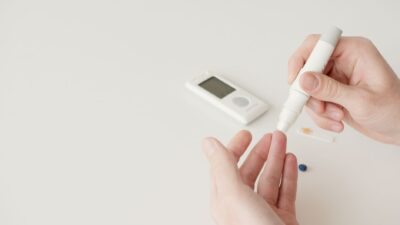
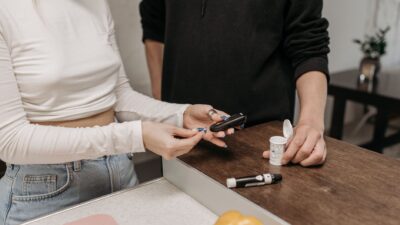
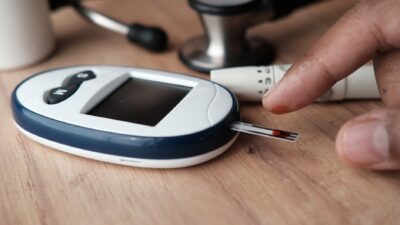
Home blood glucose meters sold legally in the US are FDA-cleared, not FDA-approved. The FDA reviews them through its 510(k) premarket process and expects over-the-counter meters to meet a set accuracy standard. So when people search for FDA approved glucose meters, what they want is a meter with current FDA clearance, sold with US labeling and used with authorized test strips.
This guide explains what clearance means, how accurate a cleared meter must be, how to check a meter yourself, and how to choose one that fits your needs and budget. It does not rank brands, because the right meter depends on your coverage and how you test.
FDA Cleared vs FDA Approved: What the Difference Means
The FDA uses different pathways for different kinds of products. Drugs and the highest-risk devices go through approval. Most moderate-risk devices, including home blood glucose meters, go through clearance under section 510(k). To get a 510(k) clearance, the maker must show the meter is substantially equivalent to a device already on the market and submit performance data, including accuracy studies with real users.
In practice, the distinction matters less than people think. A cleared meter has been reviewed by the FDA for its intended use. What matters more is that you buy a meter labeled for sale in the US, use matching strips that are also authorized, and follow the instructions.
Over-the-Counter vs Prescription-Use Meters
The FDA separates meters intended for home use by one person (over-the-counter) from meters used in clinics and hospitals on many patients (prescription point-of-care). Home meters are designed for a single user and should never be shared, because sharing raises the risk of spreading bloodborne infections. Hospital meters are built for disinfection between patients and follow a separate FDA guidance.
How Accurate Must an FDA-Cleared Meter Be?
The FDA’s 2020 guidance for over-the-counter self-monitoring blood glucose systems sets out the accuracy makers should demonstrate. Many meters are also tested against the international standard ISO 15197:2013, which allows a fixed mg/dL margin at lower glucose levels.
| Standard | What it expects |
|---|---|
| FDA OTC guidance (2020) | 95% of results within ±15% of the lab value and 99% within ±20%, across the whole measuring range |
| ISO 15197:2013 | 95% of results within ±15 mg/dL (±0.83 mmol/L) below 100 mg/dL (5.6 mmol/L), and within ±15% at 100 mg/dL or above; 99% in the clinically acceptable zones of an error grid |
Here is what that means in real numbers. If a lab measures your glucose at 100 mg/dL (5.6 mmol/L), a meter meeting the FDA expectation should read between 85 and 115 mg/dL (4.7 to 6.4 mmol/L) at least 95 times out of 100. At a lab value of 200 mg/dL (11.1 mmol/L), the 15 percent window is 170 to 230 mg/dL (9.4 to 12.8 mmol/L). Two readings a few points apart do not mean your meter is broken.
For a closer look at how specific meters perform, see our blood glucose meter accuracy comparison and our guide to the most accurate glucose meter.
How to Check Whether a Meter Is FDA-Cleared
- Search the FDA database. The FDA 510(k) premarket notification database lets you search by device name or manufacturer.
- Check the packaging. US-labeled meters list the maker, a US customer service number and instructions in English. Many manuals list the 510(k) number.
- Check the strips too. The FDA says to always use new test strips authorized for sale in the US. It has warned about pre-owned strips and strips not authorized for US sale, which may give wrong results.
- Be wary of unusual sellers. Meters or strips sold with foreign packaging, no expiration date or at prices that seem too good to be true are a red flag.
A Note on “No-Prick” Glucose Watches
Smartwatches and rings that claim to measure blood sugar without piercing the skin are not FDA-cleared for that purpose. The FDA has warned people not to use them to manage diabetes, because wrong readings can lead to dosing errors. If you want readings without frequent fingersticks, a cleared continuous glucose monitor (CGM) is the regulated option. Our guide to the way a CGM works explains the difference.
What Affects Meter Accuracy
Even a well-made meter can give a misleading result. According to the FDA, accuracy depends on the meter and strips, how you test, your health and medicines, and the environment.
- Dirty hands. Sugar on your fingers from fruit or food can raise a reading. Wash and dry your hands first.
- Strip handling. Expired strips, strips left in heat or humidity, or a vial left open can all skew results.
- Altitude, temperature and humidity. Extreme conditions can cause unpredictable results.
- Health conditions. Severe dehydration, anemia, unusual hematocrit and high uric acid levels (as in gout) can affect some meters.
- Medicines and supplements. Vitamin C and acetaminophen can interfere with some meters. Check your meter’s manual.
- Alternate sites. Readings from the palm, forearm or thigh may be less accurate when glucose is changing quickly. Use your fingertip if you suspect a low.
Running a control solution test when you open a new vial of strips, after dropping the meter, or when a result doesn’t match how you feel helps confirm the meter and strips are working together.
How to Choose a Glucose Meter
No single meter is best for everyone. These criteria matter more than marketing claims.
| Factor | Why it matters | What to ask |
|---|---|---|
| Strip cost | Strips are the ongoing expense; meters are often cheap or free | What is the price per strip with and without insurance? |
| Insurance coverage | Many plans prefer specific brands | Which meters and strips does my plan cover? |
| Ease of use | Small screens and buttons can cause errors | Can I read the display and handle the strips easily? |
| Blood sample size | Smaller samples mean less painful pricks | How much blood does each strip need? |
| Data and connectivity | Bluetooth apps can log readings automatically | Does it work with my phone and share with my care team? |
| Special needs | Talking meters help with low vision; some meters also test ketones | Do I need audio, ketone testing or large print? |
Store-brand meters can be a reasonable choice if they are FDA-cleared and their strips are affordable. Our guide to the glucose meters with the cheapest strips covers costs in more detail, and you can also learn where to get a free glucose meter. Prices change often, so compare current per-strip costs at your pharmacy before you buy.
Coverage for Meters and Strips
Medicare Part B covers blood glucose meters, strips and lancets for people with diabetes, with limits on how many strips you can get based on whether you use insulin. Most private plans and Medicaid also cover them, but often only for preferred brands. If your doctor wants you to use a specific meter, they may need to send your plan a request. People without diabetes generally pay out of pocket.
Meters vs Continuous Glucose Monitors
A meter gives a single snapshot from a drop of blood. A CGM measures glucose under the skin every few minutes. The CDC notes that a CGM does not fully replace fingersticks, because glucose in the fluid under the skin can differ from blood glucose. Most CGM users still keep a meter to confirm readings that don’t match their symptoms and as a backup if a sensor fails.
Using a Meter Safely
- Read the manual before your first test and follow the maker’s steps.
- Use a new lancet each time and never share your lancing device or meter.
- Keep the strip vial tightly closed and check expiration dates.
- Confirm the meter passes its self-check when it turns on, and look up any error code in the manual.
- Take your meter to appointments so your care team can watch your technique and compare a reading with a lab test.
- If your meter malfunctions, call the toll-free number in the manual. For an urgent health problem, contact your provider or call 911.
Signs Your Meter May Need Replacing
Meters can last for years, but they do wear out or become outdated. Consider asking for a new one if your meter repeatedly fails control solution tests with fresh strips, shows frequent error codes, has a cracked case or faded screen, or no longer has strips available. Makers sometimes discontinue older models, and insurance plans change their preferred brands, so check strip availability before stocking up. When you switch meters, run a control test and compare a few readings with your care team.
Glucose Meters and Prediabetes
If you have prediabetes, you probably do not need to test every day. Your doctor will usually track your progress with an A1C or fasting glucose test. The NIDDK explains how these numbers fit together. Some people find occasional home checks useful for seeing how meals affect them. If you go that route, any FDA-cleared meter is fine. Learn what your results mean with our A1C levels guide and our broader overview of glucose meters.
The Bottom Line
The meters people call FDA approved glucose meters are FDA-cleared devices that have passed 510(k) review and meet accuracy expectations for home use. Check clearance in the FDA database, use only new US-authorized strips, and choose based on strip cost, coverage and ease of use. Ask your care team to check your technique, and remember that no meter is perfect. Small differences between readings are normal.