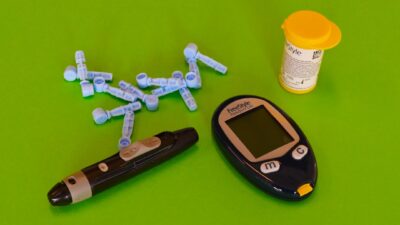
A blood sugar reading of 70 mg/dL sits exactly at the American Diabetes Association hypoglycemia threshold. Values below 70 are hypoglycemic; values at 70 are borderline. Whether the reading needs treatment depends on what medications you take, whether you are symptomatic, and which direction glucose is moving. For insulin or sulfonylurea users with symptoms or a falling trend, treat with the Rule of 15. For people not on glucose-lowering medication, a regular meal or snack is usually enough.
What 70 mg/dL Means by Context
| Context | Category at 70 mg/dL | Action |
|---|---|---|
| Insulin user, symptomatic | At hypoglycemia threshold | Treat with Rule of 15 |
| Insulin user, falling trend on CGM | About to drop below threshold | Treat preemptively with 15g carb |
| Insulin user, stable, no symptoms | Borderline | Consider a small carb snack, monitor |
| Sulfonylurea user | Borderline; long-acting medication risk | Treat with 15g carb and monitor 30-60 min |
| No glucose-lowering medication | Low end of normal | Regular meal or snack usually enough |
| Before driving | Below safe driving threshold | Do not drive until above 80-90; eat first |
The Hypoglycemia Thresholds
- Below 70 mg/dL: Level 1 hypoglycemia per ADA — treat with fast carb if symptomatic or on insulin
- Below 54 mg/dL: Level 2 (clinically significant or severe) hypoglycemia
- Level 3 (severe): any hypoglycemia with altered mental status requiring assistance
- “Low normal”: 60 to 70 mg/dL is sometimes called low normal for people without diabetes who feel fine and are not on medication
The Rule of 15 Protocol
| Step | Action | Notes |
|---|---|---|
| 1 | Eat 15g fast-acting carb | Glucose tabs are most predictable |
| 2 | Wait 15 minutes | Avoid additional carbs during the wait |
| 3 | Recheck blood sugar | Use a meter; CGM has 5-15 minute lag |
| 4 | If still below 70, repeat | Keep treating until above 70 with stable trend |
| 5 | Eat a small protein-carb snack if meal is more than 1 hour away | Helps prevent rebound low |
Distinguishing 70 mg/dL from “Low Normal”
For people not on insulin or sulfonylureas, glucose readings of 60 to 80 mg/dL are usually well tolerated and called “low normal.” Healthy adults can run fasting glucose in the 60s without symptoms. The key distinctions:
- Symptoms: 70 with shakiness, sweating, or confusion is hypoglycemia regardless of label
- Medications: 70 in someone on insulin or sulfonylurea is hypoglycemia by convention
- Trend: 70 falling rapidly is more concerning than 70 stable
- Context: 70 right before a meal is expected; 70 four hours after a meal in a healthy adult is unusual
Driver and CGM Alarm Settings
- Drivers with insulin-treated diabetes: the ADA recommends glucose at least 70 mg/dL before driving and ideally above 90 with a recent carb snack on longer drives
- CGM default low alarm: typically 70 mg/dL — can be set higher (75 to 80) for earlier warning
- Predictive low alarm: most modern CGMs alert when glucose is predicted to drop below 70 within 20 to 30 minutes
- Hypoglycemia unawareness: consider tighter alarm thresholds and a structured awareness recovery program
Common Triggers for a 70 mg/dL Reading
- Insulin dose timing or amount slightly off relative to meals
- Sulfonylurea active duration (glipizide and glyburide can last 8 to 24 hours)
- Delayed or smaller-than-planned meal after insulin
- Unplanned or extended exercise
- Alcohol intake, especially on an empty stomach
- Recent weight loss or improved insulin sensitivity not yet reflected in medication doses
- Kidney function changes — slower insulin clearance
When to Escalate
- Reading drops below 54 mg/dL — severe hypoglycemia; treat urgently
- Repeated readings at 70 across multiple days — call your doctor for a medication review
- Symptoms not relieved after correction — confirm with a second meter test, recheck dose history
- Inability to swallow safely — use glucagon (Baqsimi, Gvoke) and call emergency services
Adjacent Values
- 60 mg/dL: hypoglycemic — see blood sugar 60
- 70 mg/dL: at hypoglycemia threshold — borderline
- 80 mg/dL: low-normal fasting — see blood sugar 80
- 90 mg/dL: normal fasting — see blood sugar 90
Related Reading
See our broader guides on detection of prediabetes and diabetes treatment.
The Bottom Line
A blood sugar of 70 mg/dL sits exactly at the ADA hypoglycemia threshold. Insulin or sulfonylurea users with symptoms or a falling trend should treat with the Rule of 15. People not on glucose-lowering medication usually do not need treatment beyond a regular meal or snack. Repeated readings at 70 warrant a medication and timing review with your doctor. Drivers should be above 70 — ideally above 90 — before getting behind the wheel.