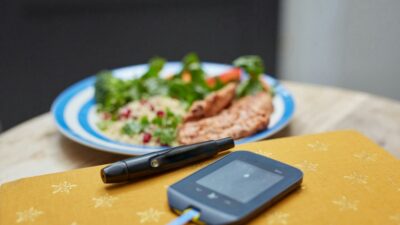
Blood sugar lower after eating than fasting is usually not a cause for concern. After a meal, glucose rises and then falls, and by two to three hours it can dip slightly below your morning level. Your fasting number may also be raised by early-morning hormones. A reading below 70 mg/dL (3.9 mmol/L) after a meal, though, needs a doctor’s review.
Below are the most common reasons for this pattern, how to tell a normal dip from a problem, and how to test so your readings make sense.
How Blood Sugar Normally Changes Around a Meal
When you eat carbohydrate, glucose enters your bloodstream and your pancreas releases insulin to move it into your cells. In people without diabetes, glucose usually peaks within about an hour of starting a meal and returns close to baseline within two to three hours. As insulin keeps working, glucose can briefly drop a little below the pre-meal level before settling.
That means the time you test matters as much as what you ate. A reading 30 to 60 minutes after a meal will often be higher than your fasting number. A reading three hours later may be lower. See our guide to how long after eating blood sugar peaks for more on timing.
| Time | Typical pattern without diabetes | What can make it lower than fasting |
|---|---|---|
| Fasting (morning) | Under 100 mg/dL (5.6 mmol/L) | Not applicable; dawn hormones may push it up |
| 1 hour after a meal | Rises above fasting | Very low-carb meal, a walk right after eating |
| 2 hours after a meal | Usually under 140 mg/dL (7.8 mmol/L) | Small meal, protein- or fat-heavy meal |
| 3 to 4 hours after a meal | Back near or slightly below baseline | Normal insulin overshoot |
For people with diabetes, the American Diabetes Association commonly uses a target of under 180 mg/dL (10.0 mmol/L) one to two hours after the start of a meal, though your care team may set different goals.
7 Reasons Your Blood Sugar Is Lower After Eating Than Fasting
1. The dawn phenomenon is raising your fasting number
In the early morning hours, your body releases hormones such as cortisol and growth hormone that tell the liver to release glucose. This can raise your waking glucose, especially if you have insulin resistance, prediabetes or diabetes. In this case, it is the fasting number that is elevated, and your after-meal number simply looks low by comparison. Read more about the dawn phenomenon and why fasting blood sugar can be high.
2. You tested late in the after-meal curve
If you check two and a half or three hours after eating, you may catch glucose on its way back down or in a small dip below baseline. This is normal physiology, not a sign of a problem.
3. Your meal was low in carbohydrate
A meal of eggs and vegetables, or meat and salad, causes only a small glucose rise. Meanwhile insulin is still released, partly in response to protein. The result can be an after-meal reading at or below your fasting value.
4. You were active after eating
Walking, housework or exercise after a meal helps muscles take up glucose without needing as much insulin. A short walk can noticeably blunt the after-meal rise.
5. Meter variation and testing technique
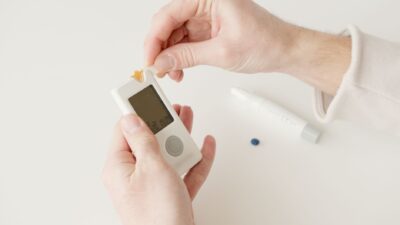
Home meters are allowed a margin of error, so two readings taken minutes apart can differ. Sugar on your fingers from food can raise a reading falsely, and the FDA notes that improperly stored strips, extreme temperatures and humidity can affect accuracy. A morning reading taken with unwashed hands, or with strips stored in a humid bathroom, may not be comparable with a later one. Always wash and dry your hands before testing. Our glucose meter accuracy guide explains more.
6. Diabetes medicines
If you use insulin, a sulfonylurea or a meglitinide, the timing and size of your dose can bring glucose down after meals, sometimes too far. The NIDDK lists these medicines as common causes of low blood glucose in people with diabetes. Talk with your prescriber before changing any dose.
7. Reactive (postprandial) hypoglycemia
Some people have an exaggerated insulin response that drives glucose below normal within a few hours of eating, especially after a high-sugar meal. This is more common after some weight-loss and stomach surgeries. MedlinePlus notes that some weight-loss surgeries can cause low blood sugar years later. Learn more in our guide to reactive hypoglycemia.
When a Low After-Meal Reading Is Not Normal
A small dip that stays at or above 70 mg/dL (3.9 mmol/L) is expected. Talk to your doctor if you notice:
- Readings below 70 mg/dL (3.9 mmol/L) after meals, confirmed with a second test
- Symptoms such as shakiness, sweating, a pounding heart, hunger, irritability, headache or confusion a few hours after eating
- Episodes that happen repeatedly, or that wake you at night
- Lows after weight-loss surgery
- Lows while taking insulin or a sulfonylurea
If someone has symptoms of a low and does not improve after eating a sugary snack, or becomes less alert, MedlinePlus advises calling 911. Never give food or drink to someone who is unconscious or cannot swallow safely. If you have diabetes, see our guide on how to treat low blood sugar.
How to Test So Your Numbers Make Sense
- Test fasting first thing after at least 8 hours without food, before coffee or breakfast.
- Test after meals at a consistent time, such as exactly 2 hours after your first bite.
- Wash and dry your hands before every check.
- Write down what you ate, how active you were, and how you slept.
- Repeat for one to two weeks to see patterns rather than single readings.
- Bring the log to your doctor, who may order an A1C or a lab fasting glucose.
What This Pattern Means for Prediabetes
A higher fasting number than after-meal number can happen in prediabetes, for example when the liver releases more glucose overnight. It does not mean you have diabetes, and a home meter cannot diagnose prediabetes. Lab criteria include a fasting plasma glucose of 100 to 125 mg/dL (5.6 to 6.9 mmol/L) or an A1C of 5.7 to 6.4 percent (39 to 47 mmol/mol), confirmed by repeat testing. Our A1C levels guide explains the ranges, and our prediabetes overview covers next steps.
The Bottom Line
Blood sugar lower after eating than fasting is usually explained by normal after-meal physiology, the timing of your test, a lower-carb meal, activity, meter variation or a dawn phenomenon rise in your fasting number. It becomes a concern if after-meal readings fall below 70 mg/dL (3.9 mmol/L) or come with symptoms such as shakiness and sweating. Test at consistent times, keep a log and share it with your doctor, who can order lab tests to clarify what your numbers mean.