Blood sugar testers are devices and laboratory tests used to measure glucose in the blood. The three main categories are fingerstick glucometers, continuous glucose monitors (CGMs), and clinical laboratory assays. Each has a distinct role: glucometers for spot checks, CGMs for continuous trends, and lab tests for diagnosis.
Fingerstick Glucometers
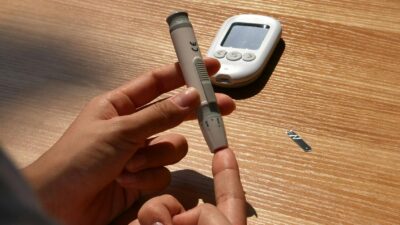
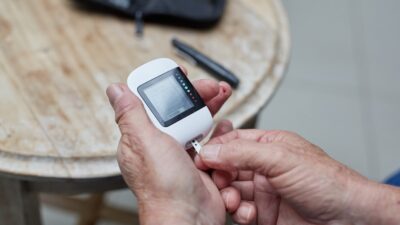
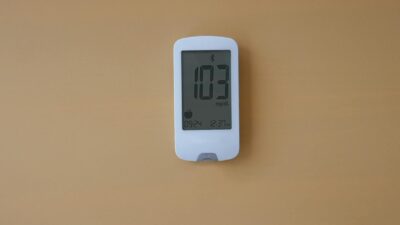
A glucometer is a small handheld device that reads a drop of capillary blood placed on a disposable test strip. The strip contains glucose oxidase or glucose dehydrogenase chemistry; the meter converts the resulting electrical current to a displayed mg/dL value within seconds.
- Strengths: Low cost per test, no battery or calibration issues, fast results, useful for confirming suspected hypoglycemia.
- Limitations: Single time point, requires a lancet prick, strip storage matters, typical accuracy within ±15% of laboratory value under FDA standards.
- Typical cost: Meter $10-40; strips $0.15-1.00 each.
Popular models include Accu-Chek Guide, Contour Next, OneTouch Verio, and FreeStyle Lite. ADA and CDC guidance emphasizes using strips within expiration and storing them in a dry environment.
Continuous Glucose Monitors
A CGM uses a small sensor inserted under the skin to measure glucose in interstitial fluid every 1-5 minutes for 10-15 days. Current mainstream products include Dexcom G7, FreeStyle Libre 3, Medtronic Guardian 4, Dexcom Stelo (OTC), and Abbott Lingo (OTC).
- Strengths: Trend data, overnight visibility, alerts for hypo and hyperglycemia, pattern recognition around meals and exercise.
- Limitations: Requires a wearable device and app, interstitial-fluid time lag, higher ongoing cost.
- Typical cost: $50-150 per sensor, or insurance co-pay for prescription devices.
CGMs have transformed management of type 1 and insulin-treated type 2 diabetes and are increasingly used for research and self-discovery in prediabetes.
Laboratory Blood Tests
Laboratory tests remain the diagnostic gold standard. Common assays include:
| Test | What It Measures | Prediabetes range | Diabetes range |
|---|---|---|---|
| A1C | Average glucose over ~3 months | 5.7-6.4% | ≥6.5% |
| Fasting plasma glucose | Glucose after 8-hour fast | 100-125 mg/dL | ≥126 mg/dL |
| 2-hour OGTT | Glucose 2 hours after 75g glucose drink | 140-199 mg/dL | ≥200 mg/dL |
| Random plasma glucose | Glucose at any time | Not used | ≥200 with symptoms |
Details on these thresholds are available in our A1C levels guide. Laboratory tests use calibrated instruments and reference standards that home meters cannot match.
Choosing the Right Tester
Your best option depends on what you are trying to answer:
- Am I diabetic or prediabetic? Start with laboratory A1C and fasting glucose ordered by your clinician.
- Is my insulin dose right? A CGM is typically the modern answer, supplemented by occasional fingersticks.
- Did I just have a hypoglycemic episode? A fingerstick confirms quickly and accurately.
- How does this meal affect me? A CGM over a few weeks shows post-meal patterns.
- Am I tracking long-term control? A1C every 3-6 months, typically paired with fingerstick or CGM logs.
Accuracy Standards
The FDA requires over-the-counter glucometers to read within ±15% of a laboratory reference at least 95% of the time across the typical glucose range. Prescription meters face tighter standards. CGMs publish MARD values typically between 8-10%. Laboratory instruments have coefficients of variation below 2% when properly maintained.
Common Mistakes
- Expired or poorly stored test strips.
- Insufficient blood drop for the strip to read.
- Contamination from sugary residue on fingers – wash hands before testing.
- Using a CGM reading during rapid glucose change when a fingerstick would be more accurate.
- Relying on a single test to diagnose diabetes without repeat confirmation.
Working With Your Clinician
Any testing strategy should be matched to your diagnosis and treatment plan. People on insulin benefit from different tools than those managing prediabetes with diet and exercise. Bring meter or CGM data to visits; most devices generate shareable reports that show time in range, average glucose, and variability.
Interpreting Readings in Context
A single number rarely tells the full story. A fasting glucose of 110 mg/dL after a restless night with late dinner is different from 110 mg/dL on a well-rested morning following a light, balanced meal the evening before. Pattern recognition over days or weeks matters more than isolated readings. For non-diabetic or prediabetic users, look for trends in fasting values, post-meal peaks, overnight stability, and response to specific foods or activities.
According to the ADA, diagnostic tests should generally be repeated on a separate day to confirm before labeling someone with diabetes or prediabetes, unless the initial values are clearly in the diabetes range with classical symptoms.
Care and Maintenance
- Glucometers: Store strips in their original container, check expiration dates, and run the control solution periodically.
- CGMs: Rotate insertion sites, clean the skin with alcohol, and consider an overpatch if sensors detach early.
- Lancing devices: Change lancets frequently; reused lancets dull and cause more pain and poorer blood flow.
- Data backup: Export and save meter or CGM reports periodically so you have a historical record even if you change devices or apps.
The Bottom Line
Blood sugar testers exist on a spectrum from inexpensive fingerstick meters to sensor-based CGMs to laboratory diagnostic assays. Each has a clear role, and no single device is best for every purpose. Choose based on the question you are trying to answer, your diagnosis, and your clinician’s recommendations. Accurate testing depends on proper technique and device care as much as on the technology itself.