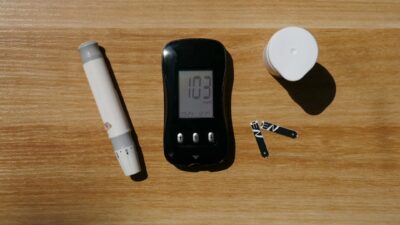
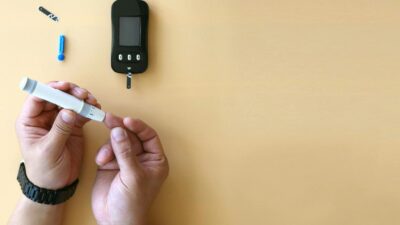
Whats a Dexcom? It is a continuous glucose monitor (CGM) – a small, skin-worn sensor that measures glucose in the fluid just under your skin every five minutes and sends the reading to a phone, smartwatch, or receiver. Dexcom is the brand name, and the company makes several models including the prescription Dexcom G7 and the over-the-counter Dexcom Stelo.
Whats a Dexcom in Plain Terms
A Dexcom is a wearable biosensor. A flexible filament – thinner than a strand of hair – sits in the subcutaneous tissue and produces an electrical signal proportional to interstitial glucose. A small transmitter above the skin converts that signal to a digital reading and beams it by Bluetooth to your device. You see a continuous line graph of your glucose, trend arrows, and optional high and low alerts.
Dexcom launched its first CGM in 2006 and now sells products across prescription and over-the-counter categories. The FDA press announcement on Dexcom Stelo marked the first time a CGM was cleared for U.S. consumer sale without a prescription.
Current Dexcom Products
| Product | Who It Is For | Wear Time | Prescription? |
|---|---|---|---|
| Dexcom G7 | Ages 2+ with diabetes, including pregnancy | 10 days + 12-hour grace | Yes |
| Dexcom G6 | Ages 2+ with diabetes (legacy users) | 10 days | Yes |
| Dexcom Stelo | Adults 18+ not using insulin | 15 days | No – OTC |
How a Dexcom Works Step by Step
- Insertion: A spring-loaded applicator places the sensor on the back of the upper arm (or the upper buttock for young children with G7).
- Warm-up: The sensor pairs with the app and warms up for 30 minutes (G7) to 2 hours (G6).
- Reading: Every five minutes the sensor transmits glucose in mg/dL along with a trend arrow.
- Alerts: Customizable high, low, and predictive alerts can alert you 20 minutes before hypoglycemia.
- End of session: The sensor stops after its wear period; peel it off and insert a new one.
How Accurate Is a Dexcom?
The standard accuracy metric for CGMs is mean absolute relative difference (MARD). Dexcom G7 reports 8.2% MARD overall. Dexcom G6 reports 9.0% MARD. Dexcom Stelo has shown comparable accuracy in adults not on insulin. For context, the National Institute of Diabetes and Digestive and Kidney Diseases notes that interstitial readings lag capillary blood glucose by roughly 5-10 minutes.
When to Consider a Dexcom
CGM data is most useful when you want to see patterns, not just snapshots. Reasons people choose Dexcom:
- Type 1 or type 2 diabetes, especially with insulin therapy or hypoglycemia risk
- Gestational diabetes requiring tight glucose control
- Pairing with automated insulin delivery (Tandem, Omnipod 5, iLet)
- Prediabetes: using Stelo to understand meal responses and lifestyle impact
- Wellness tracking for adults interested in metabolic health
If you are exploring where a Dexcom fits in your care, our Prediabetes 101 overview, A1C levels guide, and treatment hub provide context on how CGM data complements clinical testing and lifestyle plans.
What a Dexcom Does Not Do
- It does not replace A1C testing for diagnosis or long-term tracking.
- It does not prescribe insulin or medication changes; your clinician does that.
- It does not diagnose diabetes on its own – lab testing is still standard.
- It cannot “prevent” prediabetes – it simply shows data you can act on with your care team.
Cost and Access
With insurance, Dexcom G7 often costs $0-$75 per month for covered patients. Cash price without coverage is roughly $400-$450 per month. Dexcom Stelo retails around $99 for a one-month supply (two 15-day sensors) or slightly less with subscription.
Dexcom Alternatives
The most common alternatives are the Abbott FreeStyle Libre 3 (prescription) and FreeStyle Libre Rio (OTC). Medtronic Guardian 4 is also available but primarily for use with Medtronic insulin pumps. All current CGMs have overlapping accuracy and features; choice often comes down to cost, smartphone compatibility, and personal preference.
The Bottom Line
A Dexcom is a continuous glucose monitor that lets you see your glucose in near real time without routine fingersticks. The G7 is the flagship prescription version for people with diabetes, while Stelo extends Dexcom’s technology to anyone curious about their metabolic patterns. Talk with your clinician to pick the right version and to get the most out of the data.
Medical Disclaimer: This content is for educational purposes only and is not a substitute for professional medical advice, diagnosis, or treatment. Always consult your physician or qualified healthcare provider with any questions about a medical condition or treatment.