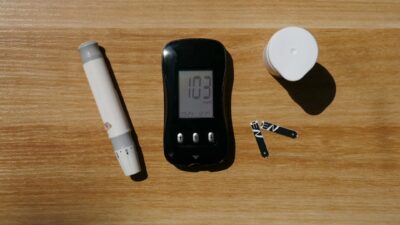
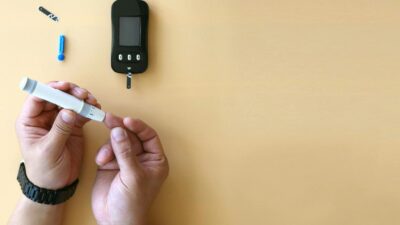
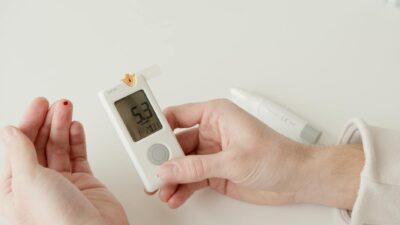
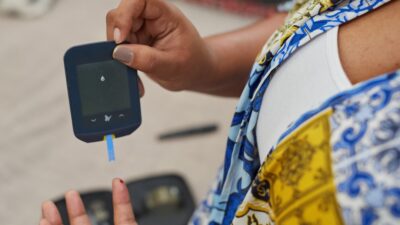
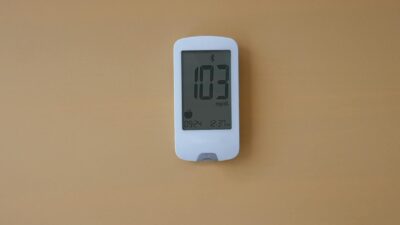
CGM stands for continuous glucose monitor, a wearable sensor that measures glucose in the fluid just under your skin every one to five minutes. Unlike a fingerstick meter that captures a single point in time, a CGM builds a trend line across hours and days. This helps people with diabetes, prediabetes, and some athletes understand how food, activity, sleep, and stress move their blood sugar.
What Does CGM Stand for in Diabetes Care
CGM is short for continuous glucose monitor (sometimes continuous glucose monitoring, referring to the practice rather than the device). The term covers any wearable system that uses a subcutaneous sensor wire and a small transmitter to stream glucose readings to a receiver, smartphone, or insulin pump. Examples include Dexcom G6 and G7, Abbott FreeStyle Libre 2 and 3, Medtronic Guardian Connect, and Senseonics Eversense.
The American Diabetes Association’s 2024 Standards of Care recommend CGM for all adults and youth with type 1 diabetes, and increasingly for people with insulin-treated type 2 diabetes. A growing body of research also supports short-term use for people with type 2 who are not on insulin, and for those with prediabetes who want data on how meals affect them.
How a CGM Works Under the Skin
A CGM sensor is about the size of a small coin or a quarter-inch disc with a tiny flexible filament beneath it. The filament sits in interstitial fluid, the watery tissue between cells, where glucose equilibrates a few minutes behind the bloodstream. A glucose-oxidase enzyme on the filament produces a small electrical signal proportional to glucose concentration. The transmitter converts that signal into a reading and sends it via Bluetooth to your smartphone.
Key Parts of a Modern CGM
- Sensor: the disposable patch with the subcutaneous filament.
- Transmitter: built into the sensor in Libre and G7, separate in older Dexcom models.
- Receiver or app: displays the reading, trend arrow, and alerts.
- Cloud service: lets caregivers and clinicians see data remotely (Dexcom Share, LibreView).
How Accurate Is a CGM?
CGM accuracy is often reported as mean absolute relative difference (MARD), a comparison between sensor readings and lab glucose. Lower is better. Current leading sensors have MARD around 8 to 10 percent in adults:
| Device | Sensor Life | Adult MARD (%) | Fingerstick Needed? |
|---|---|---|---|
| Dexcom G7 | 10 days | ~8.2 | No (iCGM cleared) |
| FreeStyle Libre 3 Plus | 15 days | ~7.8 | No (iCGM cleared) |
| Dexcom Stelo (OTC) | 15 days | ~10.0 | No for non-insulin users |
| Senseonics Eversense 365 | 365 days | ~8.5 | Twice daily calibration |
For context, a typical home fingerstick meter has a MARD of 5 to 10 percent against lab reference. That means modern CGMs are accurate enough for insulin dosing when the FDA has granted integrated CGM (iCGM) clearance. Early CGMs required two daily calibrating fingersticks; most current sensors are factory calibrated.
Who Benefits Most from a CGM?
- Type 1 diabetes: strongest evidence; CGM reduces A1C and hypoglycemia.
- Insulin-using type 2 diabetes: robust clinical trial benefit.
- Non-insulin type 2 and prediabetes: growing use for education and behavior change.
- Gestational diabetes and pregnancy: helpful for tight targets.
- Athletes and biohackers: personal education; no clinical mandate.
If your focus is on understanding A1C levels and how specific meals affect you, a two-week CGM trial can be more informative than months of random fingersticks.
When a CGM Beats Fingerstick Testing
A CGM shows direction of change, not just a number. The trend arrow tells you whether glucose is rising, falling, or flat, which a fingerstick cannot. That is especially useful overnight, during exercise, and after meals. CGMs also log data automatically, so there is no notebook to keep. Many platforms generate an ambulatory glucose profile (AGP) report that clinicians can review at appointments.
However, fingersticks still have a role. If a CGM reading does not match how you feel, confirm with a fingerstick. Some drugs and supplements can interfere with sensor chemistry; Dexcom G7, for example, lists high-dose acetaminophen as a possible interference on older models. Always read your device’s user guide.
How to Get Started
Most people get a CGM through their clinician. Bring a recent A1C, medication list, and goals to the appointment. Ask:
- Which CGM is preferred by my insurance?
- What alerts should I set for high and low glucose?
- How often will we review data?
Pair the device with any habits you are already building through our diet and nutrition hub so the data drives specific changes rather than anxiety.
The Bottom Line
CGM stands for continuous glucose monitor, a small wearable sensor that measures glucose every few minutes and streams the data to your phone. Modern CGMs are accurate enough for insulin decisions, can replace most fingersticks, and give you a trend-based view of glucose that a meter cannot match. Talk with your clinician about whether a prescription CGM or the new over-the-counter Stelo fits your situation.
Medical disclaimer: This article is educational and is not medical advice. Consult your healthcare provider before starting or stopping any glucose monitoring device.