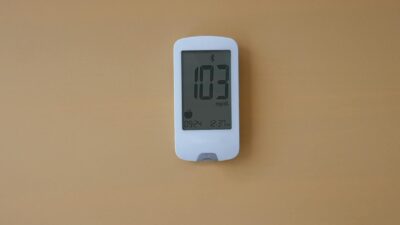
A blood glucose monitor watch, on its own, cannot measure your blood sugar. The FDA issued a consumer safety alert in February 2024 warning that no smartwatch or smart ring has been cleared to measure glucose non-invasively. What does work is pairing an FDA-cleared continuous glucose monitor (CGM) such as Dexcom or FreeStyle Libre with a smartwatch that displays the readings. The watch shows the data; the CGM still performs the measurement.
The FDA Warning on Blood Glucose Monitor Watches
In February 2024, the U.S. Food and Drug Administration issued an unusually direct safety communication: “Do Not Use Smartwatches or Smart Rings to Measure Blood Glucose Levels.” The agency noted that multiple companies were marketing wearables claiming to measure blood sugar without needles or skin penetration. None of them had FDA clearance for that use. Inaccurate readings could lead to wrong insulin doses, missed hypoglycemia, or delayed treatment.
The alert specifically covered smartwatches and smart rings, regardless of brand. It did not cover FDA-cleared CGMs whose readings are displayed on a watch; that is a different, valid workflow.
Why a Blood Glucose Monitor Watch Alone Does Not Work
Measuring glucose without piercing the skin is genuinely hard. Blood sugar is a low-concentration analyte behind layers of skin, sweat, and moving tissue. Researchers have tried optical spectroscopy, microwave sensing, and sweat-based biosensors for decades. Real-world accuracy has not matched the 8 to 10 percent MARD of current minimally invasive CGMs, which place a tiny filament in the interstitial fluid under the skin.
Several well-funded efforts (including public reports from Apple) are still in development, but as of early 2026 no non-invasive wearable has cleared the FDA’s rigorous glucose-measurement standards. If a product advertises needle-free readings today, consider the claim unproven.
How a Legitimate CGM Plus Smartwatch Setup Works
Here is what actually functions:
- You wear an FDA-cleared CGM sensor on the back of your upper arm or abdomen. The sensor measures glucose every one to five minutes.
- A transmitter sends the reading via Bluetooth to your smartphone’s CGM app (Dexcom G7, FreeStyle Libre 3, Stelo, etc.).
- The phone app shares the value with your Apple Watch, Wear OS watch, or Garmin via the watch’s companion app.
- The watch face or complication displays the number and trend arrow, and can trigger vibration alerts.
The watch is a second screen, not a sensor. That distinction matters because any accuracy discussion traces back to the CGM, not the wristwear.
Popular CGM and Watch Pairings
| CGM | Apple Watch | Wear OS | Garmin |
|---|---|---|---|
| Dexcom G7 | Yes (native app + complications) | Yes | Through Dexcom Connect IQ |
| FreeStyle Libre 3 Plus | Yes (LibreLink app) | Yes | Limited via third-party apps |
| Dexcom Stelo (OTC) | Yes | Yes | Via third-party apps |
| Eversense 365 | Yes (via phone relay) | Yes | No native support |
Red Flags for Blood Glucose Monitor Watch Scams
- Claims of “needle-free,” “laser-based,” or “non-invasive” glucose measurement with no FDA clearance listed.
- Prices that look too cheap compared to prescription CGMs (often under 100 dollars).
- Vague mentions of “AI algorithms” without published validation data.
- Look-alike branding that mimics Apple Watch, Dexcom, or Libre.
- Heavy social-media ads and no clinical study citations.
If a product checks several of these boxes, consider it unverified. The American Diabetes Association Standards of Care recommend only FDA-cleared monitoring systems for people who depend on glucose readings to guide treatment.
Who Is at Highest Risk from Inaccurate Readings?
Anyone taking insulin, sulfonylureas, or other hypoglycemia-risk drugs could suffer serious harm from a wrong reading. A smartwatch that overestimates glucose might cause you to take unnecessary rapid-acting insulin, dropping your blood sugar to dangerous lows. Parents of children with type 1 diabetes are often targeted by scam marketing because remote monitoring is an emotional pain point.
Even if you do not take insulin, using a fake glucose watch to guide diet or prediabetes treatment choices means acting on random numbers. That is not helpful, and it can mask real problems.
What Actually Helps for Prediabetes and Type 2 Diabetes
If your goal is to understand how meals, sleep, and activity affect your blood sugar, the options that work are:
- An FDA-cleared CGM (prescription or the over-the-counter Dexcom Stelo).
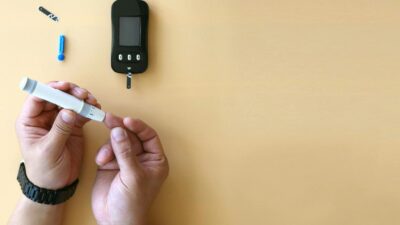
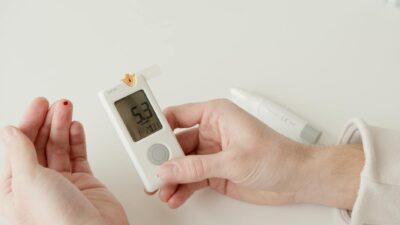
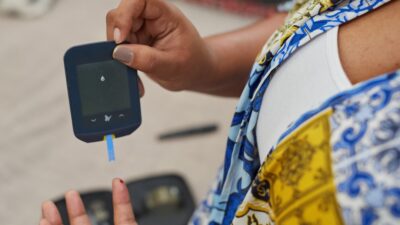
- A fingerstick glucose meter with log-keeping.
- Lab A1C testing every 3 to 6 months.
- Clinician-directed prediabetes education.
Pair any of these with habit changes you can read about in our diet and nutrition hub, and you will get far more signal than any non-invasive wristwear promises today.
The Bottom Line
There is no blood glucose monitor watch that measures blood sugar by itself in 2026. The FDA has explicitly warned against such products. What works is an FDA-cleared CGM paired with a smartwatch that displays the CGM’s data. Do not purchase a wrist or ring device based on glucose-reading claims until the FDA clears it. If you rely on glucose data for insulin decisions, stick to validated systems and bring any new device to your clinician before using it.
Medical disclaimer: This article is educational and is not medical advice. Discuss all glucose-monitoring decisions with your healthcare provider, especially if you take insulin or other diabetes medications.