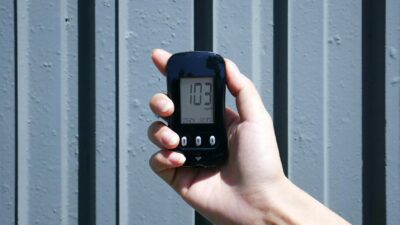
First, the spelling. Dexcom Stello is a common misspelling of Dexcom Stelo, which is the actual name of Dexcom’s over-the-counter continuous glucose monitor. If you came here looking for Stello, you are looking for Stelo, with a single L. The rest of this article covers Stelo factually: how it works, its accuracy, who it is for, and its limitations.
Why the Misspelling Is So Common
Stelo is a short brand name that sounds like “stellar” or “Stello,” so English speakers often double the L by instinct. Dexcom uses the correct spelling consistently: S-t-e-l-o. The official app, packaging, and product pages all use that version. If you are searching for manuals, support, or the app store listing, use the correct spelling to avoid misleading results.
What Dexcom Stelo Actually Is
Stelo is the first FDA-cleared over-the-counter continuous glucose monitor in the United States. It was authorized in March 2024 for adults 18 and older who do not use insulin. The target users are people with prediabetes, people with type 2 diabetes managed without insulin, and adults generally curious about how food, activity, and sleep affect their glucose. You can buy it online at Stelo.com without a prescription.
For readers wondering where glucose tracking fits in a prediabetes plan, our A1C levels guide explains how continuous readings complement the three-month A1C average.
How Stelo Works
Stelo is a small, disc-shaped sensor applied to the back of the upper arm with a one-step applicator. A thin filament sits just under the skin and measures glucose in interstitial fluid. Readings are transmitted via Bluetooth to the Stelo smartphone app every 15 minutes. After a short warm-up, the app shows current glucose, daily trend graphs, time-in-range summaries, and simple insights that connect meals or activities to glucose responses.
There are no fingerstick calibrations required. Each sensor lasts 15 days, after which you apply a fresh one. Stelo does not emit real-time high or low alarms; it is designed for pattern recognition rather than acute safety alerts.
Accuracy
Clinical data submitted to the FDA show Stelo’s mean absolute relative difference is around 10 percent against reference lab values, which is in the same range as other OTC and prescription CGMs. Accuracy can be lower during the first 12 hours after insertion, during rapid glucose changes (such as immediately after a high-carbohydrate meal), and at extreme values. Sensor location, hydration, and skin condition all play a role.
Stelo in Context
| Feature | Dexcom Stelo (OTC) | Dexcom G7 (Rx) | Abbott Lingo (OTC) |
|---|---|---|---|
| Prescription | No | Yes | No |
| Target user | Non-insulin adult | All ages, all types | Metabolic wellness |
| Wear time | 15 days | 10 days | 14 days |
| Typical MARD | ~10% | ~8.2% | ~9-10% |
| Real-time alarms | No | Yes | No |
| Reading interval | 15 minutes | 5 minutes | 1 minute |
| Approx. cost | ~$89-99 per sensor | Varies by payer | ~$49-89 per sensor |
Who Benefits from Stelo
- Adults with prediabetes who want feedback on specific meals.
- Adults with type 2 diabetes managed with oral medications, diet, or exercise.
- People making a major lifestyle change such as a new eating pattern or exercise program.
- Individuals with a family history of diabetes who want more data than an annual A1C.
Who Should Not Use Stelo
- Anyone who takes insulin or has experienced severe hypoglycemia.
- Pregnant users; Stelo is not validated in pregnancy.
- Children or adolescents under 18.
- People relying on a CGM to diagnose diabetes; diagnosis requires clinical labs.
- Individuals who might be triggered by additional tracking, especially with a history of disordered eating.
Getting Useful Data from Stelo
Think of Stelo as a two to four-week experiment rather than a permanent accessory. In the first week, live normally and establish a baseline. In the following weeks, change one variable at a time: add protein at breakfast, take a 10-minute walk after dinner, shift dinner earlier, or swap white rice for quinoa. See how your curves respond. Anchor these experiments in the principles in our diet and nutrition hub.
What the Readings Mean
For adults without diabetes, fasting glucose is typically 70 to 99 mg/dL and post-meal peaks generally stay below 140 mg/dL. Prediabetes ranges include 100 to 125 mg/dL fasting or 140 to 199 mg/dL two hours after a meal. Occasional spikes above these thresholds do not equal diabetes, but sustained patterns deserve a clinician conversation and an A1C test.
Cost and Purchase
Stelo is sold through Dexcom’s direct-to-consumer Stelo site. Single sensors run about 99 US dollars; monthly subscriptions deliver two sensors at roughly 89 dollars each. Insurance generally does not cover OTC CGMs, but HSA and FSA accounts may reimburse. Shipping is direct to your home after a short eligibility check.
Safety and Skin Care
Rotate arms each sensor cycle to reduce irritation. Avoid applying lotion where the adhesive sits. If the skin under a sensor becomes red, itchy, or raised, remove it and consult a pharmacist or clinician. Mild bruising at the insertion site is common; significant pain, swelling, or infection is not and warrants medical attention.
The Bottom Line
Once you know Stello is actually Stelo, the device itself is straightforward: a 15-day wearable CGM for adults who do not use insulin. It excels at pattern recognition and falls short as a medical-grade alarm system. Use it as a structured learning tool, bring the trends to your clinician, and remember that durable health change comes from the behavior, not the sensor.
This article is educational and not a substitute for medical advice. Talk with your clinician before starting a CGM or acting on any unusual readings.