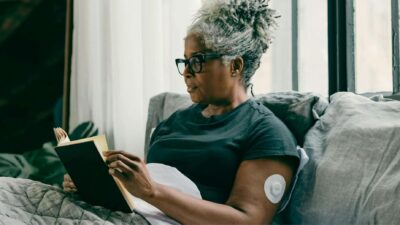
A FreeStyle glucose meter is one of the most common ways to check blood sugar in the United States. Abbott’s FreeStyle brand covers two different kinds of devices: classic fingerstick meters that use test strips and a small blood sample, and the FreeStyle Libre family of continuous glucose monitors that wear on the arm. Both are FDA-cleared; both are widely used; and the right pick depends on how often you need to check glucose and whether you use insulin.
The FreeStyle Lineup
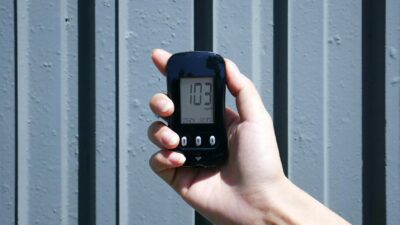
FreeStyle fingerstick meters include compact models such as the FreeStyle Lite and FreeStyle Precision Neo. These pocket-sized devices give a single glucose reading from a blood drop on a test strip, typically in about five seconds. They are inexpensive, battery-powered, and do not require a smartphone. Test strips are sold separately and often represent the largest ongoing cost.
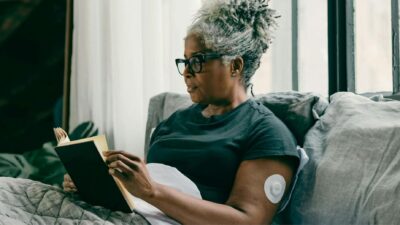
The FreeStyle Libre family includes Libre 2 Plus and Libre 3 Plus continuous glucose monitors. Libre sensors adhere to the back of the upper arm for 14 to 15 days, measuring glucose every minute and streaming data to a smartphone or reader. For broader context, see our A1C levels guide, which explains how spot-check or continuous readings relate to long-term averages.
How a Fingerstick Meter Works
You insert a single-use test strip into the meter, use a lancing device to produce a small drop of blood from the side of a fingertip, and touch the drop to the strip. An electrochemical reaction on the strip generates a signal proportional to glucose concentration, which the meter translates into a number. Modern meters need only a fraction of a microliter of blood and finish in about five seconds.
How FreeStyle Libre CGM Works
Libre uses a small sensor with a fine filament placed just under the skin on the back of the upper arm. A chemical reaction on the filament generates a signal based on glucose in the surrounding interstitial fluid. The sensor transmits readings via Bluetooth to a phone or reader, which displays current glucose, trend arrows, and historical graphs. There is a short warm-up after insertion and a typical 5 to 15-minute lag behind actual blood glucose.
Accuracy Standards and Real-World Performance
| Device | Type | Accuracy Benchmark | Typical Use |
|---|---|---|---|
| FreeStyle Lite | Fingerstick meter | Meets ISO 15197:2013 | Spot checks |
| FreeStyle Precision Neo | Fingerstick meter | Meets ISO 15197:2013 | Spot checks, ketone option |
| FreeStyle Libre 2 Plus | Continuous glucose monitor | MARD ~9.3% | Ongoing monitoring, alarms |
| FreeStyle Libre 3 Plus | Continuous glucose monitor | MARD ~7.9% | Ongoing monitoring, alarms |
| Abbott Lingo (OTC) | Continuous glucose monitor | MARD ~9-10% | Metabolic wellness |
The ISO 15197:2013 standard, which the FDA references for blood glucose monitoring systems, requires 95 percent of results to fall within 15 mg/dL of a reference value below 100 mg/dL and within 15 percent above 100 mg/dL. Mean absolute relative difference (MARD) is the preferred accuracy metric for CGMs; lower is better.
Who Should Use Which
- Type 1 diabetes: CGMs like Libre 3 Plus are the standard; fingerstick meters serve as backups.
- Type 2 diabetes on insulin: CGMs preferred; fingerstick may supplement during sensor swaps or warm-up.
- Type 2 diabetes without insulin: Either; many use periodic fingersticks or a structured CGM trial.
- Gestational diabetes: Fingersticks remain common; selected CGMs are used under specialist guidance.
- Prediabetes or wellness focus: Occasional fingersticks or an OTC CGM like Lingo or Stelo. See prediabetes basics.
Getting Accurate Fingerstick Readings
- Wash your hands with warm water and soap, then dry thoroughly. Food residue can produce falsely high readings.
- Insert a new strip before the blood drop is ready; most meters start countdown from strip insertion.
- Use a fresh lancet and lance the side of the fingertip, not the pad.
- Let the blood bead naturally; do not squeeze hard, which introduces tissue fluid and skews results.
- Touch the strip to the drop and hold until the meter confirms receipt.
- Store strips tightly sealed, at room temperature, and within the use-by date.
Getting Accurate CGM Readings
- Clean the skin with alcohol and allow it to dry before applying the sensor.
- Rotate arms each cycle to reduce irritation and improve adhesion.
- Allow the full warm-up period before trusting early readings.
- Confirm with a fingerstick if symptoms and sensor disagree, particularly during rapid changes.
- Keep the app updated, and review data trends weekly rather than minute by minute.
What the Numbers Mean
For adults without diabetes, fasting glucose is typically 70 to 99 mg/dL, with post-meal peaks under 140 mg/dL. Prediabetes ranges are 100 to 125 mg/dL fasting or 140 to 199 mg/dL at 2 hours. Diabetes is generally 126 mg/dL or higher fasting or 200 mg/dL or higher post-meal, confirmed with an A1C or repeat testing. Our diet and nutrition hub covers how specific foods affect these numbers.
Cost and Access
Fingerstick meters often cost less than 30 US dollars, with ongoing costs driven by strips (roughly 20 to 80 cents each). FreeStyle Libre CGMs typically cost 70 to 150 US dollars for a two-sensor month retail, though insurance coverage can reduce this significantly for qualifying users. Abbott’s OTC CGMs, Lingo and Rio, range from about 49 to 99 US dollars per sensor. Ask your pharmacy about manufacturer savings programs.
When to See a Clinician
Reach out if you see repeated fasting values above 100 mg/dL, post-meal peaks frequently above 180 mg/dL, or lows below 70 mg/dL. Do not adjust medication based on home readings without your clinician’s input. If readings fluctuate wildly, your clinician may order an A1C, a fasting lab glucose, or a clinic-supervised CGM trial.
The Bottom Line
FreeStyle is a trusted umbrella of glucose monitoring tools, from simple fingerstick meters to the Libre CGM family. Which one suits you depends on whether you use insulin, how much data your clinician wants, and how you prefer to track. Match the device to the decision it needs to support, apply good technique, and bring the results back to a professional who can connect them to your overall plan.
This article is educational and does not replace medical advice. Talk with your clinician before changing how you monitor glucose or use the data.