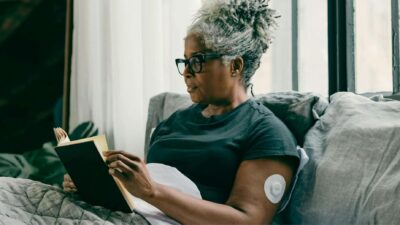
FreeStyle Libre 2 sensors are small, coin-sized continuous glucose monitors (CGMs) worn on the back of the upper arm. They measure interstitial glucose every minute, store up to eight hours of data, and alert you to highs and lows through an optional alarm — a key feature that distinguishes Libre 2 from the original 14-day Libre.
How Libre 2 Sensors Actually Work
Under the skin, a thin, flexible filament sits in the interstitial fluid (the liquid surrounding your cells). An enzyme on the filament reacts with glucose, and the resulting electrochemical signal is converted into a glucose estimate. Because interstitial glucose lags plasma glucose by five to ten minutes, CGM values trail finger-stick values slightly during rapid change, then catch up.
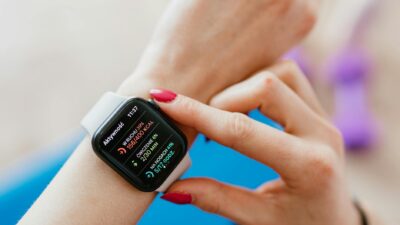
You pair the sensor with a compatible reader or the FreeStyle Libre 2 app on a supported smartphone. Bluetooth pushes real-time data and alarms; near-field communication (NFC) lets you scan the sensor for historical tracings.
Accuracy: What the MARD Number Means
CGM accuracy is usually summarized by MARD, the mean absolute relative difference between sensor values and a laboratory reference. Libre 2’s adult MARD is approximately 9.3 percent in Abbott’s pivotal study — close to Dexcom G6 and G7 and within the FDA’s expectation for non-adjunctive CGMs (those used without routine finger-stick calibration).
Accuracy varies by glucose range. Most CGMs are slightly less accurate below 70 mg/dL. If your sensor reading does not match your symptoms, a confirmatory finger-stick is appropriate, especially before treating a suspected hypoglycemic event.
Libre 2 vs Libre 14-Day vs Libre 3: Quick Comparison
| Feature | Libre 14-day | Libre 2 | Libre 3 |
|---|---|---|---|
| Wear time | 14 days | 14 days | 14 days |
| Real-time alarms | No (scan required) | Yes | Yes |
| Data push frequency | On scan | Every minute via Bluetooth | Every minute via Bluetooth |
| Sensor size | Coin-sized | Coin-sized | Smaller, lower profile |
| Finger-stick calibration | Not required | Not required | Not required |
| Reported adult MARD | ~9.4% | ~9.3% | ~7.9% |
Setting Up a Sensor Correctly
Skin preparation matters. Clean the back of the upper arm with soap and water, let it dry, and if needed use an alcohol wipe. Apply the sensor firmly and wait for the one-hour warm-up before readings appear. Rotate arms with each new sensor to reduce irritation.
Water exposure up to 1 meter for 30 minutes is allowed. Avoid hot tubs and extended swims. Keep the sensor away from strong MRI, X-ray, or CT fields, which can damage it.
When a Clinician Might Recommend Libre 2
CGM is standard of care for people on intensive insulin therapy. Use in non-insulin type 2 diabetes and prediabetes is growing but more variable. Indications a clinician may consider include:
- Hypoglycemia unawareness or frequent lows.
- Type 1 diabetes or insulin-requiring type 2 diabetes.
- Gestational diabetes monitoring, under obstetric direction.
- Behavior-change support in prediabetes — to see how meals, exercise, and sleep affect personal glucose patterns.
If you are new to glucose monitoring, pair CGM insights with broader education on A1C levels and prediabetes fundamentals.
What Libre 2 Will Not Do
CGMs do not diagnose diabetes on their own. Diagnostic criteria from the American Diabetes Association rely on lab A1C, fasting plasma glucose, or oral glucose tolerance test results, not CGM averages. CGM can be a complementary data source that your clinician reviews alongside lab tests and symptoms.
Libre 2 also does not automatically dose insulin. It is a monitoring device; therapeutic decisions remain with you and your clinician.
Side Effects and Troubleshooting
Most users experience no issues. Reported problems include skin irritation from adhesive, early sensor failure, and occasional “signal loss” notifications. If a sensor falls off before 14 days, Abbott’s customer support typically replaces it on request.
For persistent skin reactions, a barrier film or hypoallergenic tape layer under the sensor patch may help. Consult a dermatologist or your prescriber if irritation is severe.
Cost and Coverage
Libre 2 is available by prescription in the US and over the counter in some states as of 2024. Insurance coverage is strong for insulin-treated diabetes, mixed for non-insulin type 2, and limited for prediabetes. Cash price runs roughly $75–$90 per 14-day sensor at major pharmacies, excluding reader or app costs.
The Bottom Line
FreeStyle Libre 2 sensors offer continuous interstitial glucose data for 14 days with optional real-time alarms and a MARD around 9.3 percent. They are most useful when your clinician can interpret the patterns in the context of your broader care plan — not as a standalone replacement for lab testing or clinical judgement.
This article is for educational purposes only and is not medical advice. Always consult a licensed healthcare professional about any device, test, or health decision.