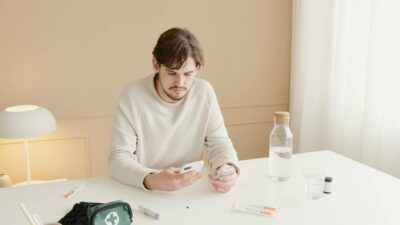
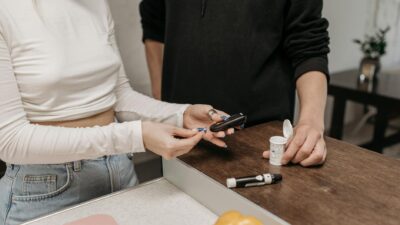
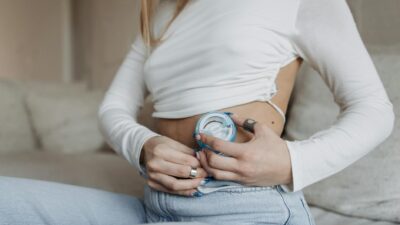
A truly needle-less blood sugar monitor — one that reads glucose through the skin with zero penetration — is not FDA-cleared at consumer grade in 2026. Continuous glucose monitors (Dexcom G7, FreeStyle Libre 3, Abbott Lingo, Dexcom Stelo, Medtronic Simplera) use a hair-thin filament inserted once every 10 to 15 days; the insertion itself is usually painless, but not zero-penetration. Smart watches and rings advertising glucose measurement are not FDA-cleared. The closest to “needle-less” daily life is the Dexcom Eversense implanted CGM — a 6-month implanted sensor.
What “Needle-Less” Actually Means
- Zero penetration: true non-invasive — skin is never broken. No FDA-cleared device achieves this
- Minimally invasive: a thin filament inserted under skin for continuous reading (CGMs like Dexcom G7, Libre 3)
- Implanted: a small sensor surgically placed under skin for extended wear (Eversense)
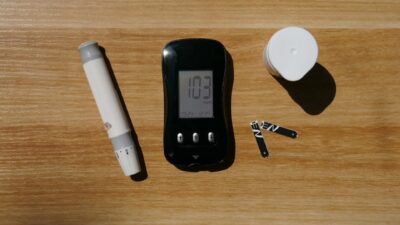
- Traditional finger-stick: multiple daily punctures — the old standard, what “needle-less” is marketed against
Current Options Ranked by “How Close to Needle-Less”
| Option | Penetration Required | How Often | Pain |
|---|---|---|---|
| Traditional finger-stick meter | Daily punctures | 1–6 per day | Mild, routine |
| Dexcom G7 / FreeStyle Libre 3 | Filament insertion every 10–15 days | 1 per sensor change | Usually painless |
| Abbott Lingo / Dexcom Stelo | Same as above (OTC version) | 1 per sensor change | Usually painless |
| Dexcom Eversense (implanted) | 5-min clinic procedure every 6 months | 1 per 6-month period | Mild from local anesthetic |
| Smart rings, watches advertising glucose | None (but not accurate) | N/A | None |
| True non-invasive (not yet) | None | N/A | None — not FDA cleared |
What Smart Rings, Watches, and Optical Devices Actually Do
- Some use near-infrared light transmitted through the skin to attempt to measure glucose
- None have FDA clearance as glucose monitors
- Many display “wellness” metrics, not validated glucose in mg/dL
- The companies that DO have glucose research programs — Apple, Samsung, Know Labs, Nix Biosensors, Afon — have not announced FDA clearance as of 2026
- Any Amazon or Alibaba product claiming needle-less glucose is unvalidated and should not be used
Why Non-Invasive Is So Hard
- Glucose is present at very low concentrations (0.007 to 0.018 percent of body mass)
- Distinguishing it from water, proteins, and lipids through intact skin is technically demanding
- Skin pigmentation, hydration, temperature, and blood flow all affect optical measurements
- Decades of attempts (GlucoWatch, Pendra) have failed to clear FDA review
- Active development continues at major tech companies
- No realistic timeline for consumer FDA clearance has been announced
The Closest Thing to Needle-Less Today: CGMs
- Filament is about the diameter of a human hair (0.2 mm)
- Spring-loaded applicator inserts painlessly in most users
- Sensor wears 10 to 15 days (Dexcom G7 at 10 + grace; Libre 3 Plus at 15)
- Once inserted, no additional skin penetration for the wear period
- Readings every 1 to 5 minutes
- Data streams to smartphone; no finger sticks needed for most dosing decisions
- Replaces 4 to 6 daily finger sticks with 1 insertion every 2 weeks
The Even Closer: Eversense Implanted CGM
- Small sensor (smaller than a US penny) implanted under the skin in a 5-minute in-office procedure with local anesthetic
- Wears for 6 months (Eversense 180 — 180 days)
- Small transmitter worn on top of the skin for communication and charging
- Readings every 5 minutes
- Requires 2 finger-stick calibrations per day at home
- Most daily activities — showering, swimming, exercise — can be done without interruption
- Insertion and removal are quick outpatient procedures
- Not self-insertable; requires trained clinician
What’s Ahead in Non-Invasive
Active development in 2026:
- Apple: rumored decade-long glucose project; no FDA application announced
- Samsung: research on Galaxy Watch glucose sensor; no FDA clearance
- Know Labs (KnowU): non-invasive wrist device in trials
- Nix Biosensors: wearable for glucose and other metabolic markers
- Afon: non-invasive radio frequency sensor in trials
- Rockley Photonics: optical sensor platform in development
Expect 2 to 5 years (or more) before any of these reach FDA clearance for glucose measurement. Do not invest in or rely on pre-launch products.
How to Identify Fake “Needle-Less” Devices
- Marketed as “non-invasive glucose monitor” without FDA clearance number
- Sold on Amazon, Alibaba, or Temu with no regulatory information
- No company name or contact information
- Under $100 with no subscription or strip requirement
- Claims to be “painless alternative” to finger sticks or CGM
- Uses “wellness score” instead of specific mg/dL value
- No clinical trial data or validation citations
- No prescription required (CGMs typically require one; OTC Stelo and Lingo are the exception but are still FDA cleared)
Best Current Options by User Type
- Type 1 diabetes: Dexcom G7 or FreeStyle Libre 3 (prescription, likely insurance-covered)
- Type 2 on insulin: Same as above
- Type 2 not on insulin, curious: OTC Abbott Lingo or Dexcom Stelo ($89/month self-pay)
- Intermittent monitoring (2 weeks at a time): OTC Stelo or Lingo
- Very long wear preference: Dexcom Eversense (6-month implanted)
- Medicare user: Prescription CGM covered for insulin-requiring diabetes
Related Reading
See our guides on no-stick glucose meters, FreeStyle Libre 3, and detection of prediabetes.
The Bottom Line
A truly needle-less blood sugar monitor — one that reads glucose through the skin with zero penetration — does not exist at FDA-cleared consumer grade in 2026. Smart rings, watches, and optical devices claiming this are not validated medical devices. The closest to needle-less are CGMs (Dexcom G7, FreeStyle Libre 3) with a hair-thin filament inserted once every 10 to 15 days, or the Dexcom Eversense implanted sensor with a 6-month wear period. If you are tired of finger sticks, a CGM is the best practical option — talk to your clinician about starting. For reliable glucose data today, avoid the “needle-less” marketing promises from unvalidated devices.