A noninvasive glucose monitor — a device that measures blood sugar without piercing the skin — does not exist in FDA-cleared, consumer form as of 2026. Despite marketing from smartwatch and smart-ring makers, the FDA has issued a formal safety warning against these products and recommends minimally invasive or traditional fingerstick monitoring instead.
The Current Regulatory Landscape
The FDA has authority over all devices marketed in the United States for diagnostic use, including blood glucose measurement. Every commercially available, clinically validated glucose monitor — fingerstick meter or continuous glucose monitor (CGM) — has either pierced the skin with a lancet or placed a small sensor filament under the skin. As of 2026, no fully noninvasive device has cleared this regulatory bar for home or clinical use.
This is not for lack of trying. Over 30 companies have publicly announced noninvasive glucose projects since the early 2000s. Several well-funded efforts collapsed after clinical data failed to meet FDA accuracy standards, including Google/Verily’s contact lens project and a string of watch-based optical attempts.
The FDA’s February 2024 Safety Communication
On February 21, 2024, the FDA issued a safety communication titled “Do Not Use Smartwatches or Smart Rings to Measure Blood Glucose Levels.” The communication warned that the agency had not authorized, cleared, or approved any smartwatch or smart ring that purports to measure blood glucose noninvasively. The FDA’s core points:
- These devices have not been evaluated for accuracy.
- Inaccurate glucose readings can lead to errors in diabetes management.
- Errors may include incorrect insulin dosing that causes severe hypoglycemia or hyperglycemia.
- The warning applies to any device marketed directly to consumers, regardless of brand.
The FDA specifically noted that some devices being sold use paired third-party smartwatches or phone apps that display glucose-like numbers. Those numbers are not clinically validated.
What “Minimally Invasive” Actually Means
Many consumers use “noninvasive” to describe any glucose monitor that does not require a daily fingerstick. Technically, continuous glucose monitors like Dexcom G7 and FreeStyle Libre 3 are classified as minimally invasive. A hair-thin flexible filament, about 5 mm long, sits in the interstitial fluid just beneath the skin surface. It is inserted with a spring-loaded applicator and remains in place for 10-15 days depending on the model.
The distinction matters because the FDA’s clearance pathway for minimally invasive CGMs requires accuracy data measured against laboratory reference methods. These devices typically achieve a mean absolute relative difference (MARD) of 8-10% — meaning readings are within 10% of lab values on average, which is accurate enough for insulin-dose decisions in most ranges.
Comparing Glucose Monitoring Options
| Category | Example Devices | FDA Status (2026) | Skin Penetration |
|---|---|---|---|
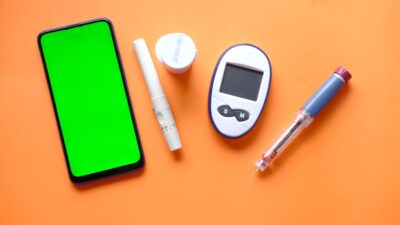
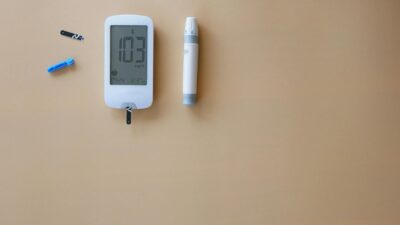
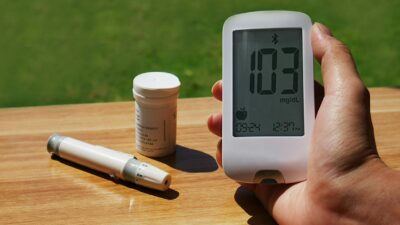
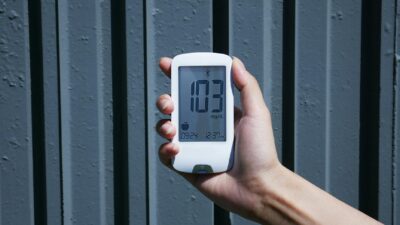
| Fingerstick meter | Contour Next, OneTouch Verio | Cleared | Lancet puncture |
| Minimally invasive CGM | Dexcom G7, FreeStyle Libre 3, Stelo | Cleared | Filament 5 mm under skin |
| Implantable CGM | Eversense E3 | Approved | Sensor implanted by clinician |
| Noninvasive smartwatch/ring | Various unapproved brands | Not cleared; FDA warning | None claimed |
| Optical/research devices | Investigational | Clinical trials only | Varies |
Why Regulatory Clearance Is Essential
Glucose monitoring is a high-stakes medical measurement. An unvalidated reading that suggests 120 mg/dL when your actual glucose is 45 mg/dL can lead to missed hypoglycemia treatment — a potentially life-threatening error. Conversely, a reading of 150 mg/dL when your actual value is 280 mg/dL can mask worsening diabetes. FDA clearance requires manufacturers to prove that readings are accurate enough to guide real decisions, across wide ranges of skin types, activity levels, and coexisting conditions.
What to Use Instead
If you have been diagnosed with prediabetes or diabetes and want home glucose data, work with your clinician to choose an FDA-cleared option:
- Fingerstick meter: Inexpensive, accurate, ideal for spot checks.
- Prescription CGM: Dexcom G7 or FreeStyle Libre 3 for insulin users; covered by most plans for type 1 and many type 2 diabetes patients.
- Over-the-counter CGM: Abbott Stelo (approved March 2024) and Dexcom Stelo-class products are available without a prescription for adults not using insulin.
Pair any device with regular lab A1C testing, which remains the reference standard for glycemic control.
What’s in the Pipeline
Research into truly noninvasive glucose sensing continues. Active technology approaches include near-infrared and Raman spectroscopy, radio-frequency sensing, photoacoustic detection, and sweat/saliva biosensors. Some devices have entered FDA feasibility studies, but none have reached commercial clearance. A commercially viable noninvasive monitor would need to match CGM-level accuracy (MARD under 10%) while handling skin diversity, hydration shifts, and daily-life conditions.
How to Evaluate Noninvasive Device Claims
If you see a device marketed as noninvasive, check the FDA’s device database at fda.gov for a 510(k) clearance, De Novo authorization, or PMA approval with a glucose monitoring indication. If none is listed, assume the device is not cleared. Marketing language like “glucose trends,” “wellness metric,” or “estimated glucose” is a red flag — these phrases are often used to sidestep medical-device regulations.
The Bottom Line
No truly noninvasive glucose monitor has earned FDA clearance for consumer use as of 2026, and the FDA has explicitly warned against smartwatches and rings that claim to measure blood glucose without piercing the skin. Minimally invasive CGMs and fingerstick meters remain the accurate, validated options. Talk with your clinician about which FDA-cleared device fits your situation.
Medical disclaimer: This article is for educational purposes only and is not a substitute for professional medical advice, diagnosis, or treatment. Always consult your physician for guidance on glucose monitoring and diabetes management.