If you have seen dosing discussions online, you may be wondering: 20 units of semaglutide is how many mg? On a standard 0.68 mg/mL semaglutide preparation, 20 units drawn on a U-100 insulin syringe (0.20 mL) equals roughly 0.136 mg. The answer changes when the concentration changes, so the label on your specific product always wins.
Why Units and Milligrams Are Not the Same
Insulin syringes are marked in units, where 100 units equals 1 mL. That is a volume scale, not a weight scale. Semaglutide, by contrast, is dosed in milligrams, which is a weight measurement. To go from one to the other you need the concentration printed on the pen or vial, usually expressed as mg per mL.
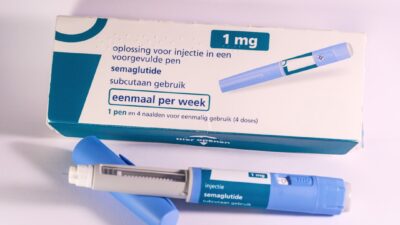
Branded semaglutide products such as Ozempic and Wegovy are delivered through pre-filled pens that dial in milligrams directly, so patients never need to do unit math. The question tends to come up with compounded semaglutide, which pharmacies sometimes dispense in vials alongside insulin syringes.
The Basic Conversion Math
The formula is straightforward: milligrams = volume in mL times concentration in mg/mL. Because 100 units equals 1 mL on a U-100 insulin syringe, 20 units equals 0.20 mL. Multiply that volume by the product concentration to get the milligram amount. This is purely an educational calculation and is not a dosing recommendation.
Conversion Reference at Common Concentrations
The table below shows how 20 units (0.20 mL) converts at several concentrations that appear on real-world semaglutide products. Your actual product may use a different concentration, so read the label.
| Concentration (mg/mL) | Volume for 20 Units | Approx. Milligrams |
|---|---|---|
| 0.68 mg/mL (Wegovy-style) | 0.20 mL | 0.136 mg |
| 1.34 mg/mL (Ozempic 2 mg pen) | 0.20 mL | 0.268 mg |
| 2.27 mg/mL (higher-dose pen) | 0.20 mL | 0.454 mg |
| 2.5 mg/mL (compounded example) | 0.20 mL | 0.5 mg |
| 5 mg/mL (compounded example) | 0.20 mL | 1.0 mg |
Branded Versus Compounded Semaglutide
The U.S. Food and Drug Administration has only approved semaglutide in branded pens: Ozempic and Rybelsus for type 2 diabetes and Wegovy for chronic weight management. The FDA has warned that compounded GLP-1 products may use salt forms or concentrations that differ from the approved versions.
This matters for unit math because compounded concentrations vary widely. Two vials that both say “semaglutide” can deliver meaningfully different milligram amounts at the same syringe mark.
Clinical Dose Ranges You May See
For background only, semaglutide is typically titrated. Wegovy weekly doses include 0.25 mg, 0.5 mg, 1 mg, 1.7 mg, and 2.4 mg. Ozempic weekly doses include 0.25 mg, 0.5 mg, 1 mg, and 2 mg. The goal of titration is to let the stomach and nervous system adapt, which may reduce nausea and other gastrointestinal effects.
Side Effects to Discuss With Your Clinician
Common side effects reported on semaglutide labels include nausea, diarrhea, constipation, vomiting, abdominal pain, and fatigue. Serious but less frequent concerns include pancreatitis, gallbladder issues, and a labeled warning about thyroid C-cell tumors in rodents. If you are exploring GLP-1 therapy as part of a broader plan, review our treatment overview and talk with your clinician about how medication fits into diet and activity changes.
How This Connects to Prediabetes Care
Many people researching semaglutide are trying to lower A1C or body weight. If you are in the prediabetes range, read our guides to A1C levels and whether prediabetes is reversible. Medication is one tool, and it works best alongside nutrition and movement described in our diet and nutrition resources.
Common Mistakes With Unit Math
People often assume 20 units equals 0.2 mg because the digits look similar. That shortcut ignores concentration and can lead to doses that are either sub-therapeutic or too high. Another mistake is mixing up syringe types; a U-40 or tuberculin syringe reads differently from a U-100 insulin syringe, so the volume for 20 marks changes.
The Bottom Line
The short answer to “20 units of semaglutide is how many mg” is: it depends on the concentration. On a 0.68 mg/mL preparation, 20 units is about 0.136 mg; on a 2.5 mg/mL compound, the same 20 units would be about 0.5 mg. Always verify your product label with your pharmacist and follow the exact dosing plan your prescriber gave you, rather than relying on unit-to-milligram shortcuts. This article is educational and is not medical advice.