An insulin pen is a portable injection device that delivers insulin from a pre-filled cartridge through a small disposable needle. Pens are easier to carry and dose accurately than the older vial-and-syringe approach and are now the most common way Americans take insulin. This guide covers how to use one step by step, the major types and brands, needle choices, storage, and what they cost.
What an Insulin Pen Is
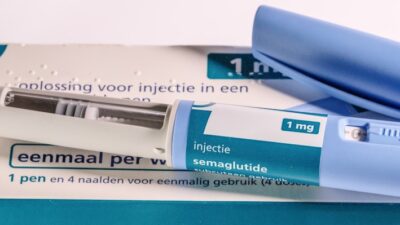
An insulin pen looks like a thick marker. It contains:
- An insulin cartridge (built-in for disposable pens, replaceable for reusable pens)
- A dose dial that lets you select insulin units
- A push button that delivers the dose
- A removable cap and a separate, single-use pen needle that screws onto the tip
Disposable vs Reusable Pens
| Feature | Disposable Pen | Reusable Pen |
|---|---|---|
| Insulin source | Built-in pre-filled cartridge | Replaceable 3-mL cartridge |
| Lifespan | Discarded when empty | 1 to 5 years (varies by brand) |
| Up-front cost | None (cost is in the insulin) | Pen body $25 to $50 (often free with prescription) |
| Per-unit insulin cost | Higher | Lower |
| Memory feature | Some models | Many models |
| Best for | Convenience, travel, lower volume | Daily use, environmental considerations, long-term users |
How to Use an Insulin Pen: Step by Step
- Wash your hands with soap and water.
- Check the insulin: confirm it is the correct type and not expired or cloudy when it should be clear (or properly mixed for cloudy NPH).
- Attach a new needle: peel the paper tab, screw the needle on straight, remove both caps (outer and inner).
- Prime the pen: dial 2 units, hold the pen needle-up, tap to move bubbles up, and press the button until a drop of insulin appears at the tip. Repeat if no drop appears.
- Dial your dose: turn the dose selector to your prescribed number of units.
- Choose an injection site: abdomen (most common, fastest absorption), outer thigh, upper outer arm, or upper buttock. Stay 2 inches from the navel and avoid scars or moles.
- Inject: insert the needle straight in (90 degrees) into a pinched fold of skin. Press the button all the way down.
- Hold for 6 to 10 seconds with the button pressed before withdrawing, to make sure the full dose is delivered.
- Withdraw and dispose: remove the needle and place it in a sharps container. Never recap with the inner cap.
- Replace the pen cap and return the pen to room-temperature storage.
Always rotate sites within a region (for example, left and right sides of the abdomen) to prevent lipohypertrophy, the lumpy fatty tissue that develops with repeated use of the same spot and impairs insulin absorption.
Pen Needle Sizes
Modern pen needles are very short and thin. Common gauges are 31 to 33 (smaller number = thicker), and lengths range from 4 to 12.7 mm.
| Length | Best For |
|---|---|
| 4 mm | Most adults and children; least painful; effective even in heavier patients |
| 5 mm | Many adults; common default |
| 6 mm | Adults; consider pinching skin |
| 8 mm | Older recommendation; rarely needed today |
| 12.7 mm | Almost never recommended |
According to the American Diabetes Association, the 4 mm needle is now generally recommended for most users because it is as effective as longer needles, less painful, and reduces the risk of accidental intramuscular injection.
Storage Rules
- Unopened pens: refrigerate at 36 to 46 °F (2 to 8 °C) until the printed expiration date.
- In-use pens: store at room temperature (below 86 °F / 30 °C) away from direct sunlight or heat.
- Each insulin has a different in-use shelf life, typically 7 to 56 days depending on brand and formulation. Examples (verify with package insert):
- Lispro (Humalog): 28 days
- Aspart (Novolog): 28 days
- Glargine U-100 (Lantus, Basaglar): 28 days
- Glargine U-300 (Toujeo): 56 days
- Degludec (Tresiba): 56 days
- Detemir (Levemir): 42 days
- Do not freeze. Frozen insulin must be discarded.
- Travel with insulin in carry-on luggage, not checked baggage (cargo holds can freeze).
Brands by Insulin Type
Long-Acting (Basal) Pens
- Lantus, Basaglar, Toujeo, Semglee (glargine)
- Levemir (detemir)
- Tresiba (degludec)
Rapid-Acting (Mealtime) Pens
- Humalog, Lyumjev, Admelog (lispro)
- Novolog, Fiasp (aspart)
- Apidra (glulisine)
Pre-Mixed Pens
- Humalog Mix 75/25, NovoLog Mix 70/30
- Humulin 70/30 (regular and NPH)
Combination Pens (Insulin + GLP-1)
- Soliqua (glargine + lixisenatide)
- Xultophy (degludec + liraglutide)
Cost and Insurance
Insulin pricing in the United States has changed significantly. List prices used to range from $100 to over $300 per pen for many brands. Recent changes include:
- Medicare Part D caps insulin out-of-pocket at $35 per month per covered insulin.
- Eli Lilly, Novo Nordisk, and Sanofi have reduced list prices on several insulins.
- Authorized generics (Semglee, Lispro Authorized Generic, Insulin Aspart) are available at lower cost.
- Walmart’s ReliOn line offers some insulins at lower over-the-counter prices, though these are older formulations.
- Manufacturer assistance programs and copay cards can reduce costs further.
Always verify pricing with your pharmacy and insurance, since formularies change.
Common Mistakes to Avoid
- Forgetting to prime: can deliver less than the dialed dose.
- Pulling the needle out too quickly: can leave insulin behind.
- Reusing needles: dulls the tip, increases pain and infection risk.
- Injecting into the same spot repeatedly: causes lipohypertrophy and erratic absorption.
- Storing in a hot car or freezing in a refrigerator’s back wall: degrades insulin.
- Sharing pens: even with a new needle, contamination risk is real; the FDA explicitly warns against this.
When to Call Your Care Team
- Blood glucose stays high after a corrected dose (suspect insulin failure or technique problem).
- Frequent or severe low blood glucose (under 70 mg/dL).
- Visible lumps at injection sites.
- Unexpectedly cloudy clear insulin or particles in the cartridge.
- Pen mechanism not delivering accurately.
For background on insulin within broader diabetes care, see our treatment hub. People newly diagnosed who want to understand monitoring should also visit our blood sugar monitor page.
The Bottom Line
An insulin pen is a simple, accurate, and portable way to take insulin. Whether you choose disposable or reusable, the keys to safe use are the same: new needle every injection, careful priming, site rotation, correct storage, and clear communication with your prescribing clinician about doses and side effects. If you are starting your first pen, ask your pharmacist or diabetes educator for a hands-on demonstration; ten minutes of training prevents months of avoidable problems.