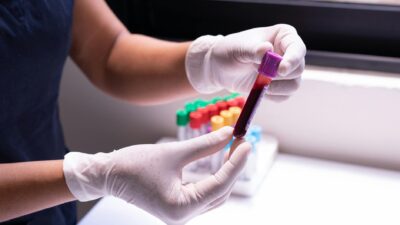
The A1C test does not require fasting. You can eat and drink normally before the blood draw because A1C measures the percentage of your hemoglobin that has glucose attached, reflecting average blood sugar over the past two to three months. A fasting glucose test, by contrast, is a single snapshot taken after an overnight fast.
Why A1C Doesn’t Require Fasting
When glucose circulates in your bloodstream, it slowly and permanently attaches to hemoglobin inside red blood cells. Because red blood cells live about 120 days, the percentage of glycated hemoglobin — hemoglobin A1C — gives a rolling average of blood sugar over roughly the previous 8 to 12 weeks.
That average is not meaningfully changed by whether you ate breakfast before the blood draw. A single meal, or even a single day of unusual eating, cannot move the needle much. This is exactly what makes A1C useful — it is less sensitive to day-to-day noise than a spot glucose test.
A1C vs. Fasting Glucose at a Glance
| Feature | A1C | Fasting Glucose |
|---|---|---|
| What it measures | Average blood sugar over 2-3 months | Blood sugar after 8-12 hours of fasting |
| Fasting required? | No | Yes |
| Units | Percent (%) | mg/dL (or mmol/L) |
| Normal | Below 5.7% | Below 100 mg/dL |
| Prediabetes | 5.7-6.4% | 100-125 mg/dL |
| Diabetes | 6.5% or higher | 126 mg/dL or higher |
For more detail on ranges and interpretation, visit our A1C levels hub.
What Your A1C Number Means
- Below 5.7%: Normal. Low diabetes risk, but some people with strong risk factors should still be screened regularly.
- 5.7 to 6.4%: Prediabetes. Blood sugar is higher than normal but not yet diabetes. Lifestyle change has been shown to reduce progression.
- 6.5% or higher: Diabetes, based on two separate tests or one test plus clear hyperglycemic symptoms.
The NIDDK notes that A1C reflects only average glucose — not the high spikes or low dips that can affect how you feel day to day.
Why Doctors Sometimes Order Both Tests
A1C and fasting glucose can disagree. For example, someone with frequent post-meal spikes but normal morning glucose may have an elevated A1C, while someone with mildly high morning glucose but otherwise stable readings may have a normal A1C.
Ordering both tests — plus sometimes an oral glucose tolerance test — helps your clinician see the full pattern. This is especially useful for diagnosing gestational diabetes, atypical type 1 diabetes, or early type 2 diabetes in high-risk populations.
When A1C Results Can Be Misleading
Several conditions can make A1C inaccurate. According to the American Diabetes Association, any situation that changes red blood cell lifespan may distort the result.
| Condition | Possible A1C Effect |
|---|---|
| Iron deficiency anemia | Falsely high |
| Recent blood loss or transfusion | Falsely low |
| Sickle cell trait / hemoglobin variants | Can be high or low depending on assay |
| Advanced chronic kidney disease | Usually falsely low |
| Pregnancy | Often falsely low in second and third trimesters |
| Chronic liver disease | Variable |
If any of these apply to you, your doctor may lean more heavily on fasting glucose, fructosamine, or continuous glucose monitoring data.
How A1C Is Measured
A1C is drawn from a standard venous blood sample or sometimes a finger-stick on a point-of-care device. Results usually return within a day or two from the lab. Point-of-care machines in clinics can deliver a result in a few minutes and are considered reliable for monitoring but may not be used alone for initial diagnosis.
How Often Should You Get Tested?
- Adults without risk factors: Every 3 years starting at age 35.
- Adults with risk factors: Annually or as your clinician advises.
- Prediabetes: Every 1-2 years.
- Diabetes (well-controlled): Every 6 months.
- Diabetes (not at goal or therapy changing): Every 3 months.
The CDC publishes specific screening recommendations on its diabetes testing page.
What to Do If Your A1C Is Elevated
- Confirm with a second A1C or fasting glucose if results are borderline.
- Review lifestyle factors — weight, activity, sleep, stress, diet.
- Check blood pressure, cholesterol, and kidney function.
- Discuss whether structured programs like the CDC National Diabetes Prevention Program are available.
- If you already have diabetes, review medications and technology (glucose meters, CGMs) with your care team.
For many people with prediabetes, sustained lifestyle change can reverse elevated A1C. Our is prediabetes reversible guide explains the evidence.
Practical Tips Before Your Blood Draw
- Drink plenty of water before the appointment — it may make the blood draw easier without affecting A1C.
- Take medications as usual unless your doctor advises otherwise.
- If you are also having fasting glucose or a lipid panel, follow fasting instructions specifically for those tests.
- Tell the lab about recent blood donations, transfusions, or hemoglobin variants.
The Bottom Line
The A1C test does not require fasting. It captures average blood sugar over 2-3 months, making it unaffected by a single meal. Fasting glucose remains useful for detecting short-term patterns and for confirming diagnoses when A1C may be inaccurate. Most clinicians use A1C and fasting glucose together — along with your symptoms and risk factors — to assess and monitor diabetes. Ask your healthcare team which tests fit your situation.