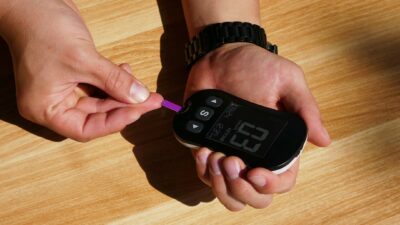
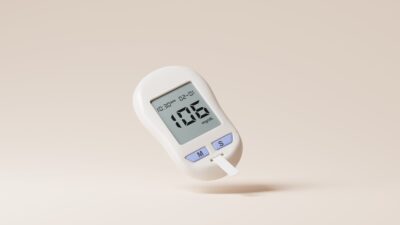
A blood sugar of 100 mg/dL is borderline. Measured fasting, it sits exactly at the threshold the American Diabetes Association uses to define impaired fasting glucose — the lower boundary of prediabetes. Measured after a meal or at a random time, 100 mg/dL is well within normal range and is not a concern. Context is everything, so the first thing to clarify is whether the reading was taken fasting.
What 100 mg/dL Means by Context
| Context | Category at 100 mg/dL | Concern Level |
|---|---|---|
| Fasting (8+ hours no food) | Impaired fasting glucose (lower bound) | Borderline — confirm |
| 1 hour after meal | Normal | None |
| 2 hours after meal (OGTT) | Normal (less than 140) | None |
| Random / no meal context | Normal | None |
| Bedtime | Normal to low-normal | None for most adults |
The Diagnostic Thresholds
- Fasting glucose: below 100 is normal; 100 to 125 is impaired fasting glucose (prediabetes); 126 or higher on two tests is diabetes.
- 2-hour OGTT: below 140 is normal; 140 to 199 is impaired glucose tolerance; 200 or higher is diabetes.
- A1C: below 5.7 percent is normal; 5.7 to 6.4 is prediabetes; 6.5 or higher is diabetes.
- Random with symptoms: 200 or higher with classic symptoms confirms diabetes.
If 100 mg/dL Is a Fasting Reading
A single fasting reading at the lower edge of prediabetes is not a diagnosis. The next reasonable steps:
- Repeat fasting test on a different day — confirm the trend
- Request an A1C from your doctor — captures three-month average
- Consider an oral glucose tolerance test if family history or risk factors are strong
- Review recent diet, sleep, stress, and any new medications (steroids and some antidepressants raise fasting glucose)
- Begin or intensify lifestyle measures — weight loss, walking, reducing refined carbs
Equivalent A1C If Average Glucose Stays Near 100
| Average glucose (mg/dL) | Estimated A1C (%) | Category |
|---|---|---|
| 85 | 4.6 | Normal |
| 100 | 5.1 | Normal |
| 120 | 5.7 | Prediabetes (lower bound) |
| 140 | 6.5 | Diabetes (lower bound) |
The formula is A1C = (average glucose + 46.7) / 28.7. If your fasting is 100 but your post-meal readings are higher, your average glucose may exceed 100 — making A1C a more complete picture.
Why Fasting Glucose Can Drift Up
- Dawn phenomenon: cortisol and growth hormone rise before waking, pushing liver glucose output up by 10 to 30 mg/dL
- Insulin resistance: the most common driver in adults; usually tied to abdominal weight gain and inactivity
- Sleep loss: less than 6 hours per night raises fasting glucose
- Late-night carbs: a heavy carb dinner can leave glucose elevated into morning
- Medications: corticosteroids, some beta-blockers, statins, and SSRIs nudge glucose up
- Illness or infection: stress hormones raise glucose for several days
Action Steps If Fasting Sits at 100 mg/dL
- Confirm with a repeat test — fasting glucose varies day to day by 10 to 20 mg/dL
- Get an A1C — best single marker of where you sit
- Lose 5 to 7 percent of body weight if overweight — the Diabetes Prevention Program showed a 58 percent reduction in progression to type 2 diabetes
- Move 150 minutes per week — walking after meals lowers post-meal peaks by 10 to 30 percent
- Reduce refined carbs — white rice, white bread, sugary drinks; replace with intact grains, legumes, and vegetables
- Sleep 7 to 9 hours — consistent sleep stabilizes morning glucose
- Recheck in 3 to 6 months — measure progress with both fasting and A1C
Emergency Thresholds (For Context — Not 100)
A reading of 100 mg/dL is not an emergency in any context. Emergency thresholds you should know:
- Below 54 mg/dL — severe hypoglycemia; treat with fast-acting carbs immediately
- Above 240 mg/dL with symptoms — call your doctor; check ketones if type 1
- Above 300 mg/dL — urgent contact; consider emergency care if symptomatic
- Above 400 mg/dL — emergency room
Adjacent Values
- 90 mg/dL: clearly normal fasting
- 100 mg/dL: borderline — at the prediabetes line
- 110 mg/dL: in the impaired fasting glucose range
- 120 mg/dL: upper prediabetes range
- 126 mg/dL: diabetes threshold on fasting
Related Reading
For more on interpretation, see detection of prediabetes, A1C levels, and our companion lookup on blood sugar 110 or the matching A1C 5.0 page.
The Bottom Line
Blood sugar of 100 mg/dL is borderline only in fasting context — it is the lower edge of impaired fasting glucose. In any other context it is normal. A single reading is not diagnostic; repeat the test, get an A1C, and review lifestyle. Most people at this level can return to clearly normal range with modest weight loss, regular activity, and fewer refined carbs. Talk to your doctor if repeated fasting readings stay at 100 mg/dL or higher.