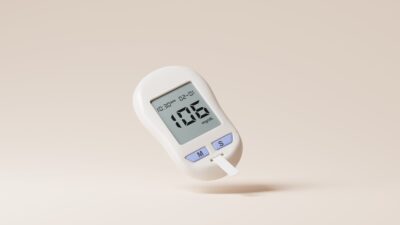
Blood sugar of 150 mg/dL is clearly elevated when fasting and borderline in the impaired glucose tolerance range two hours after a meal. A fasting value of 150 is strongly suggestive of type 2 diabetes; a post-meal value of 150 indicates impaired glucose tolerance. Medical evaluation and lifestyle action are the right next steps.
What 150 mg/dL Means by Context
| Context | Category at 150 mg/dL | Concern Level |
|---|---|---|
| Fasting (8+ hours no food) | Well above diabetes threshold | High — clinical evaluation |
| 1 hour after meal | Mildly elevated | Low to moderate |
| 2 hours after meal (OGTT) | Impaired glucose tolerance | Moderate |
| Random / no meal context | Mildly elevated | Moderate — recheck |
| Bedtime | Above target for most | Moderate |
Where the Number Falls on the Diagnostic Map
- Fasting normal: below 100 mg/dL
- Impaired fasting glucose: 100 to 125 mg/dL
- Diabetes (fasting): 126 mg/dL or higher — 150 is well into this zone
- 2-hour OGTT normal: below 140 mg/dL
- 2-hour OGTT impaired: 140 to 199 mg/dL — 150 is here
- 2-hour OGTT diabetes: 200 mg/dL or higher
Equivalent A1C If Average Glucose Sits at 150
| Average glucose (mg/dL) | Estimated A1C (%) | Category |
|---|---|---|
| 140 | 6.5 | Diabetes (lower bound) |
| 150 | 6.9 | Diabetes |
| 170 | 7.6 | Diabetes (treatment intensification) |
| 183 | 8.0 | Diabetes (suboptimal control) |
What Could Be Driving 150 mg/dL
- Untreated or undiagnosed type 2 diabetes — most common cause in adults
- Insufficient diabetes treatment in someone already diagnosed
- Recent steroid use — prednisone, dexamethasone push fasting glucose up substantially
- Acute illness or infection — stress hyperglycemia
- Pregnancy — well above gestational diabetes thresholds (fasting 95, 1-hour 180, 2-hour 153)
- LADA — autoimmune diabetes in adults
- Pancreatic disorders — pancreatitis, less commonly tumors
Action by Diabetes Status
| Situation | Recommended Action |
|---|---|
| No diabetes diagnosis | Schedule doctor visit this week; A1C, fasting glucose, urinalysis |
| Type 2 on metformin alone | Reassess plan; consider intensification |
| Type 2 on multiple agents | Discuss adjustment; rule out infection or steroid effect |
| Type 1 diabetes | Correction insulin per plan; check for missed dose or infusion site issue |
| Pregnancy | Contact OB urgently; tight monitoring |
Practical Steps If This Number Just Appeared
- Schedule a doctor visit within a week — request fasting glucose, A1C, comprehensive metabolic panel
- Hydrate — water helps the kidneys clear glucose
- Move — a 15 to 20 minute walk lowers glucose 10 to 30 mg/dL acutely
- Skip the next sugary drink or refined carb — let the number come down naturally
- Track symptoms — thirst, urination, fatigue, blurred vision, weight loss
- Recheck — fasting glucose 2 to 3 mornings; post-meal at 2 hours
- Note medications — bring a current list to the appointment
Treatment Considerations
- Lifestyle: still meaningful — 5 to 10 percent weight loss can lower A1C 1 to 2 percentage points
- Metformin: often first-line; can lower A1C 1 to 2 percent
- GLP-1 receptor agonists: increasingly used for combined glucose and weight benefit
- SGLT2 inhibitors: add cardiovascular and kidney protection
- Continuous glucose monitor: useful for understanding daily patterns
Emergency Thresholds
Blood sugar of 150 mg/dL is not emergent. Thresholds requiring urgent attention:
- Above 240 mg/dL with ketones in type 1 — call doctor
- Above 300 mg/dL with symptoms — urgent contact or ER
- Above 400 mg/dL — emergency room
- Below 54 mg/dL — severe hypoglycemia, treat immediately
Adjacent Values
- 130 mg/dL: just above diabetes threshold fasting
- 150 mg/dL: clearly elevated fasting; impaired tolerance post-meal
- 170 mg/dL: moderate hyperglycemia
- 200 mg/dL: diabetes confirmation threshold post-meal
Related Reading
See detection of prediabetes, treatment, and the adjacent lookups blood sugar 130 and blood sugar 170. The matching A1C page is A1C 7.0.
The Bottom Line
Blood sugar of 150 mg/dL is clearly elevated fasting and indicates impaired glucose tolerance post-meal. A fasting value at this level is strongly suggestive of type 2 diabetes. The right next step is medical evaluation — an A1C, a repeat fasting test, and a treatment plan. Lifestyle changes remain valuable; medication may also be appropriate. Talk to your doctor about confirming the picture and starting treatment.