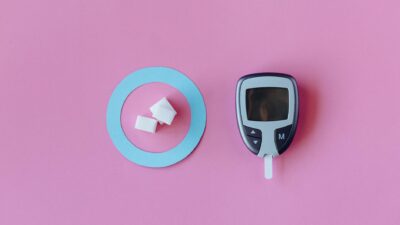
A blood sugar tester is a home device that measures glucose from a small drop of blood or from interstitial fluid under the skin. Finger-stick meters give a single value in about five seconds, while continuous glucose monitors report readings every one to five minutes for up to 15 days. Knowing when and how to use each is as important as choosing the device itself.
What a Blood Sugar Tester Actually Measures
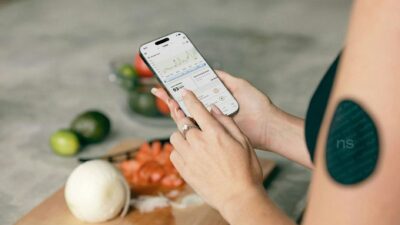
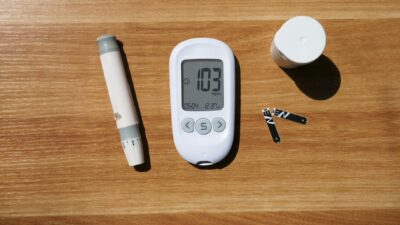
Finger-stick meters use a test strip with an enzyme coating. When a blood drop contacts the strip, the enzyme reacts with glucose, producing a tiny electrical current. The meter converts that current into a number in milligrams per deciliter. Continuous glucose monitors work differently. A flexible filament thinner than a human hair sits in the fluid between cells, and its sensor measures glucose through a similar enzyme reaction, relaying readings wirelessly to a phone or receiver.
The core chemistry has been refined for decades. Today most home meters use glucose oxidase or glucose dehydrogenase reactions, with filters to reduce interference from drugs and other sugars. CGMs use similar enzyme chemistry adapted for longer wear.
Types of Blood Sugar Testers
| Type | How It Samples | Best For |
|---|---|---|
| Finger-stick meter | Small drop from fingertip | Spot checks, confirming symptoms, budget testing |
| Alternate-site meter | Drop from palm or forearm | Reducing fingertip soreness; not for suspected lows |
| Professional CGM | Under-skin sensor, clinician downloads | Diagnostic assessment over one to two weeks |
| Real-time CGM | Under-skin sensor, live data to phone | Daily management, alerts, trend tracking |
| Flash CGM | Under-skin sensor, continuous data | People who want frequent data without finger sticks |
For many people, the decision comes down to whether you need trend data and alerts or a periodic snapshot.
Accuracy Standards You Should Know
In the United States and most of the world, the accepted accuracy benchmark for home glucose meters is ISO 15197:2013. The standard asks that 95 percent of results fall within 15 mg/dL of a lab reference below 100 mg/dL, and within 15 percent of the reference at or above 100 mg/dL. FDA guidance sets similar thresholds for over-the-counter devices. Independent testing has shown not every meter on store shelves meets the rule in daily use.
CGMs are usually rated by mean absolute relative difference or MARD. Modern consumer CGMs report overall MARD near 8 to 9 percent. That is competitive with many finger-stick meters, although CGMs may lag blood by a few minutes during rapid changes, so a confirmation stick is wise if a reading does not fit symptoms.
How to Use a Finger-Stick Tester Well
Wash hands with soap and warm water, then dry thoroughly. Residual sugar from fruit, soft drinks, or hand lotion can lift a reading by 20 percent or more. Load a fresh lancet, use the lowest depth that produces a clean drop, and apply blood to the strip from the side, not the top, to avoid compressing the strip. Keep strips in their original vial, sealed, at room temperature and away from humidity. Always check expiration dates.
Record results in the device app or a paper log. Patterns are more useful than individual numbers. If you see persistent values outside your target range, bring the log to your next appointment to discuss medication, diet, and activity changes.
When to Test Through the Day
Testing schedules vary. People on multiple daily insulin doses typically test before meals, at bedtime, and when symptoms suggest a low. People on basal insulin may only need a fasting test plus an occasional post-meal value. People with type 2 diabetes on oral medications often check a fasting value and occasionally two hours after a meal. People exploring prediabetes management may test strategically to see how certain foods shift glucose.
Whatever the schedule, consistency helps. The CDC recommends working with your care team to set a plan that matches your medications, daily routine, and A1C levels.
Signals That Should Trigger an Extra Test
Shakiness, sweating, sudden hunger, confusion, or lightheadedness can signal a low. If you have these symptoms, test right away rather than waiting for your scheduled time. On the other end, very strong thirst, blurred vision, or unexpected fatigue can signal a high. Illness, new medications, steroid use, major stress, and changes in activity can all shift readings, so testing more often during those periods is reasonable.
Common Mistakes That Skew Results
Several everyday errors push readings off target. Using the first drop of blood when hands are still damp, squeezing the fingertip too hard, testing with expired strips, or storing strips in a humid bathroom drawer are frequent culprits. On a CGM, applying the sensor on scar tissue, pressing on it while sleeping, or ignoring the warm-up window can produce early drift. Fresh batteries, updated firmware, and adhesive barriers help keep devices performing at their stated accuracy.
Sharing and Cleaning a Blood Sugar Tester
CDC infection-control guidance strongly discourages sharing lancing devices. Bloodborne viruses such as hepatitis B can survive on surfaces longer than many people expect. If you must share a meter in an emergency, use a new lancet every time and wipe the meter body with an approved disinfectant. For ongoing use, everyone in the household should have their own meter and lancing device.
The Bottom Line
A blood sugar tester is a simple tool that, used correctly, can guide medication, meals, and activity in powerful ways. Pick a meter or CGM that meets modern accuracy standards, follow clean technique, and agree on a testing schedule with your clinician. Retest any device against a lab value once a year, and bring logs to appointments so your care plan can adapt.
Medical disclaimer: This article is for educational purposes only and does not replace medical advice. Always consult a qualified healthcare provider before starting, stopping, or changing any medical device or therapy.