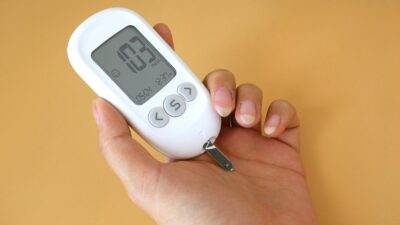
A CGM — continuous glucose monitor — is a small wearable sensor that tracks your glucose every 1-5 minutes for 10-15 days. For prediabetes, a CGM is not required, but it can reveal patterns that A1C and occasional finger-pricks miss. Most people with prediabetes benefit from a focused 2-4 week trial to identify what spikes their glucose.
What a CGM Is and How It Works
A CGM consists of a sensor — a hair-thin filament inserted just under the skin, usually on the back of the upper arm or abdomen — and a transmitter that sends readings wirelessly to a phone app or dedicated receiver. Instead of measuring glucose in blood, it measures glucose in the interstitial fluid surrounding your cells, which closely tracks blood glucose with a 5-10 minute lag.
Sensors last 10-15 days depending on the brand. After that, you replace the sensor. No daily finger-pricking is needed for most modern systems (though fingerstick confirmation is still recommended if symptoms don’t match the reading).
Why Use a CGM if You Have Prediabetes?
A1C gives you a 3-month average. A fingerstick gives you one moment. Neither shows you the shape of your glucose response — the spikes after specific meals, the overnight dips, or the way stress and poor sleep shift your numbers. A CGM fills that gap.
Common insights people discover on CGM:
- Breakfast cereals and smoothies spike them higher than expected
- A 10-minute post-meal walk flattens the post-meal curve
- Poor sleep raises their morning fasting glucose
- Stress meetings cause 20-30 mg/dL bumps without eating
- Resistance exercise lowers glucose for hours afterward
These personalized insights make lifestyle changes more concrete. For foundational advice on what to eat, see our diet and nutrition hub.
CGM Targets for Prediabetes
There are no official ADA-endorsed CGM targets specifically for prediabetes — the published consensus targets are for diabetes. However, studies of healthy, non-diabetic adults suggest reasonable goals:
| Metric | Prediabetes target (suggested) |
|---|---|
| Time in range 70-140 mg/dL | >96% |
| Fasting (pre-meal) glucose | 70-99 mg/dL |
| 1-hour post-meal peak | <140 mg/dL |
| 2-hour post-meal | <120 mg/dL |
| Average 24-hour glucose | <110 mg/dL |
| Nighttime glucose | 70-110 mg/dL |
These are not diagnostic thresholds. A1C and fasting plasma glucose remain the standard for diagnosis.
Accuracy of CGMs
Accuracy is measured by mean absolute relative difference (MARD). Modern CGMs like the Dexcom G7, Abbott Freestyle Libre 3, and over-the-counter sensors (Stelo, Lingo) report MARDs around 8-10%. That means typical readings are within 10% of a lab blood glucose value.
Things that affect accuracy:
- Rapid glucose changes (CGM lag is most noticeable here)
- Sensor compression during sleep
- Dehydration
- Very low or very high glucose (less relevant in prediabetes)
- Certain medications (high-dose vitamin C, acetaminophen, hydroxyurea — varies by brand)
OTC vs Prescription CGMs
Two FDA-cleared over-the-counter CGMs are available in the US for people not using insulin: Dexcom Stelo and Abbott Lingo. These are designed specifically for the prediabetes and general wellness audience. Prescription CGMs (Dexcom G7, Libre 3) offer tighter alarms and features designed for diabetes but still work for prediabetes if a clinician prescribes.
| Option | Prescription? | Typical monthly cost | Wear time |
|---|---|---|---|
| Dexcom Stelo | No (OTC) | ~$89/month | 15 days |
| Abbott Lingo | No (OTC) | ~$49-$89 | 14 days |
| Dexcom G7 | Yes | $150+ without coverage | 10 days |
| Freestyle Libre 3 | Yes | $75-$140 without coverage | 14 days |
How to Use a CGM Productively
- Wear it at least 2 weeks. Patterns take time to emerge.
- Log what you eat. Pair meals with glucose response.
- Watch post-meal peaks, not just fasting. Big spikes matter even if fasting is normal.
- Test one variable at a time. Eat oatmeal plain one day, with protein the next.
- Look for overnight trends. Rising fasting glucose often signals poor sleep, late dinners, or the dawn phenomenon.
- Review with a clinician. Ambulatory glucose profile (AGP) reports help spot patterns.
Limitations and Downsides
- Cost — rarely covered by insurance for prediabetes
- Obsessive tracking can cause anxiety for some users
- Interstitial vs blood lag creates small discrepancies
- Not a substitute for formal diagnostic testing
- Adhesive irritation in a small percentage of users
Is a CGM Worth It for You?
Consider trying a CGM if any apply:
- Your A1C is in the prediabetes range and lifestyle changes haven’t moved it
- You suspect certain foods spike you but can’t tell which
- You exercise regularly and want to optimize meal timing
- You have a strong family history of type 2 diabetes
It’s probably not worth it if you already have strong healthy habits, a stable A1C under 5.7%, and no specific diagnostic question to answer.
The Bottom Line
A CGM for prediabetes is an optional but often illuminating tool. A 2-4 week trial shows you exactly how foods, exercise, sleep, and stress affect your glucose — information that quarterly A1C results simply can’t provide. Choose an FDA-cleared device, wear it long enough to see patterns, and use what you learn to refine diet and lifestyle habits alongside your doctor.