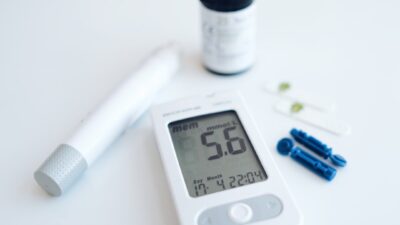
The FreeStyle InsuLinx is a discontinued Abbott glucose meter that was notable for its built-in insulin bolus calculator. Abbott released it in 2012 and stopped manufacturing in 2018. Legacy users continued to get test strips for several years, but supply has tightened, and the device is no longer competitive with modern CGMs or insulin pumps with integrated calculators. Transition options include FreeStyle Libre 3 CGM, a FreeStyle Lite meter plus a smartphone bolus calculator app, or a pump with a built-in calculator.
What the InsuLinx Was
- Handheld glucose meter with color touchscreen
- Built-in insulin-dose calculator (programmed by clinician)
- USB connection for data download to clinic software
- Memory for 1,000 readings
- Small blood sample requirement (0.3 μL)
- 5-second test time
- Released 2012; discontinued 2018
Why It Was Replaced by Newer Technology
- Continuous glucose monitors (FreeStyle Libre, Dexcom) eliminated the need for many finger sticks
- Smartphone apps now replicate the bolus-calculator function
- Insulin pumps with integrated calculators reduced the market for standalone meter calculators
- The InsuLinx was more expensive than simpler meters
- Abbott focused development resources on the FreeStyle Libre CGM platform
Current Replacement Options
| Replacement | What It Replaces | Cost | Best For |
|---|---|---|---|
| FreeStyle Libre 3 | Meter + daily monitoring + calculator | $0–$170/mo | Most insulin users |
| FreeStyle Libre 3 Plus | Same, 15-day wear | $0–$170/mo | Users wanting max wear time |
| Dexcom G7 | Meter + daily monitoring | $0–$170/mo | Pump users, AID users |
| FreeStyle Lite + RapidCalc app | Meter + calculator | $30 meter + $5 app | Budget-conscious users |
| Contour Next One + Contour Diabetes app | Meter + calculator | $10 meter + free app | Accuracy-focused users |
| OneTouch Verio Reflect | Meter + color insights | Similar to InsuLinx | Users wanting a similar device experience |
| Tandem t:slim X2 pump | All InsuLinx functions plus insulin delivery | Pump + supplies | Type 1 diabetes pump users |
| Omnipod 5 pump | Tubeless pump with built-in calculator | Pump + supplies | Users wanting AID without tubing |
Transitioning From InsuLinx to a CGM
- Ask your clinician for a prescription for FreeStyle Libre 3 or Dexcom G7
- Submit to your pharmacy benefit; wait for prior authorization if needed
- Insert your first sensor following manufacturer instructions
- Pair with the LibreLink (Abbott) or Dexcom (Dexcom) app on your phone
- Keep your InsuLinx for 2 to 4 weeks as backup while you learn CGM
- Share CGM data with your clinician through LibreView or Dexcom Clarity
- Recalibrate your insulin-to-carb ratio with your clinician using CGM-informed data
Transitioning to a Simpler Meter Plus App
- Purchase a FreeStyle Lite, Contour Next, or ReliOn Prime meter
- Download a bolus calculator app: RapidCalc, Sanofi My Dose Coach, Accu-Chek Connect, or Insulinx Aide
- Enter your insulin-to-carb ratio, correction factor, and target glucose
- Test the workflow for 1 to 2 weeks alongside the InsuLinx
- Fully switch once you trust the app’s calculations
- Discard InsuLinx test strips responsibly (expired strips give inaccurate results)
If You Want to Keep Using InsuLinx
- Stockpile test strips within expiration dates
- Bookmark two or three retailers that still carry them
- Set a calendar reminder to order 3 months ahead of your supply running out
- Keep a backup meter available for when strips finally become unavailable
- Plan for a full transition by late 2026 — Abbott is unlikely to resume production
Common Issues With Expired or Mishandled Strips
- False low readings from degraded enzyme activity
- Meter errors — “E-” codes during insertion
- Inconsistent readings between duplicate tests
- Strips stored in hot cars or humid bathrooms lose accuracy first
Insulin Dose Safety Without the InsuLinx
If you are moving away from the meter’s calculator, either to mental math, a smartphone app, or a pump calculator, keep these safety practices:
- Write down your current insulin-to-carb ratio and correction factor on a physical card in your bag or wallet
- Share the numbers with your partner or a household member
- Test your calculator app’s output against a few InsuLinx-recommended doses before trusting it
- Use a standardized food-logging app (MyFitnessPal, Carb Manager) for carb counts if eyeballing is unreliable
- Reassess your dosing parameters with your clinician every 3 to 6 months — they change with weight, activity, and metabolic state
Related Reading
See our guides on detection of prediabetes and A1C levels.
The Bottom Line
The FreeStyle InsuLinx was a good glucose meter with an unusually useful insulin-dose calculator, but it was discontinued in 2018 and is no longer a viable long-term device. Legacy users should plan a transition over the next 6 to 12 months — ideally to a CGM (FreeStyle Libre 3 or Dexcom G7) for continuous data plus a smartphone bolus calculator, or to an insulin pump with a built-in calculator. The calculator function itself is now commodity — multiple apps do it for free or a few dollars. What matters is picking a modern measurement platform that will still be supported and improved in 2027 and beyond.