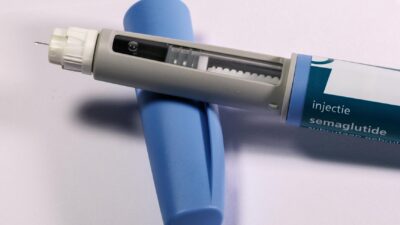
Microdosing semaglutide refers to taking doses below the FDA-approved range, typically through compounded preparations obtained from telehealth platforms or compounding pharmacies. The practice has no dedicated clinical trial data and is not endorsed in any major clinical guideline. This article explains what advocates claim, what the evidence actually shows, and why a cautious framing is warranted.
What “Microdosing” Means in This Context
The term is borrowed from psychedelic research, where “microdose” describes sub-perceptual amounts of a substance. Applied to semaglutide, it usually means weekly doses of roughly 0.05 to 0.2 mg — significantly below the FDA-approved starting dose of 0.25 mg weekly (which itself is already a titration step, not a therapeutic target).
For context on approved dosing, according to the FDA label for Wegovy, the standard escalation is:
| Week | Dose | Purpose |
|---|---|---|
| 1-4 | 0.25 mg weekly | Tolerance build-up, not therapeutic |
| 5-8 | 0.5 mg weekly | Titration |
| 9-12 | 1.0 mg weekly | Titration |
| 13-16 | 1.7 mg weekly | Titration |
| 17+ | 2.4 mg weekly | Maintenance weight-loss dose |
Microdosing advocates essentially stop at or below the titration doses indefinitely.
What Proponents Claim
Arguments in favor of microdosing typically include:
- Fewer side effects — nausea and GI disturbance are dose-dependent, so lower doses feel more tolerable.
- Lower cost — a smaller dose stretches a vial further (particularly relevant with compounded product).
- Gentler effects — some users report modest appetite control without the dramatic satiety at full doses.
- Maintenance rationale — some use low doses after reaching a weight goal, hoping to prevent regain.
None of these claims have been tested in controlled trials. The published STEP trials used 2.4 mg weekly — not 0.1 mg — to demonstrate the 15 percent weight loss that drove Wegovy’s approval.
Why Researchers and Regulators Are Cautious
The concerns clinicians and the FDA have raised include:
- No efficacy data: Microdosing protocols are essentially untested in randomized trials. Outcomes are anecdotal.
- Compounded quality: Most microdosing uses compounded semaglutide, which is not FDA-approved as a generic. Potency, purity, and sterility can vary.
- Unknown long-term effects: Low-dose chronic exposure may have different safety implications than short-term titration doses.
- Monitoring gaps: DIY protocols often bypass the baseline and follow-up labs that accompany standard prescribing.
- Misleading marketing: Some compounding operations promote microdosing as scientifically supported when it is not.
Review your A1C levels before considering any GLP-1 therapy — dosing decisions should be anchored in measured metabolic need.
The Scenarios Where Lower Doses Have Clinical Logic
Not all off-standard dosing is microdosing in the DIY sense. Clinicians sometimes use lower-than-typical doses when:
- A patient cannot tolerate standard doses despite slow titration
- A patient reaches a stable weight and wants to taper
- Another condition (e.g., gastroparesis, severe GI disease) limits dose
- The goal is glucose control more than weight loss, and lower doses suffice
These are individualized decisions made by a prescriber with knowledge of the patient’s full history — not broad protocols applied to everyone via a questionnaire.
Questions to Ask Before Starting Any Non-Standard Dosing Plan
- Why is this dose being recommended instead of the standard protocol?
- Is the product FDA-approved or compounded? What is the concentration?
- What evidence supports this dose for my specific goal?
- What baseline labs are required before starting?
- How will we know if it is working? What are the follow-up metrics?
- What are the contingency plans if I have side effects or do not respond?
- Who is the prescribing clinician, and how can I reach them between visits?
Browse the prediabetes treatment hub for broader evidence-based context on diabetes and weight-loss therapies.
Risks Specific to DIY Microdosing
Beyond the general GLP-1 risks (pancreatitis, gallbladder disease, thyroid tumor warnings in contraindicated patients), microdosing brings its own:
- Dose measurement errors — drawing 0.1 mg from a multi-dose vial is error-prone, especially at small unit counts on insulin syringes.
- Contamination risk — repeated needle entries into a vial over weeks increase contamination chances.
- Product variability — compounded concentrations may not be labeled accurately.
- False reassurance — a subtle benefit can lead to skipping lifestyle changes that would be more effective.
The Bottom Line
Microdosing semaglutide is not an FDA-studied practice and sits largely in the realm of social media anecdote plus compounding-pharmacy marketing. Low-dose GLP-1 use sometimes makes individualized clinical sense, but that is a nuanced prescribing decision — not a blanket DIY protocol. Before starting any non-standard dosing plan, consult a licensed clinician who can review your labs, health history, and goals. Evidence-based medicine favors tested doses in tested indications.
This article is for educational purposes only and is not a substitute for medical advice. Dosing decisions should always be made with a licensed clinician.