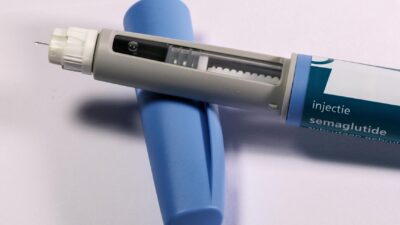
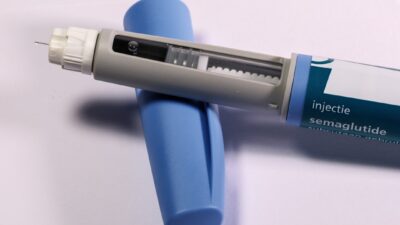
Brand-name semaglutide lists for $968-$1,349 per month before insurance, with Ozempic and Rybelsus at the lower end and Wegovy at the high end. What you actually pay depends on which product you’re prescribed, your insurance plan, whether you qualify for the manufacturer’s savings card, and whether you choose brand-name or compounded versions. Insurance coverage is the single biggest variable — coverage for type 2 diabetes is broad, but coverage for weight loss is inconsistent and excluded from Medicare entirely.
List Prices by Product
Semaglutide is sold in the United States as three distinct products with different list prices:
| Product | Indication | List Price (per month) | Form |
|---|---|---|---|
| Ozempic | Type 2 diabetes | ~$968 | Weekly injection |
| Wegovy | Chronic weight management | ~$1,349 | Weekly injection |
| Rybelsus | Type 2 diabetes | ~$968 | Daily oral tablet |
List prices change periodically as manufacturers update their pricing, and your pharmacy may charge slightly different amounts based on local discounts. The values above are typical 2026 list prices in the US market.
Insurance Coverage
For type 2 diabetes (Ozempic, Rybelsus), insurance coverage is widespread. Most commercial plans, Medicare Part D, and many state Medicaid programs cover semaglutide for diabetes, usually with prior authorization. Step therapy is common — your plan may require you to try metformin first, or another GLP-1, before approving semaglutide.
For weight loss (Wegovy), coverage is much more limited. Many commercial plans either exclude weight-loss drugs entirely or require documentation of failed diet and exercise attempts plus a BMI threshold (typically 30, or 27 with comorbidity). Medicare Part D does not cover Wegovy for weight loss because federal law excludes weight-loss medications from Part D. This applies even though Medicare covers Ozempic for diabetes and now covers Wegovy for cardiovascular risk reduction in select patients (a separate FDA approval added in 2024).
Manufacturer Savings Programs
Novo Nordisk offers savings cards and patient assistance programs:
- Ozempic savings card: Commercially insured patients can pay as little as $25 per 28-day supply for up to 24 months, subject to a monthly maximum benefit.
- Wegovy savings card: Similar structure for commercially insured patients with covered prescriptions.
- Patient assistance program: Free medication for uninsured patients who meet income limits (typically up to 400% of the federal poverty level).
Patients on Medicare, Medicaid, TRICARE, or other government insurance are not eligible for the savings cards under federal anti-kickback rules. The patient assistance program may help if you have no insurance at all.
Compounded Semaglutide
Compounded versions of semaglutide are sold by telehealth platforms and compounding pharmacies for roughly $150-$400 per month — substantially less than brand-name pricing. Compounding was permitted under FDA rules during the FDA-declared shortage of brand-name semaglutide (2022-2024). Once the shortage ended, the legal pathway for routine compounding narrowed significantly.
The FDA has issued multiple safety warnings about compounded GLP-1 drugs, including reports of dosing errors, contaminated products, and platforms that misrepresent compounded drugs as FDA-approved. Compounded versions are not FDA reviewed for safety or efficacy. Some compounded products contain non-pharmaceutical-grade semaglutide salts or are mixed with vitamins like B12 (sometimes labeled “semaglutide with cyanocobalamin”). Quality varies widely by source.
Pharmacy Discount Cards (GoodRx, etc.)
Third-party discount cards (GoodRx, SingleCare, RxSaver) negotiate prices with pharmacies. For brand-name semaglutide, the discount versus list price is typically modest — often 5-15% off — because the drugs are still under patent and not heavily discounted. Comparing across pharmacies and combining with the manufacturer savings card (where eligible) usually yields the lowest cost.
The 340B Program
If you receive care at a Federally Qualified Health Center, Ryan White HIV/AIDS clinic, or other 340B-eligible facility, semaglutide may be available at deeply discounted 340B pricing. This applies primarily to safety-net providers, not to commercial pharmacies.
How to Lower Your Cost
- Confirm your insurance covers your specific product (Ozempic vs Wegovy vs Rybelsus) before filling
- If commercially insured, apply for the manufacturer savings card before filling
- If uninsured, apply to the patient assistance program
- Ask your prescriber whether step therapy alternatives exist that your plan covers without prior auth
- Compare cash prices across multiple pharmacies using GoodRx or similar tools
- If considering compounded versions, verify the pharmacy’s licensing and read FDA safety warnings first
The Bottom Line
Semaglutide is expensive without insurance — roughly $1,000-$1,400 per month at list prices. Insurance coverage is broad for diabetes indications, much more limited for weight loss, and excluded from Medicare Part D for weight loss. Manufacturer savings cards can reduce commercial-insured out-of-pocket cost to $25 per month for eligible patients. Compounded versions exist at lower prices but carry FDA safety warnings. Confirm coverage, apply for available patient assistance, and discuss options with your prescriber before deciding which form and channel to pursue. For more on diabetes treatment approaches, consult your prescriber.