40 units of semaglutide equals 1.0 mg at the most common compounded concentration of 2.5 mg per milliliter. The conversion depends entirely on the concentration of your specific vial, which varies by compounding pharmacy. This guide explains the math and how to avoid the dosing errors the FDA has flagged as a leading cause of compounded GLP-1 safety reports.
The Basic Math
Insulin syringe units are a measure of volume, not mass. On a standard U-100 insulin syringe (the type usually used for compounded semaglutide):
- 100 units = 1.0 mL
- 10 units = 0.1 mL
- 1 unit = 0.01 mL
To convert units to mg of semaglutide, you need to know the concentration of your vial (in mg/mL). The formula is:
mg = units × (concentration in mg/mL) ÷ 100
So at 2.5 mg/mL concentration:
- 40 units × 2.5 mg/mL ÷ 100 = 1.0 mg
Conversion Table at Common Concentrations
The same number of units delivers very different doses depending on concentration:
| Units (volume) | 1 mg/mL | 2.5 mg/mL | 5 mg/mL | 10 mg/mL |
|---|---|---|---|---|
| 10 (0.10 mL) | 0.10 mg | 0.25 mg | 0.50 mg | 1.0 mg |
| 20 (0.20 mL) | 0.20 mg | 0.50 mg | 1.0 mg | 2.0 mg |
| 25 (0.25 mL) | 0.25 mg | 0.625 mg | 1.25 mg | 2.5 mg |
| 40 (0.40 mL) | 0.40 mg | 1.0 mg | 2.0 mg | 4.0 mg |
| 50 (0.50 mL) | 0.50 mg | 1.25 mg | 2.5 mg | 5.0 mg |
| 80 (0.80 mL) | 0.80 mg | 2.0 mg | 4.0 mg | 8.0 mg |
| 100 (1.00 mL) | 1.0 mg | 2.5 mg | 5.0 mg | 10 mg |
Why This Matters: FDA Safety Concerns
The FDA has issued multiple safety warnings about compounded GLP-1 medications. Dosing errors have caused reports of:
- Severe nausea, vomiting, and dehydration requiring emergency care
- Hypoglycemia in patients combining compounded GLP-1 with insulin or sulfonylureas
- Hospitalization for pancreatitis
- Confusion when patients accustomed to one concentration switch to a pharmacy using a different concentration
The most dangerous error is interpreting “units” as mg directly — for example, drawing up 25 units thinking it equals 0.25 mg when at 2.5 mg/mL concentration it actually equals 0.625 mg (2.5 times the intended dose).
How to Avoid Dosing Errors
- Verify concentration on every refill. Read the vial label carefully — concentration is usually printed clearly. Don’t assume your new vial matches the old one.
- Use a U-100 insulin syringe. Compounded semaglutide is typically dosed with a 1 mL or 0.5 mL insulin syringe. Confirm with your pharmacy.
- Confirm the dose with your prescriber. Your prescriber should give you the dose in BOTH mg and units (based on your vial concentration). If you only received one number, ask for clarification.
- Write the math down. Keep a written note of your concentration, mg dose, and unit equivalent. Check it before every injection.
- Don’t change concentrations mid-titration. If your pharmacy switches concentrations, ask your prescriber to recalculate your dose in units before the next injection.
Equivalent Doses to Brand-Name Semaglutide
Common brand-name semaglutide doses translated to mg (for reference):
| Brand-name dose | mg per dose | Volume at 2.5 mg/mL | Units |
|---|---|---|---|
| Wegovy starting | 0.25 mg | 0.10 mL | 10 units |
| Wegovy week 5 | 0.50 mg | 0.20 mL | 20 units |
| Wegovy week 9 | 1.0 mg | 0.40 mL | 40 units |
| Wegovy week 13 | 1.7 mg | 0.68 mL | 68 units |
| Wegovy maintenance | 2.4 mg | 0.96 mL | 96 units |
Brand-Name Pens Skip the Math
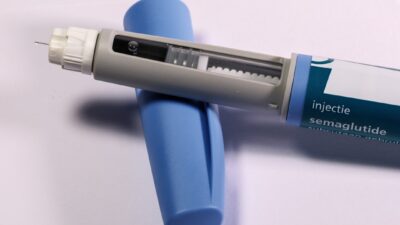
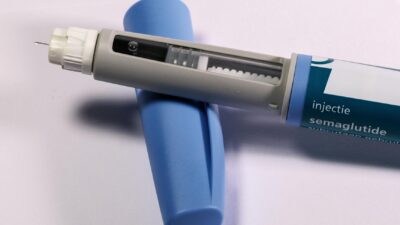
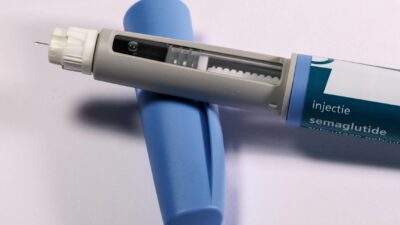
Ozempic and Wegovy pens deliver pre-measured fixed doses with no calculation required. You select the dose on the pen dial, inject, and the pen administers the correct volume automatically. This eliminates the unit-to-mg conversion problem entirely. The trade-off is cost — brand-name pens cost roughly 5-10 times more per month than compounded semaglutide.
The Bottom Line
40 units of semaglutide equals 1.0 mg at the standard 2.5 mg/mL compounded concentration, but the conversion is different at other concentrations. Always verify the concentration on your specific vial before calculating doses, use a U-100 insulin syringe, and confirm the dose with your prescriber. Dosing errors with compounded semaglutide are a documented FDA safety concern. Brand-name pens eliminate the math entirely by delivering pre-measured doses. Consult your prescriber and pharmacist before injecting any compounded medication. For more on GLP-1 treatment options, see our hub.