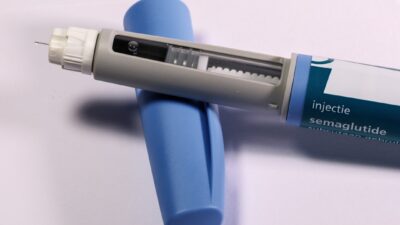
A tirzepatide injection site reaction is most commonly mild — redness, itching, small bumps, swelling, or bruising at the injection spot that resolves over 2 to 7 days. About 3 to 5 percent of users experience some reaction in the first weeks of treatment. Prevention focuses on site rotation, warming the pen to room temperature before use, and using a fresh needle. Severe reactions (large welts, blisters, spreading redness, systemic symptoms) are rare but require urgent medical evaluation.
What a Typical Reaction Looks Like
- Redness ranging from a few millimeters to a few centimeters
- Mild swelling or a small raised bump
- Itching or tingling at the site
- Occasional bruising from needle entry
- A pinpoint bleed that stops within a minute
- Mild tenderness to touch for 24 to 48 hours
- Fading coloration to pink, then normal, over several days
Timeline of a Mild Reaction
| Time | What You Notice |
|---|---|
| 0–30 min | Pinpoint redness; mild sting from the solution |
| 30 min – 6 hr | Small raised area; mild itching may start |
| 6–24 hr | Peak redness and itching; bump slightly firmer |
| Day 2–3 | Redness fading; itching resolving; bump softening |
| Day 4–7 | Slight discoloration only; no tenderness |
| Day 7–14 | Fully resolved; rotate to a new site for next dose |
Why It Happens
- The cold solution from the fridge can cause temporary irritation
- Mild immune response to the injected peptide
- Small amount of blood vessel disruption from needle entry
- Adhesive or wipe residue on the skin
- Injecting too superficially (intradermal) rather than subcutaneously
- Using a dull or reused needle
- Repeatedly injecting in the same small area (leads to lipohypertrophy)
Prevention Checklist
- Take the pen out of the refrigerator 15 to 30 minutes before injection to warm to room temperature
- Wash your hands thoroughly
- Clean the site with an alcohol wipe and let it dry completely (wet alcohol stings)
- Use a fresh needle each time
- Rotate sites systematically — alternate between abdomen, thigh, and upper arm; within each site move at least 1 to 2 inches from the last injection
- Inject perpendicular (90 degrees) to the skin
- Press and hold the button until the dose counter reaches 0, then count to 5 before withdrawing
- Do not rub the site afterward
- Apply gentle pressure with gauze if any bleeding occurs
Site Rotation Plan
| Week | Suggested Site |
|---|---|
| 1 | Right abdomen (upper) |
| 2 | Left abdomen (upper) |
| 3 | Right abdomen (lower) |
| 4 | Left abdomen (lower) |
| 5 | Right thigh (upper outer) |
| 6 | Left thigh (upper outer) |
| 7 | Right upper arm (back) |
| 8 | Left upper arm (back) |
After week 8, restart the cycle. This gives each small area of tissue 8 weeks to recover between injections, greatly reducing lipohypertrophy and site reaction risk.
How to Treat a Mild Reaction
- Cool compress for 10 to 15 minutes, 2 to 3 times on the day of injection
- Fragrance-free moisturizer (CeraVe, Vanicream, Aveeno) if skin is dry or itchy
- OTC hydrocortisone 1 percent cream for itching (short-term use, not on broken skin)
- Oral diphenhydramine (Benadryl) or loratadine (Claritin) for significant itching
- Avoid scratching — it prolongs irritation and risks infection
- Do not apply heat to the site (hot shower, heating pad) in the first 24 hours — heat can accelerate absorption unpredictably
- Skip tight clothing over the site for a day or two
When to Call Your Clinician
- Reaction spreads beyond 2 to 3 inches from the injection site
- Pain prevents normal movement of the area
- Blisters or fluid-filled bumps form
- Redness persists more than 2 weeks
- Fever, chills, or feeling unwell
- Rash or hives appear elsewhere on the body
- Lip, tongue, or face swelling
- Breathing difficulty or wheezing
- Streaking red lines radiating from the site (possible infection)
- Warmth and tenderness that worsens instead of improving
Lipohypertrophy — Lumps That Persist
Repeatedly injecting in the same small area can cause lipohypertrophy — fatty, rubbery lumps beneath the skin where subcutaneous tissue has thickened. Characteristics:
- Firm, raised area that does not resolve
- May be painless but can feel “different” from normal fat
- Reduces and makes erratic the absorption of future injections
- Common cause of unexplained weight loss plateaus or glucose fluctuations
- Reversible with strict site rotation — typically improves over 3 to 6 months of avoiding the lumpy area
Check every 3 months for lumps during your routine injection hygiene. If found, re-plan your rotation to avoid that area entirely until it resolves.
When a Reaction Might Mean Stop the Medication
- Anaphylactic reaction (breathing, face/tongue swelling, hives) — stop immediately, use epinephrine if prescribed, call 911
- Biopsy-confirmed severe immune-mediated reaction
- Repeated severe local reactions despite rotation and technique changes
- Whole-body rash that does not clear with antihistamines
Mild reactions alone are not reasons to stop tirzepatide. Work with your clinician to adjust technique, site rotation, and timing before considering discontinuation.
Related Reading
See our broader guides on treatment options and prediabetes basics.
The Bottom Line
Tirzepatide injection site reactions are usually mild — redness, itching, small bumps, and bruising that resolve in 2 to 7 days. Prevention focuses on warming the pen before injection, using a fresh needle, rotating sites on an 8-week cycle, and injecting perpendicular to the skin. At-home treatment includes cool compresses, fragrance-free moisturizer, and short-term hydrocortisone cream. Call your clinician for reactions that spread, blister, persist more than 2 weeks, or come with systemic symptoms. Severe reactions are rare but require urgent evaluation. Lipohypertrophy from under-rotation is preventable and reversible with a systematic site plan.