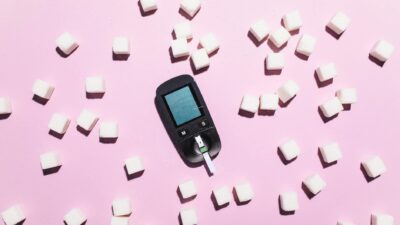
Most artificial sweeteners do not directly raise blood sugar — that’s the short answer. Aspartame, sucralose, saccharin, stevia, and monk fruit all have a glycemic index of zero because your body doesn’t metabolize them as carbohydrates. But the full picture is more nuanced: some sugar alcohols do raise glucose, individual gut responses vary, and long-term metabolic effects are still being studied.
This guide walks through the evidence sweetener by sweetener, highlights what’s new from WHO and recent research, and helps you decide which to use, avoid, or test with a CGM. Whether you’re managing prediabetes or type 2 diabetes, the goal is reducing glucose-impacting sugars without introducing new problems.
How Sweeteners Are Categorized
Not all “sugar-free” sweeteners behave the same way. The three main categories:
- Non-nutritive (high-intensity) sweeteners: Hundreds of times sweeter than sugar, used in tiny amounts. Examples: aspartame, sucralose, saccharin, acesulfame-K, neotame.
- Natural low-calorie sweeteners: Derived from plants. Examples: stevia (steviol glycosides), monk fruit (mogrosides).
- Sugar alcohols (polyols): Lower calorie than sugar, partially absorbed. Examples: erythritol, xylitol, maltitol, sorbitol, allulose.
Glycemic Impact by Sweetener
| Sweetener | Glycemic Index | Directly Raises Glucose? | Notes |
|---|---|---|---|
| Aspartame | 0 | No | Not for people with PKU |
| Sucralose (Splenda) | 0 | No* | *Some insulin response in subsets |
| Saccharin | 0 | No | Older, well-studied |
| Stevia (pure) | 0 | No | Check for added dextrose/maltodextrin |
| Monk fruit (pure) | 0 | No | Often blended with erythritol |
| Erythritol | 0 | No | 2023 study raised CV questions |
| Allulose | 0-2 | Minimal | May actually lower post-meal glucose |
| Xylitol | ~13 | Slightly | Toxic to dogs |
| Maltitol | 35-52 | Yes, moderately | Often in “sugar-free” candy |
| Sorbitol | ~9 | Slightly | GI side effects common |
What the Research Actually Shows
Short-Term Glucose Response
Clinical trials consistently show that high-intensity sweeteners like aspartame and sucralose do not raise blood glucose when consumed alone. A 2020 meta-analysis in the American Journal of Clinical Nutrition confirmed no acute glycemic effect across dozens of studies.
The Gut Microbiome Angle
A 2022 study in Cell (Suez et al.) found that sucralose and saccharin altered the gut microbiome in a subset of healthy adults, producing subtle impairments in glucose tolerance. Effects varied significantly person to person — some participants showed no change at all, while others had meaningful shifts. This is individual-dependent, not universal.
Insulin Response
Some studies suggest that sweet taste alone can trigger a small cephalic-phase insulin release in susceptible individuals, even without carbohydrates. The clinical significance for long-term glucose control is unclear.
The WHO 2023 Guideline
In 2023, the WHO issued a conditional recommendation against using non-sugar sweeteners for long-term weight control, citing observational evidence linking habitual use to increased risk of type 2 diabetes and cardiovascular disease. The WHO noted the evidence was limited and that the guideline does not apply to people with existing diabetes using sweeteners for glucose management.
Sugar Alcohols: Mind the Labels
Sugar alcohols are the most common source of hidden glucose impact in “sugar-free” products. Maltitol is the biggest offender — its glycemic index can approach that of table sugar. A “sugar-free” chocolate bar sweetened with maltitol may spike glucose nearly as much as the regular version.
Erythritol and allulose are the friendliest for blood sugar; allulose may even modestly lower post-meal glucose in some studies. Xylitol and sorbitol sit in the middle and can cause significant GI discomfort at higher intakes.
Individual Variation and CGMs
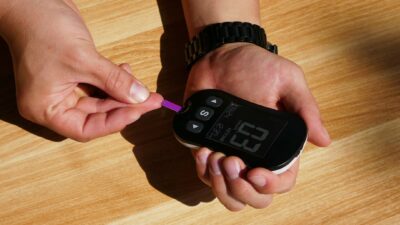
Because gut microbiome responses differ, the most reliable way to know how a sweetener affects you is direct measurement. Wear a CGM (Dexcom Stelo, Libre Rio, or FreeStyle Libre 3) for 2-4 weeks and test each sweetener in isolation — a plain cup of coffee with a single sweetener, fasting, with no other carbs. The curve will show you whether that particular product moves your glucose.
Practical Recommendations
- Default to whole foods first. Zero-calorie sweeteners can help reduce sugar intake but are not a substitute for a fiber-forward diet.
- Prefer pure stevia, monk fruit, allulose, and erythritol for minimal glucose impact.
- Read labels on “sugar-free” products. Maltitol and maltodextrin are common hidden carbohydrate sources.
- Limit total artificial sweetener intake. WHO’s caution is worth respecting even if evidence is not yet definitive.
- Track individual response with a CGM if you want personal certainty.
- Work with a clinician or dietitian to build a sustainable diabetes-friendly eating pattern.
The Bottom Line
Do artificial sweeteners raise blood sugar? Most do not directly — aspartame, sucralose, saccharin, stevia, monk fruit, erythritol, and allulose all have minimal or zero acute glycemic impact. Sugar alcohols like maltitol are different and can raise glucose meaningfully. Individual responses vary due to gut bacteria and insulin signaling, so use a CGM if you want certainty. Treat sweeteners as a useful transition tool rather than a long-term solution, and build your eating pattern around fiber, protein, and whole foods. Review any big dietary changes with your diabetes care team.
This article is educational and not a substitute for personalized medical advice. Consult your healthcare provider or registered dietitian for individualized guidance.