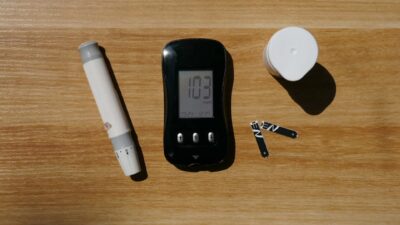
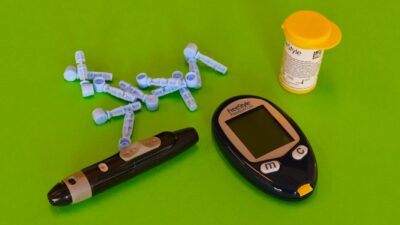
The best glucose meter with the cheapest strips for most self-pay users is the ReliOn Prime (Walmart) at about $0.18 per test, followed by CareTouch at $0.19 and EasyMax at $0.20. Contour Next has $0.28 to $0.35 strips but is the most accurate mainstream option. Name-brand strips (Accu-Chek Guide, OneTouch Verio, FreeStyle Lite) cost $0.80 to $1.40 retail but may be cheaper on insurance. Compare total 90-day strip costs, not meter prices, because the meter is a one-time expense while strips recur for years.
90-Day Cost Comparison at Typical Testing Frequencies
| Meter | Retail Strip Cost (per strip) | 90-Day Cost, 2x Daily | 90-Day Cost, 4x Daily | Accuracy |
|---|---|---|---|---|
| ReliOn Prime (Walmart) | $0.18 | $32 | $65 | ISO 15197 compliant |
| CareTouch | $0.19 | $34 | $68 | ISO 15197 compliant |
| EasyMax | $0.20 | $36 | $72 | ISO 15197 compliant |
| Contour Next One | $0.28 | $50 | $100 | Very tight; ±8% of reference |
| Contour Next EZ | $0.32 | $58 | $115 | Very tight accuracy |
| OneTouch Verio Flex | $1.20 | $216 | $432 | Standard |
| Accu-Chek Guide Me | $0.92 | $166 | $330 | Standard |
| FreeStyle Lite | $1.30 | $234 | $468 | Standard |
Retail strip prices vary by retailer; Walmart, Amazon, Costco, and Sam’s Club typically beat standalone pharmacy chains. Bulk 200- or 300-strip boxes always cost less per strip than 50-strip packs.
Why Strip Cost Dominates
A glucose meter is essentially a free or $10 device — manufacturers often give them away because the business model relies on recurring strip purchases. For a patient testing 4 times per day:
- 4 tests × 365 days = 1,460 tests per year
- ReliOn Prime at $0.18 = $262 per year
- OneTouch Verio at $1.20 = $1,752 per year
- Difference = nearly $1,500 per year
Meter accuracy differences are modest within FDA-cleared products; strip cost differences are 3- to 7-fold.
If You Have Insurance
- Check your plan formulary — which meters are listed as “preferred” tier
- Call your insurance to confirm the copay for a 90-day supply of the preferred meter’s strips
- Compare to the $32 to $58 ReliOn Prime 90-day self-pay cost
- If insurance copay is higher than $58, switch to self-pay with ReliOn Prime
- If the insurance copay is lower, use the covered brand for the lower out-of-pocket cost
- Medicare Part B covers glucose meters and strips at 80 percent for diabetes; patients pay the 20 percent coinsurance
The Contour Next Exception
Contour Next is worth mentioning separately because it is both accurate and cheaper than most name brands. Independent accuracy testing has placed it among the top three in mainstream meters. Retail strip cost is about $0.28 to $0.35 — roughly double ReliOn Prime but a fraction of other name brands. For pregnant women, type 1 diabetes patients, and anyone making insulin-dosing decisions every few hours, the small cost premium over ReliOn Prime may be worth it.
What to Avoid
- Unbranded strips from Amazon or Alibaba without FDA clearance — actual counterfeits exist
- Meters bundled with expensive strip-only subscriptions
- Using strips past their expiration date — enzyme activity degrades, causing false-low readings
- Strips stored at high temperatures (hot car) — enzyme damage
- Sharing strips across different meter brands (they are not interchangeable)
- Using a strip coded for a different lot number on meters that require coding
Meter Features Worth Paying a Little More For
- No coding required — reduces user error; most modern meters
- Backlit screen — important for low-light testing
- Bluetooth connectivity — useful if you use a diabetes app
- Small blood sample requirement — 0.3 to 0.6 μL is easier than 1 μL
- Second-chance sampling — can re-touch a partial sample without wasting the strip
Alternative: Switch to a CGM
If you are testing more than 4 times per day or finding daily pricks unsustainable, a CGM may actually be cheaper long-term after insurance. Dexcom G7 and FreeStyle Libre 3 each cost about $85 per sensor (14 days), or roughly $180 per month self-pay — but with commercial insurance copays of $0 to $100. OTC CGMs (Stelo, Lingo) are about $89 per month self-pay. See our guide on detection of prediabetes for CGM options.
Practical Buying Plan
- Identify your testing frequency (1, 2, 4, or more times per day)
- Calculate 90-day strip demand (frequency × 90)
- Call insurance to get covered-brand copay
- Compare to ReliOn Prime self-pay cost at the same 90-day volume
- Buy the lower-cost path plus one box of Contour Next as backup
- Reassess every 6 months as formularies change
Related Reading
See our guides on detection of prediabetes and A1C levels.
The Bottom Line
The best glucose meter with the cheapest strips for self-pay is the ReliOn Prime from Walmart at about $0.18 per test, with CareTouch and EasyMax as close alternatives. For slightly better accuracy at a small premium, Contour Next strips are $0.28 to $0.35 each. Name-brand strips (Accu-Chek, OneTouch, FreeStyle) are significantly more expensive retail but may be cheaper after insurance copays. Your long-term cost depends on strip price × testing frequency; compare 90-day costs rather than being distracted by free-meter promotions. If you are testing frequently enough that strip cost is burdensome, evaluate CGM options as a possibly cheaper alternative once insurance is factored in.