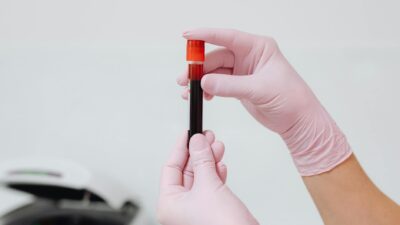
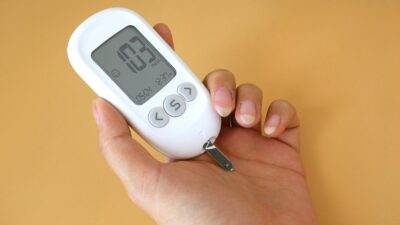
Fructosamine and A1C both measure average blood sugar, but over different time windows. Fructosamine captures the past 2-3 weeks; A1C reflects about 3 months. A commonly used conversion is estimated A1C (%) = (fructosamine μmol/L + 87.2) / 31.2, and doctors pick the test that fits your clinical situation.
What Fructosamine Measures
Fructosamine is the general term for glycated serum proteins — mostly albumin — created when glucose attaches to proteins in your blood. Because serum albumin turns over every 14-21 days, fructosamine reflects your average blood glucose over that shorter window.
A1C (hemoglobin A1C), by contrast, measures glucose bound to red blood cell hemoglobin. Red blood cells live about 120 days, so A1C averages roughly the last three months. Both tests rely on the same underlying chemistry (non-enzymatic glycation) but on different proteins with different lifespans.
Fructosamine-to-A1C Conversion
The most widely cited conversion formula comes from lab reference ranges and clinical studies:
Estimated A1C (%) = (fructosamine μmol/L + 87.2) / 31.2
Here is how common fructosamine values translate:
| Fructosamine (μmol/L) | Estimated A1C (%) | Interpretation |
|---|---|---|
| 200 | 9.2% | Unusually low — verify assay |
| 228 | ~10.1% | Elevated |
| 258 | ~11.1% | Poor control |
| 288 | ~12.0% | Very poor control |
Note: conversion ranges vary between lab assays. Some clinicians use simpler “band” interpretations — normal, mild, moderate, and severely elevated — rather than a single A1C equivalent. Always interpret alongside your lab’s reference values. For A1C context, see our guide to A1C levels.
When Doctors Use Fructosamine
A1C is the standard test for diagnosing and monitoring prediabetes and diabetes. But several conditions make A1C unreliable, and that’s where fructosamine helps:
- Pregnancy: Red blood cell turnover changes, so A1C can underestimate true glucose.
- Hemolytic anemia or recent blood loss: Shortened red cell lifespan lowers A1C falsely.
- Sickle cell trait/disease and other hemoglobinopathies: Abnormal hemoglobin can interfere with A1C assays.
- Chronic kidney disease or erythropoietin therapy: Altered red cell production skews A1C.
- Rapid treatment changes: Starting a new medication? Fructosamine shows results in 2-3 weeks rather than 3 months.
- Recent transfusion: Donor red cells distort A1C readings for weeks.
Normal and Elevated Fructosamine Ranges
Reference ranges differ slightly between laboratories, but general ranges are:
- Normal (non-diabetic): approximately 200-285 μmol/L
- Controlled diabetes: approximately 286-320 μmol/L
- Elevated: greater than 320 μmol/L
Always rely on your lab’s printed reference range, because assay methods and calibration differ.
Accuracy and Limitations
Fructosamine has strengths A1C lacks — speed, and independence from red blood cell biology. But it has its own limitations:
- Albumin-dependent: Low albumin (from liver disease, nephrotic syndrome, or malnutrition) falsely lowers fructosamine.
- Thyroid disease: Hyperthyroidism speeds protein turnover and lowers values.
- Less validated for diagnosis: A1C — not fructosamine — is the ADA-recommended test to diagnose prediabetes or diabetes.
- Conversion formulas are estimates: Individuals vary, and a precise fructosamine-to-A1C number should not be treated as definitive.
Fructosamine vs A1C vs Other Tests
| Test | Time window | Best use |
|---|---|---|
| A1C | ~3 months | Diagnosis, long-term monitoring |
| Fructosamine | 2-3 weeks | Recent changes, A1C unreliable |
| Glycated albumin | 2-3 weeks | Similar role to fructosamine; more specific |
| CGM / time-in-range | Real-time | Daily management |
| Fasting plasma glucose | Snapshot | Screening, diagnosis |
What to Do After Your Result
If your fructosamine is elevated — whether or not you’ve converted it to an A1C equivalent — the next steps are the same as for any elevated blood sugar marker: lifestyle adjustments, medication review, and a plan for retesting. Visit our treatment hub for an overview of management options.
If your doctor ordered fructosamine because A1C wasn’t reliable, they’ll use the result to adjust your plan and typically retest in 2-4 weeks.
The Bottom Line
Fructosamine is a useful short-term complement to A1C, not a replacement. The (fructosamine + 87.2) / 31.2 formula gives a rough A1C equivalent, but the real value of fructosamine is in situations where A1C falls short — pregnancy, certain anemias, rapid treatment changes. Ask your doctor which test fits your clinical picture, and always interpret results in the context of your lab’s reference ranges.