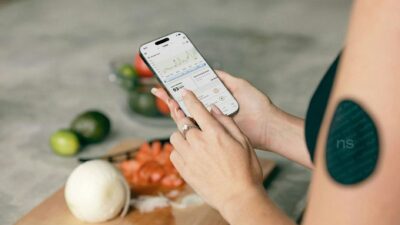
A Dexcom continuous glucose monitor uses a small sensor to measure glucose in interstitial fluid and streams the data to your phone or receiver every few minutes. Dexcom is one of the most widely used CGM brands in the United States, with the G7 for people with diabetes and Stelo over-the-counter for adults not using insulin.
How Dexcom Sensors Work
A Dexcom sensor contains a thin, flexible wire placed just under the skin during insertion. The wire uses an enzyme reaction to produce an electrical signal proportional to glucose in the interstitial fluid, and a small transmitter sends that signal wirelessly to a compatible phone or receiver. Key characteristics of current Dexcom systems include:
- Readings updated roughly every 1-5 minutes, depending on model
- Trend arrows indicating direction and rate of change
- Customizable high and low alerts on the G7
- Data sharing with care partners or clinicians through a companion app
Dexcom Models Compared
| Model | Intended Use | Sensor Life | Prescription Required |
|---|---|---|---|
| Dexcom G7 | People with diabetes, all ages | 10 days + 12-hour grace period | Yes |
| Dexcom G6 | Legacy model; still in use on some plans | 10 days | Yes |
| Stelo by Dexcom | Adults 18+ not on insulin | 15 days | No (OTC) |
Always verify current availability and indications with your pharmacy and the Dexcom user guide for the model you are using.
Accuracy and What Affects It
Dexcom reports a Mean Absolute Relative Difference (MARD) around 8% for the G7, which places it among the most accurate CGMs on the market. Accuracy can still be influenced by:
- Interstitial lag. Interstitial glucose trails blood glucose by several minutes during rapid changes.
- Compression lows. Sleeping on the sensor can create falsely low readings.
- Dehydration. Low tissue hydration affects interstitial measurements.
- Insertion quality. Proper site preparation improves first-day stability.
- Interfering substances. The user guide lists specific medications (for example, high-dose hydroxyurea) that can distort readings.
The G7 holds an iCGM designation from the FDA, which authorizes it for interoperability with compatible insulin pumps and other diabetes devices. See the FDA medical devices section for device-specific information.
Everyday Use
- Insert the sensor. Pick an approved site (abdomen, upper arm, or back of upper arm depending on model), clean with alcohol, and use the applicator.
- Pair and start. Open the Dexcom app, follow the pairing steps, and wait through the warm-up (typically 30 minutes for G7).
- Set alerts. Configure high, low, and urgent low thresholds in line with clinician guidance.
- Review patterns. Check the ambulatory glucose profile over 14-90 days to identify meals, times of day, or behaviors that drive variability.
- Share with your clinician. Dexcom Clarity lets your care team view trends, time-in-range, and glycemic variability between visits.
Who Benefits Most
CGM is well-established for people with type 1 diabetes and increasingly for people with type 2 diabetes, especially those on insulin. The ADA Standards of Care recommend CGM for people on insulin therapy and note its expanding role in non-insulin management. For people with prediabetes or general wellness users, CGM can support behavior change by making the consequences of food choices, sleep, and activity visible.
Use the data as a learning tool alongside clinician-ordered diagnostics. Our A1C levels guide and nutrition hub put CGM patterns in context.
Practical CGM Interpretation Tips
- Compare readings before and two hours after a meal to see real-world impact of specific foods.
- Track how 15-20 minutes of walking after a meal shifts the curve.
- Watch overnight patterns for dawn phenomenon or reactive rebounds.
- Note days with poor sleep or high stress; both can raise glucose independently of food.
- Do not chase every fluctuation. Focus on repeatable patterns over days and weeks.
Limitations and Safety
- CGM does not diagnose diabetes or prediabetes; clinician-ordered A1C or fasting glucose is still required.
- Skin irritation or adhesive allergies may require trial-and-error with barrier products.
- Readings during rapid glucose changes may lag fingerstick values; confirm when stakes are high.
- Do not change medication doses, including insulin, based only on CGM data without clinician input.
- Cost and insurance coverage vary; check Medicare, Medicaid, and commercial formulary status.
If you are exploring CGM to guide prediabetes self-care, pair it with structured change; see is prediabetes reversible for a broader framework. The American Diabetes Association publishes updated Standards of Care with CGM recommendations.
Medical disclaimer: This article is educational only and is not medical advice. Do not change your diabetes management or start treatment based on CGM data without consulting a licensed clinician.
The Bottom Line
A Dexcom continuous glucose monitor turns abstract glucose numbers into a continuous picture with trend arrows and alerts. Model choice depends on whether you need prescription-grade diabetes management (G7) or a non-insulin educational tool (Stelo). Use CGM data to spot patterns, confirm unexpected readings with a fingerstick, and work with your clinician to translate insights into safe action.