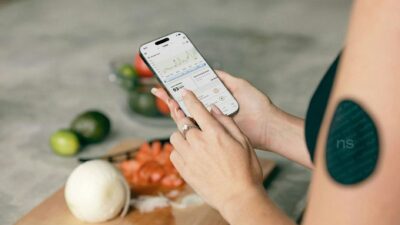
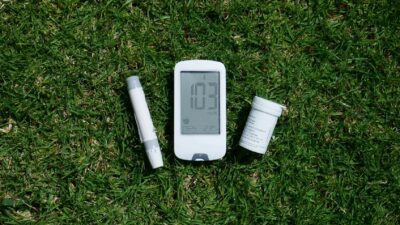
The FreeStyle Libre 14 Day is Abbott’s scan-based continuous glucose monitor (CGM) that lasts 14 days per sensor. Unlike newer streaming CGMs, the 14 Day requires you to hold a reader or phone within an inch of the sensor to display your current glucose value, along with an 8-hour trend graph. It remains a widely used option, especially for patients whose insurance still favors the older model.
Where the FreeStyle Libre 14 Day Fits Today
Abbott launched the FreeStyle Libre 14 Day in 2018 as the first two-week CGM sensor in the United States. The 10-day sensor that preceded it gave way because patients wanted longer wear time and fewer applicator changes. Since 2022, Abbott has shifted its flagship marketing to the real-time FreeStyle Libre 3 and Libre 3 Plus, but the 14 Day still ships to millions of users whose insurance plans have not yet transitioned.
How the Scan Works
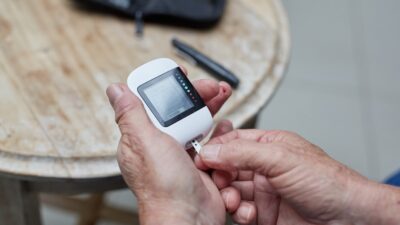
A small enzyme-coated filament in the sensor measures glucose in interstitial fluid every minute and stores 8 hours of data on the sensor itself. When you pass a reader or smartphone over the sensor, Near-Field Communication (NFC) transfers the current glucose value, a trend arrow, and the last 8 hours of readings to the device screen. Without a scan, readings accumulate silently; after 8 hours without a scan, the oldest data is overwritten.
Applying the Sensor
- Clean the back of your upper arm with alcohol and dry thoroughly
- Load the sensor into the single-use applicator as instructed
- Press the applicator firmly against your arm and release
- Pair with your reader or the FreeStyle LibreLink app
- Wait 1 hour for sensor warm-up
- Scan at least every 8 hours to capture all glucose data
Accuracy Compared to Other Options
| Model | MARD | Reading Type | Alarms |
|---|---|---|---|
| FreeStyle Libre 14 Day | 9.7% | On scan | No |
| FreeStyle Libre 2 | 9.2% | On scan + optional stream | Yes |
| FreeStyle Libre 3 | 7.9% | Streaming every minute | Yes |
| Dexcom G7 | 8.2% | Streaming every 5 min | Yes |
A MARD of 9.7 percent is still clinically acceptable and was considered excellent when the 14 Day launched. The absence of hypoglycemia alarms is the main reason most clinicians recommend upgrading if possible.
Who Might Still Choose the 14 Day?
Three groups commonly stay on the 14 Day system:
- Patients whose insurance covers it at a lower copay than Libre 3
- Users who prefer a dedicated reader over a smartphone app
- Adults with stable diabetes who do not need real-time alarms
If you routinely experience hypoglycemia, have hypoglycemia unawareness, or take insulin, upgrading to the Libre 2 or Libre 3 is the safer choice. The American Diabetes Association recommends CGMs with alarms for all insulin users.
How the Data Helps
Every 90 days, the reader or app produces an Ambulatory Glucose Profile report. It shows your time in range (percentage of readings between 70 and 180 mg/dL), average glucose, glucose management indicator (GMI), and patterns of highs and lows. Bringing this report to your next clinic visit transforms the conversation from a single A1C levels snapshot to a rich picture of your daily control.
Cost and Insurance
Without insurance, two 14 Day sensors (one month) cost around $130 to $170. Most commercial insurance plans cover the 14 Day with copays of $30 to $75 per month for people with insulin-treated diabetes. Medicare Part B also covers it when prescribing criteria are met. Always confirm pharmacy versus DME coverage with your plan.
Practical Tips for Users
Scan first thing in the morning, before meals, 2 hours after meals, before exercise, and before bed. That pattern captures the most actionable data while staying under the 8-hour overwrite window. Use an overpatch to extend wear through showers and workouts. If you suspect the sensor is giving false readings, confirm with a finger stick and call Abbott support for a free replacement.
When to Consider Upgrading
If you experience more than one low glucose event a week, take mealtime insulin, or simply want alarms and streaming data, speak with your clinician about moving to Libre 2 or Libre 3. If you have prediabetes or type 2 diabetes without insulin, consider Abbott’s Lingo or Dexcom’s Stelo, which are sold over the counter and use newer sensor generations.
The Bottom Line
The FreeStyle Libre 14 Day has been a workhorse CGM since 2018 and remains a reasonable choice for people who prefer scan-based readings and whose insurance still favors it. Newer Libre models deliver higher accuracy, continuous streaming, and alarms, and they are the default recommendation for most people starting CGM today. Either way, the 14 days of glucose data you get from any Libre sensor often transform how you eat, move, and manage your diabetes.
Medical disclaimer: This article is educational only. Talk to your healthcare provider about CGM selection and treatment decisions.